Quranic Answer
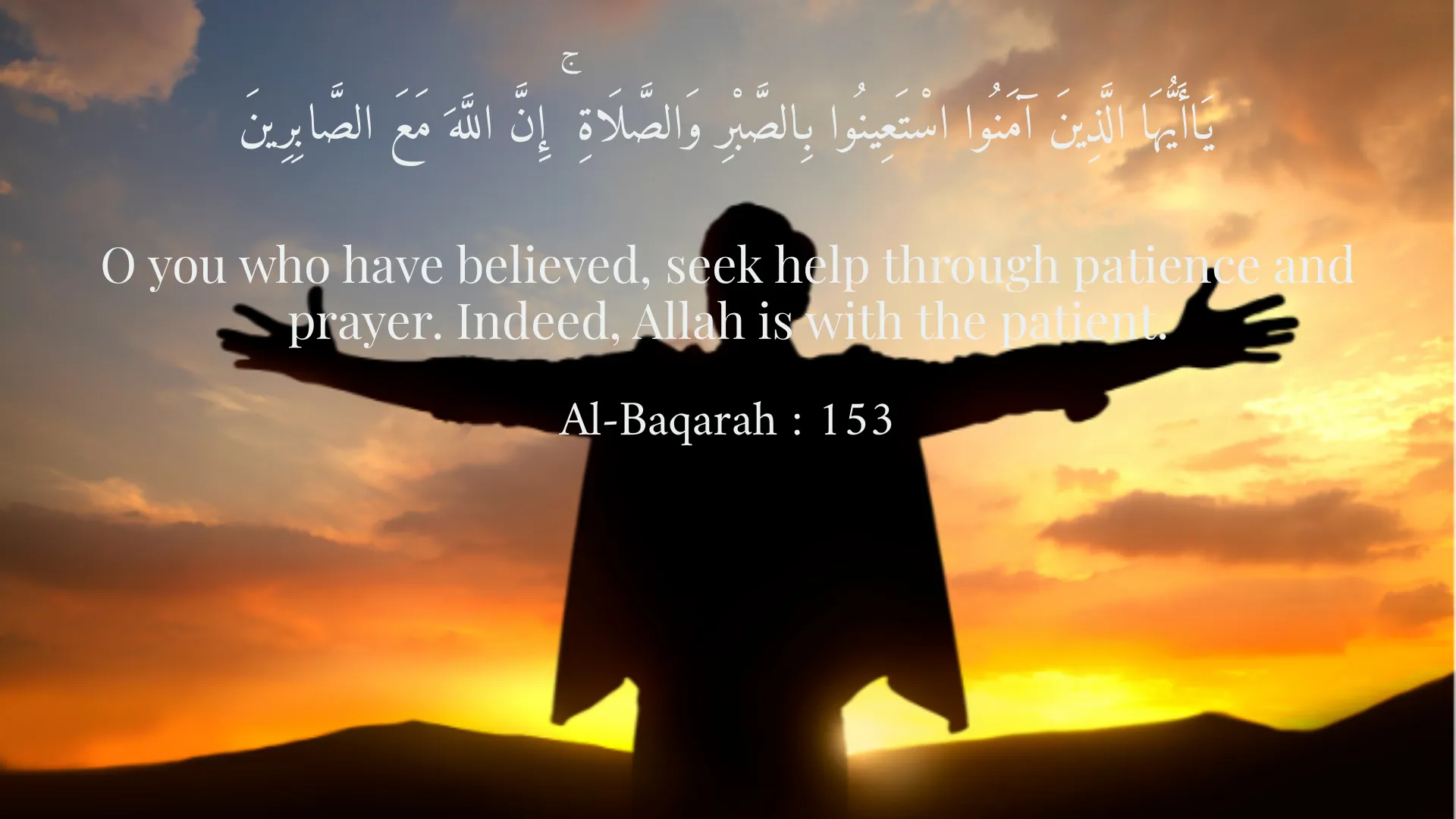
In the Holy Quran, the virtue of patience, or 'sabr,' stands out as one of the most significant traits that believers are encouraged to embody as they navigate through life's many hardships and challenges. This fundamental quality not only aids individuals in enduring the trials that life presents but also plays a critical role in shaping one's character and spiritual development. A noteworthy verse illustrating the importance of patience is found in Surah Al-Baqarah, verse 153, where Allah commands the faithful: "O you who have believed, seek help through patience and prayer. Indeed, Allah is with the patient." This verse alludes to the profound relationship between patience and prayer, suggesting that the two are intertwined in seeking divine support during difficult times. It emphasizes that patience does not merely denote passive endurance; rather, it is an active quality that entails a conscious decision to rely on faith while confronting adversities. The Quran intricately weaves the concept of patience into the broader narrative of life, asserting that patience is not solely an individual trait but a divine tool through which believers can seek assistance from Allah. Within the framework of Islamic teaching, patience is depicted as a test of faith, serving as a mirror that reflects an individual’s sincerity and commitment to their beliefs. When faced with hardships, how one reacts reveals their inner strength and resilience, often fortifying their connection with Allah. This underscores a crucial aspect of human existence—the trials one faces not only shape personal character but also determine the depth of one’s faith. Moreover, this significance of patience resonates throughout various verses in the Quran. For instance, in Surah Al-Imran, verse 186, Allah states, "And you will surely hear from those who were given the Scripture before you and from those who associate others with Allah much abuse. But if you are patient and fear Allah—that is the best [course]." This verse highlights that patience is a commendable trait, especially when faced with abuse or discouragement from others. Here, Allah reassures believers that patience, coupled with fear and reverence for Him, is truly the best course of action. This serves to remind individuals that enduring tribulations while adhering to one's values can yield profound rewards. Throughout the annals of Islamic history, the concept of patience has been exemplified by numerous prophets and leaders who faced significant tribulations yet remained resolute in their faith. One of the most prominent figures representing patience is Prophet Job (Ayub), whose life story is chronicled in the Quran as a paragon of endurance and reliance on Allah. Prophet Job endured a severe test that included the loss of his health, wealth, and family, yet he remained steadfast in his faith, continually seeking help from Allah and affirming His wisdom. His unwavering patience not only made him a model of resilience but also illuminated the path for countless believers who strive to emulate his devotion amidst their difficulties. The principle of patience is not relegated to merely enduring suffering; it also encompasses an understanding that trials serve a divine purpose. In Surah As-Saffat, verse 102, it is proclaimed: "And indeed, the patient will be given their reward without account." This profound promise reassures believers that their perseverance will not go unnoticed in the eyes of Allah. The encouragement to be patient implies a faith in the unseen rewards that will accompany their endurance and trials. Such a notion lays a foundation for positive reinforcement, instilling hope and resolve in believers as they confront life's trials. Furthermore, patience is depicted as a critical component in fostering compassion and empathy within communities. When individuals practice patience, they cultivate a spirit of understanding towards others' struggles and hardships. It serves as a reminder that everyone is engaged in their unique battles and that mutual kindness and support can thrive in an atmosphere of patience. This sense of collective resilience enhances the bonds within communities, fostering environments where individuals can support one another through shared experiences of hardship. Additionally, the Quran places significant importance on the rewards one receives for exercising patience. It encapsulates the belief that those who are patient during their tribulations will find not only solace in this life but also spiritual gratification in the Hereafter. The understanding that divine wisdom often underlies the trials faced by believers can serve to bolster their patience. Through the lens of Islamic teachings, it becomes evident that the trials, rather than being mere adversities, are manifestations of Allah’s plan, thereby reinforcing a patient disposition as a means of achieving spiritual elevation. In conclusion, patience serves as a cornerstone value within the Quran and Islamic teachings, illustrating the intrinsic relationship between humans and Allah as they navigate life's challenges. The verses within the Quran, coupled with the vivid exemplars of patience from past prophets, highlight the transformative power of this trait. Patience empowers individuals not only to endure but to grow spiritually and morally, fortifying their character and deepening their connection with Allah. Acknowledging the multifaceted benefits of patience—drawing strength from prayer, handling adversity gracefully, developing empathy within communities, and reaping divine rewards—enables believers to perceive their struggles as opportunities for growth and spiritual fulfillment. Ultimately, practicing patience equips individuals to lead purposeful lives, facing challenges with unwavering faith and resilience.
Related Verses
يَاأَيُّهَا الَّذِينَ آمَنُوا اسْتَعِينُوا بِالصَّبْرِ وَالصَّلَاةِ ۚ إِنَّ اللَّهَ مَعَ الصَّابِرِينَ
O you who have believed, seek help through patience and prayer. Indeed, Allah is with the patient.
Al-Baqarah : 153
وَلَتَسْتَبِقُونَ إِلَى حَلاوتِ الصَّبْرِ وَ الأُمَّةُ مَعَكُمْ و فِيكُم مَّن يُقِيتُ لِّكُم سابقون.
And you will surely hear from those who were given the Scripture before you and from those who associate others with Allah much abuse. But if you are patient and fear Allah—that is the best [course].
Al-Imran : 186
وَإِنَّمَا يُوَفَّى الصَّابِرُونَ أَجْرَهُمْ بِغَيْرِ حِسَابٍ
And indeed, the patient will be given their reward without account.
As-Saffat : 102
Short Story
Once upon a time, there was a man named Ali who was burdened with life's challenges. He always felt like the world was heavy on his shoulders. In this state, he decided to refer to the verses of the Quran and remembered the verse that said, 'Indeed, Allah is with the patient.' This phrase struck a chord with him. He made the decision to be patient and place his trust in Allah. Gradually, his problems began to resolve, and he was able to experience peace once again.