Quranic Answer
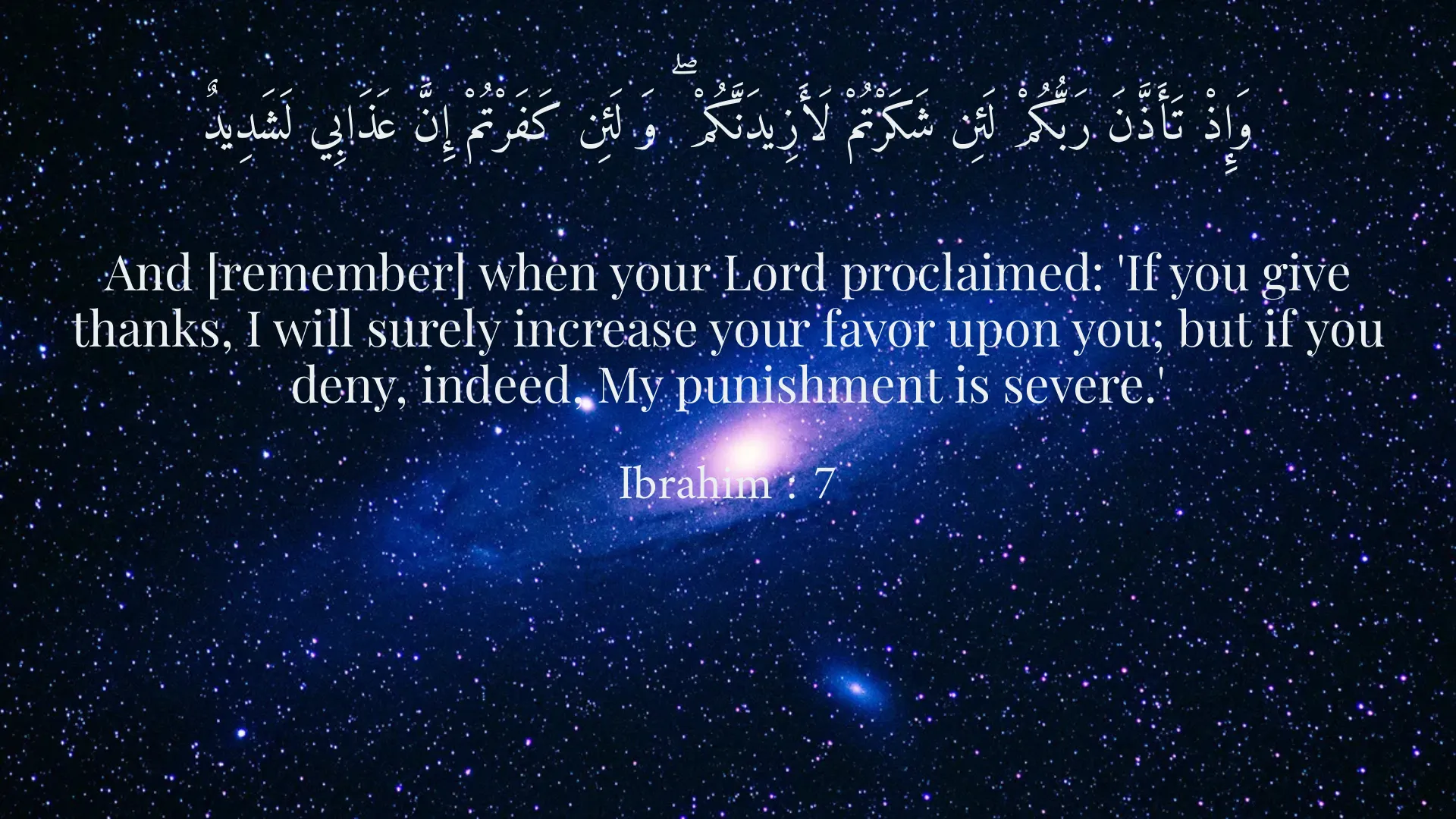
Gratitude is a fundamental principle in human life, and it holds particular significance within Islamic teachings. This intrinsic value plays a crucial role in shaping not only individual character but also community dynamics. The Holy Quran, revered as the ultimate source of guidance for Muslims, frequently emphasizes the importance of thankfulness and appreciation. In a world often preoccupied with material possessions and societal pressures, understanding the essence of gratitude becomes imperative for personal growth and spiritual fulfillment. This article delves deeper into the teachings of Islam related to gratitude, explores its implications in daily life, and encourages the practice of thankfulness amid various trials and tribulations. The Holy Quran underscores gratitude in numerous verses, depicting it as a cornerstone for a faithful and fulfilling life. One notable example is found in Surah Ibrahim, verse 7, which states: 'And [remember] when your Lord proclaimed: 'If you give thanks, I will surely increase your favor upon you; but if you deny, indeed, My punishment is severe.' This profound declaration serves as both a reminder and a warning. It encapsulates a fundamental principle: the act of being thankful can lead to the amplification of one’s blessings from Allah, whereas ingratitude may invoke severe consequences. This duality emphasizes that gratitude is not merely an attitude but a vital practice that influences the very direction of our lives. Furthermore, gratitude is profoundly entwined with the very fabric of human experience. In Surah An-Naml, verse 40, Allah speaks of Prophet Solomon, stating: 'Whoever counts your favor will have a great reward.' This verse elevates the concept of gratitude from the mere acknowledgment of blessings to an active counting and appreciation of those blessings. When one consciously counts and articulates what they are grateful for, they engage in a transformative practice that can alter their mental state and emotional well-being. This shift fosters vitality and joy in our lives, equipping us to face daily challenges with resilience and a positive spirit. Life is fraught with challenges, obstacles, and moments of despair. In these times, the practice of gratitude acts as a powerful antidote to negativity and hopelessness. By focusing on what we have rather than what we lack, we cultivate a mindset that can combat feelings of depression and despair. A heart filled with gratitude is less likely to succumb to helplessness. Instead, it encourages a proactive approach to life’s difficulties, allowing us to navigate our journeys with grace and optimism. In essence, gratitude cultivates inner strength and equips us to deal with adversity more effectively. Moreover, the expression of gratitude serves to strengthen our connection with Allah. It is through the acknowledgment of His countless blessings that we recognize our dependence on Him and His mercy. Gratitude invites us to reflect on the various ways Allah has sheltered, supported, and guided us throughout our lives. This heightened awareness not only enhances our appreciation for the provisions of daily living but also nurtures a deeper relationship with our Creator. When we express our thankfulness, we seek to align ourselves with the values and goals set forth by Allah, making gratitude a spiritual act that fosters faith and devotion. It is vital to understand that gratitude transcends mere acknowledgment; it is a comprehensive appreciation of life itself. True gratitude can be viewed as a profound understanding of blessings and the effective utilization of them in our daily lives. This understanding encourages mindfulness and intentionality in how we go about our days. Being aware of the little things – a warm meal, a smile from a stranger, or a moment of peace – amplifies our experiences and fosters a sense of contentment and happiness. By consistently practicing gratitude, we can transform our perspective and lead more fulfilling lives, replete with joy and purpose. From a social standpoint, gratitude can significantly enhance interpersonal relationships and community bonds. When individuals express appreciation toward one another, it fosters a sense of belonging and connection. A culture of gratitude within families, friendships, and communities cultivates empathy, kindness, and compassion. Such a culture enables individuals to come together to support one another, creating a nurturing environment where positivity thrives. The mutual recognition of worth and value within relationships can lead to deeper connections and a more harmonious society overall. It is essential to recognize that gratitude does not only pertain to the acknowledgment of favorable situations or outcomes. In fact, learning to find gratitude even in challenging situations can serve as a powerful mechanism for growth and resilience. Challenges often bring valuable lessons that can contribute to our personal development. By choosing to see the silver linings, we can transform negative experiences into sources of strength and insight. In conclusion, the virtue of gratitude encompasses much more than simple thankfulness. It is a principle deeply embedded in Islamic teachings and is essential for a fulfilling and rewarding life. The Holy Quran provides profound insights on the significance of expressing gratitude, highlighting its potential to multiply blessings and enhance our spiritual connection with Allah. Practicing gratitude serves as an antidote to despair and negativity, promoting resilience and a positive outlook amidst life’s challenges. By cultivating a habit of thankfulness, we not only enrich our own lives but also contribute to the well-being of those around us. Ultimately, gratitude transforms our perspectives, shapes our character, and aligns us more closely with our Creator, allowing us to navigate life’s complexities with grace and purpose.
Related Verses
وَإِذْ تَأَذَّنَ رَبُّكُمْ لَئِن شَكَرْتُمْ لَأَزِيدَنَّكُمْ ۖ وَ لَئِن كَفَرْتُمْ إِنَّ عَذَابِي لَشَدِيدٌ
And [remember] when your Lord proclaimed: 'If you give thanks, I will surely increase your favor upon you; but if you deny, indeed, My punishment is severe.'
Ibrahim : 7
مَنْ أَحْصَى شَكْرَكَ فَلَهُ جَزَاءٌ كَثِيرٌ
Whoever counts your favor will have a great reward.
An-Naml : 40
Short Story
One day, a grateful and faithful man went to the market and saw people who were blatantly indifferent to the blessings God had given them. He decided to remind them that gratitude could change their lives. He said out loud, 'If we are thankful to Allah, He will bestow even more blessings upon us!' Gradually, people began to listen to his words and learned to express gratitude at least once a day. From that day forward, they felt more joy and satisfaction in their lives.