Quranic Answer
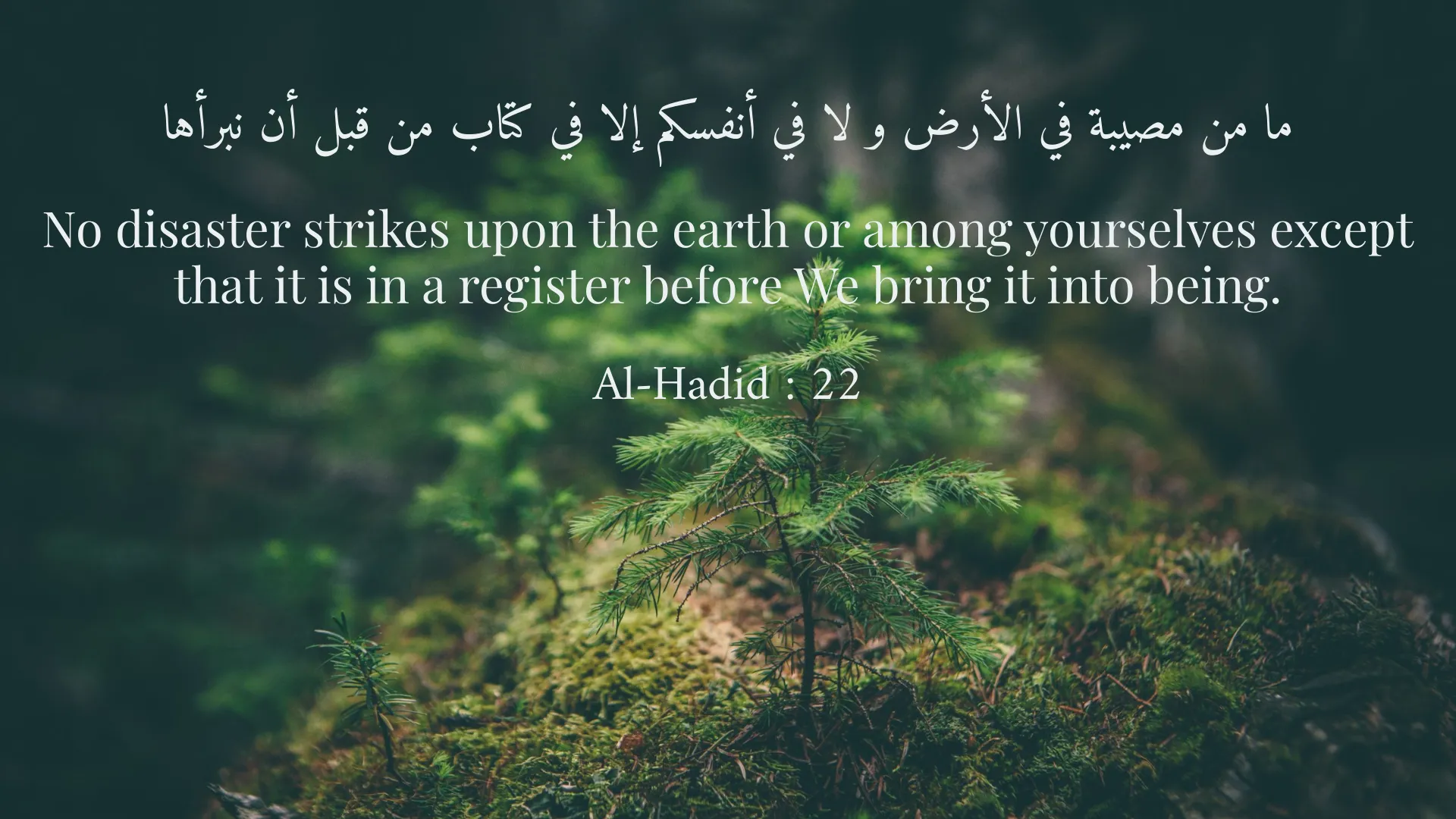
Believing in destiny is one of the fundamental principles in Islam. It encompasses the understanding that every aspect of our lives is predestined and meticulously recorded in the divine plan. This belief shapes the way Muslims perceive the events in their lives, providing a framework for understanding suffering, happiness, and every occurrence in between. The Holy Quran references this concept in various verses, illustrating that the notion of destiny is not merely a philosophical idea but a cornerstone of the Islamic faith. One of the most significant references to this concept is found in Surah Al-Hadid, verse 22, where Allah states, 'No disaster strikes upon the earth or among yourselves except that it is in a register before We bring it into being.' This verse profoundly emphasizes the importance of divine knowledge in the affairs of the universe and human existence. It assures believers that nothing happens by chance or randomness but rather according to a divine preordained plan that exists in the Preserved Tablet. This idea instills a sense of calm in the hearts of Muslims, reinforcing the belief that every challenge, trial, and hardship has a purpose and is a part of a broader divine narrative. The concept of destiny encourages individuals to reflect on their circumstances and consider them as part of a larger divine wisdom. When we face difficulties, it is easy to feel overwhelmed and question the reasons behind our struggles. However, believing in destiny offers solace, reassuring us that these obstacles are not arbitrary but serve a greater purpose in shaping our character and guiding us on our spiritual journey. The idea that everything unfolds according to divine wisdom provides a layer of meaning to our experiences that would otherwise seem inexplicable. Moreover, having faith in destiny does not imply that individuals are passive actors in their lives. On the contrary, Islam encourages personal agency and responsibility. Believers are urged to strive for what is good, make decisions to improve their circumstances, and seek beneficial knowledge. However, simultaneous to these actions is the understanding that the outcomes are ultimately in the hands of Allah. This delicate balance between personal effort and submission to divine will fosters resilience and patience in the face of adversity. When confronted with life’s challenges, knowing that they are part of Allah’s grand design can help cultivate inner tranquility, preventing us from becoming overwhelmed or despondent. In Surah Al-Imran, verse 154, Allah further emphasizes the importance of accepting His decree, stating, 'And what struck you of disaster is by the permission of Allah.' This verse serves as a reminder to remain steadfast in our faith, no matter the circumstances we encounter. It calls for a deep-seated sense of contentment and acceptance, even in times of hardship, as believers recognize that every incident—whether joyous or sorrowful—aligns with God’s plan for their lives. This perspective can foster resilience and patience, as individuals learn to trust in Allah’s wisdom and timing. Believing in destiny also encourages Muslims to maintain hope and trust in Allah’s mercy. It projects the notion that, regardless of current difficulties, there is always a purpose and eventual benefit to be found. The challenges one faces may be tests designed to strengthen their faith, develop their character, or prepare them for greater rewards in the afterlife. By embracing this belief, Muslims can cultivate a positive outlook on life's unpredictability, viewing struggles as opportunities for spiritual growth rather than insurmountable obstacles. Furthermore, the concept of destiny in Islam transcends individual experiences and encompasses broader societal dimensions. It compels believers to reflect on historical events, communal challenges, and societal injustices through the lens of divine wisdom. By recognizing that all occurrences, big or small, play a role in Allah's grand scheme, Muslims may develop greater empathy and compassion towards others. They are reminded to support one another through trials, understanding that the experience of hardship is universal and part of the human condition. In addition to fostering individual resilience and community engagement, believing in destiny also promotes strong interpersonal relationships. When one is aware that every action and event unfolds according to divine wisdom, it can lead to improved tolerance and understanding within relationships. Disagreements, misunderstandings, and conflicts may be approached with greater empathy when one acknowledges that everyone is grappling with their own struggles and destined trials. This acceptance can result in more harmonious interactions and compassionate responses. Moreover, the belief in destiny shapes the way Muslims approach worship and altruism. Knowing that acts of kindness and good intentions are recorded can motivate believers to engage more actively in charitable endeavors. They understand that by doing good in the world, they are participating in their own predestined plan, fulfilling their roles as servants of Allah and aiming to earn His pleasure. In summary, believing in destiny is a vital component of the Islamic faith that profoundly influences how Muslims view themselves, their experiences, and their relationships. The Quran's verses remind believers that everything occurs by divine decree, encouraging them to find solace in the knowledge that they are never alone in their struggles. This belief fosters resilience, acceptance, and compassion, allowing individuals to navigate life's complexities with a sense of purpose and hope. Ultimately, embracing the principles of destiny leads to a more peaceful life where one trusts in Allah's plan, relishing the journey with faith and gratitude.
Related Verses
ما من مصيبة في الأرض و لا في أنفسكم إلا في كتاب من قبل أن نبرأها
No disaster strikes upon the earth or among yourselves except that it is in a register before We bring it into being.
Al-Hadid : 22
وما أصابكم من مصيبة فبما كسبت أيديكم
And what struck you of disaster is by the permission of Allah.
Al-Imran : 154
Short Story
One day, a man named Majid was pondering about destiny and fate. He recalled the verses of the Quran and concluded that he should not lose hope in the challenges of life. Majid believed that although difficulties appeared hard, they were actually part of God's divine plan for him. He stood firm in hope and faith against trials, saying, 'Allah has written the best destiny for me, and I must be content.' His life then underwent positive changes.