Quranic Answer
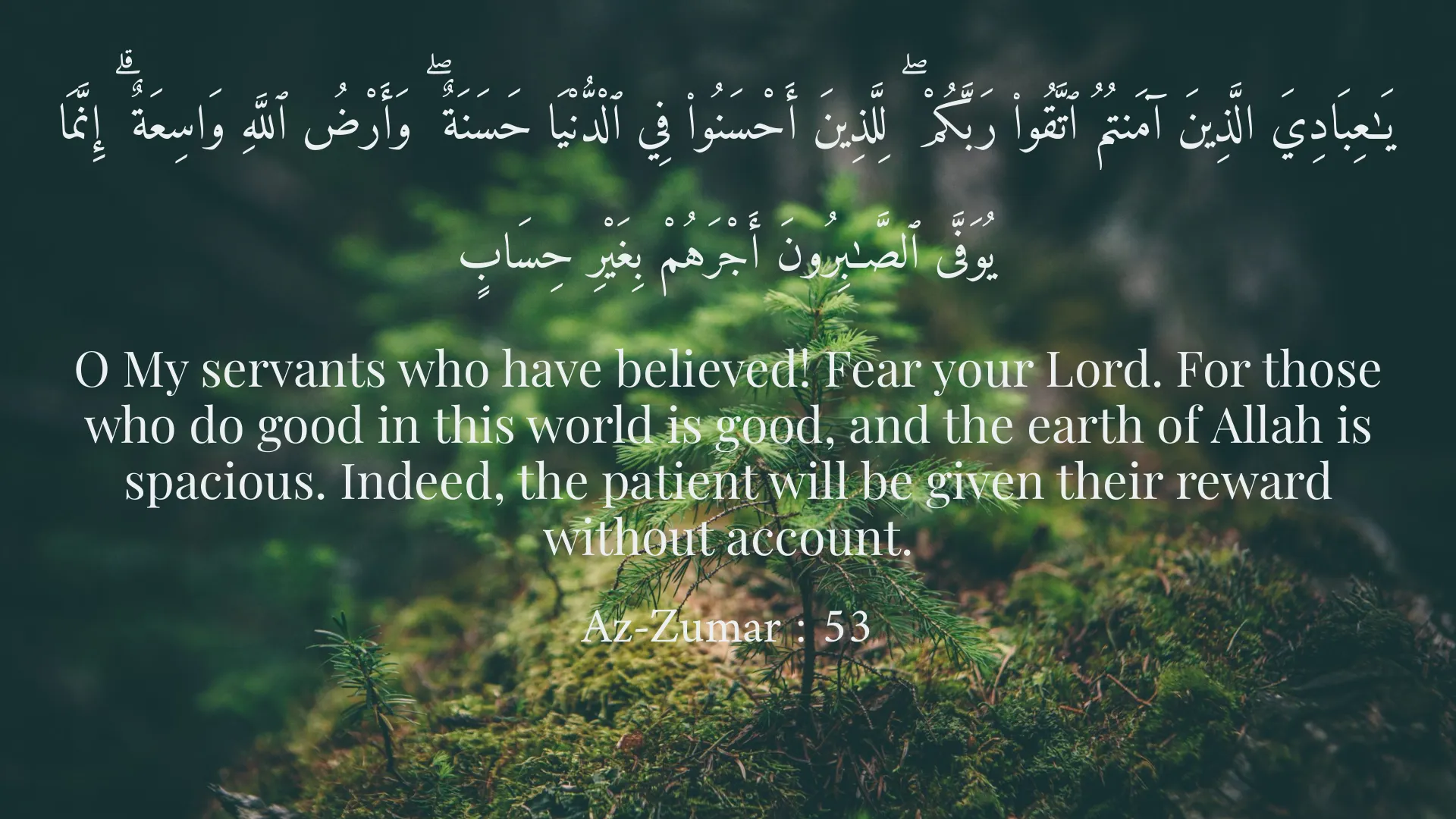
In the Holy Quran, Allah emphasizes His mercy and compassion towards His servants, highlighting one of the most significant themes that resonates deeply within the hearts of believers. This theme is prominently featured throughout the Quran, with various verses illustrating the boundless nature of Allah's mercy and the importance of repentance and hope. In Surah Az-Zumar, verse 53, Allah addresses His servants directly, saying: "O My servants who have believed! Fear your Lord. For those who do good in this world is good, and the earth of Allah is spacious. Indeed, the patient will be given their reward without account." This particular verse serves as a profound reminder that regardless of the mistakes one might make or the wrong paths one might stray toward, Allah’s mercy is always accessible to those who sincerely seek it. The significance of this verse lies in its assurance that individuals can always hope for Allah’s mercy and forgiveness, emphasizing that no one should ever lose faith in the kindness of their Creator. It is a call to embrace goodness and bear patience, knowing that tangible rewards await those who strive for righteousness. This divine message instills a sense of hope, urging believers to turn back to Allah after making mistakes, rather than succumbing to despair. This concept of forgiveness underscores the fundamental belief that Allah is always ready to forgive those who sincerely repent and seek His guidance. The Quran continuously reinforces the idea that no matter how distant one may feel from the divine, there is always an avenue back to Allah through sincere repentance and good deeds. Another powerful verse that encapsulates this theme of mercy is found in Surah Al-Baqarah, verse 286: "Allah does not burden a soul beyond that it can bear." In this verse, Allah’s mercy is articulated through His understanding of human limitations, reflecting His compassionate nature. It suggests that Allah, in His infinite wisdom, has set the challenges and trials faced by individuals in accordance with their capabilities. This alleviates feelings of hopelessness and despair, reminding believers that their struggles are acknowledged and that they possess the strength to overcome them. This verse is particularly significant because it allows individuals to view their challenges from a different perspective. Instead of feeling overwhelmed by life's burdens, believers can recognize that their struggles have been measured against their own capacity. This perspective can be incredibly empowering, as it aligns a person's struggles with their abilities, emphasizing the idea that growth often comes through overcoming difficulties. It further encourages believers to persevere in their faith, reaffirming that they are not alone in their struggles, as Allah is aware of their limits and supports them through every hardship they face. The overarching theme of mercy in the Quran is a reminder that Allah's love envelops every person, regardless of their past actions. This message serves as a call to cultivate a positive relationship with the divine, fostering hope and reassurance within the hearts of the believers. It encourages individuals to continuously seek repentance, reminding them that the act of returning to Allah is embraced and welcomed. Furthermore, the concept of divine mercy in Islam transcends individual actions; it emphasizes the collective nature of the human experience. In this regard, Allah’s mercy is not only about personal redemption but also about uplifting communities and fostering compassion towards others. As believers internalize the essence of Allah’s mercy, they are inspired to mirror this quality in their interactions with others. Acts of kindness, forgiveness, and understanding towards fellow human beings become an inherent part of a believer's life, reflecting the divine attributes they seek to embody. By turning to the Quran and adhering to its teachings, believers can strengthen their hope in Allah's mercy and forgiveness. Engaging with the Quran not only allows for personal growth but also fosters a deeper connection with the divine. With each reading, individuals are reminded that Allah’s mercy is vast and encompasses all of humanity, encouraging a life of faith guided by the principles of love, kindness, and compassion. In conclusion, Allah's emphasis on mercy and compassion in the Quran serves as a source of solace and strength for believers. Verses such as those found in Surah Az-Zumar and Surah Al-Baqarah encapsulate the essence of hope, resilience, and the welcoming nature of divine forgiveness. As individuals navigate through life's challenges and make mistakes, the doors to repentance and redemption remain open. Through sincere efforts to seek Allah's mercy, believers can cultivate a deeper relationship with their Creator, ultimately finding peace and purpose rooted in the teachings of the Holy Quran. As they enhance their understanding of Allah's attributes, they can also extend that same grace and compassion to others, creating a ripple effect of kindness in the world.
Related Verses
يَـٰعِبَادِيَ الَّذِينَ آمَنتُمُ ٱتَّقُوا۟ رَبَّكُمْ ۖ لِلَّذِينَ أَحْسَنُوا۟ فِي ٱلْدُّنْيَا حَسَنَةٌ ۖ وَأَرْضُ ٱللَّهِ وَاسِعَةٌ ۗ إِنَّمَا يُوَفَّى ٱلصَّـٰبِرُونَ أَجْرَهُمْ بِغَيْرِ حِسَابٍ
O My servants who have believed! Fear your Lord. For those who do good in this world is good, and the earth of Allah is spacious. Indeed, the patient will be given their reward without account.
Az-Zumar : 53
لَا يُكَلِّفُ اللَّهُ نَفْسًا إِلَّا وُسْعَهَا ۗ لَهَا مَا كَسَبَتْ وَعَلَيْهَا مَا اكتَسَبَتْ ۗ رَبَّنَا لَا تُؤَاخِذْنَا إِن نَّسِينَا أَوْ أَخْطَأْنَا ۚ رَبَّنَا وَلَا تَحْمِلْ عَلَيْنَا إِصْرًا كَمَا حَمَلْتَهُ عَلَى الَّذِينَ مِن قَبْلِنَا ۚ رَبَّنَا وَلَا تُحَمِّلْنَا مَا لَا طَاقَةَ لَنَا بِهِۦ ۖ وَاعْفُ عَنَّا وَاغْفِرْ لَنَا وَارْحَمْنَا ۚ أَنتَ مَوْلَانَا فَانصُرْنَا عَلَى ٱلْقَوْمِ ٱلْكَافِرِين.
Allah does not burden a soul beyond that it can bear. It will have [the consequence of] what [good] it has gained, and it will bear [the consequence of] what it has earned. Our Lord, do not impose blame upon us if we have forgotten or made a mistake. Our Lord, and lay not upon us a burden like that which You laid upon those before us. Our Lord, and burden us not with that which we have no ability to bear. And pardon us; and forgive us; and have mercy upon us. You are our protector, so give us victory over the disbelieving people.
Al-Baqarah : 286
Short Story
One day, a young man named Amir felt hopeless because of the mistakes he made in his life. He went to a local elder and complained that he was sinful and that God would not forgive him. The elder said: "No, young man! Allah is merciful, and His mercy is endless. Whenever you turn to Him, He accepts you." With that encouragement, Amir returned home and decided to repent and turn towards God. From then on, he lived with hope in Allah's mercy.