Quranic Answer
In the Holy Quran, the importance of remembering God is profoundly emphasized, highlighting its critical role in establishing a fulfilling and meaningful life for individuals. The verses throughout the Quran reflect the essence of this remembrance, showcasing how it fosters inner peace, spiritual connection, and resilience in facing life's challenges. One such powerful verse is found in Surah Ar-Ra’d, verse 28, where Allah proclaims, 'Indeed, it is through the remembrance of Allah that hearts find tranquility.' This statement underlines the psychological and emotional impacts of engaging in the act of remembering God, illustrating that it is not merely a ritualistic act but rather a source of solace and calm in a hectic and often tumultuous world. Remembrance of God, or Dhikr, is a concept deeply embedded in the Islamic tradition. It is a practice that goes beyond mere recitation of phrases or prayers; it involves a conscious awareness of God's presence in all aspects of life. By continually acknowledging God, believers cultivate a strong spiritual connection that allows them to navigate through life's adversities with greater ease. The notion that hearts can achieve tranquility through this remembrance speaks to the mental and emotional benefits that arise when individuals maintain their focus on a higher purpose that transcends daily struggles. Moreover, in Surah Al-Baqarah, verse 152, Allah directs the believers, saying, 'Remember Me, and I will remember you.' This verse presents a reciprocal relationship between God and His followers, highlighting that by remembering God, individuals can feel assured that they are not alone in their journey. This divine promise is comforting and nurturing, providing a sense of spiritual security that can bolster one's faith and confidence in the face of uncertainty. In times of distress, knowing that God is aware of one's feelings and struggles fosters resilience and courage to confront challenges head-on. The importance of remembering God is further emphasized through the understanding of Dhikr as a holistic practice that permeates daily life. It teaches believers to be mindful of God in all their actions and decisions, promoting ethical behavior and compassion in society. For instance, during moments of anger, frustration, or temptation, recalling God can lead individuals to choose patience, kindness, and forgiveness over negative reactions. This mindfulness not only enhances personal spiritual growth but also contributes to a more harmonious social environment. By embodying the principles of remembrance in their daily conduct, believers become agents of positive change within their surroundings, thus reinforcing their connection to God while serving humanity. Similarly, experiences of hardship teach us that invoking the name of God can provide immediate comfort and reassurance. The act of remembering God during trials can be transformative, shifting one’s perspective from despair to hope. It instills a sense of purpose, reminding individuals that difficulties are a part of life, but faith and reliance on God can lead to eventual relief and solutions. The power of remembrance lies in its ability to act as a mental anchor during turbulent times, allowing individuals to cultivate patience and endurance. Furthermore, continual remembrance encourages the cultivation of gratitude, shifting attention from what is lacking to recognizing the innumerable blessings already present in one’s life. In Surah Az-Zumar, verse 22, Allah presents a compelling reflection: 'Is one whose heart Allah has opened to Islam, so that he is in enlightenment from his Lord, [like one who is in darkness]?' This verse underscores the transformative effect of remembrance on one's spiritual state. When a heart is inclined towards the remembrance of God, it experiences enlightenment, clarity, and direction. In contrast, a heart that neglects this connection may find itself lost in the chaos of life's distractions and uncertainties. By remembering God, individuals illuminate their paths, fostering wisdom and insight that guide them through life’s complexities. The Quran's teachings about remembrance of God are not merely for spiritual elevation; they also carry practical implications for personal growth and mental wellness. Engaging regularly in chosen forms of remembrance, whether through prayer, meditation, or quiet reflection, can mitigate feelings of loneliness, anxiety, and existential dread. The process of remembrance often leads to mindfulness, where individuals learn to live in the present moment rather than being burdened by past regrets or future uncertainties. Thus, embracing the practice of Dhikr becomes essential in enhancing mental health and overall well-being. Furthermore, the collective aspect of remembrance within a community enhances the individual experience. Congregational prayers, study circles, and discussions about God's attributes encourage the sharing of wisdom and foster a sense of belonging among participants. These communal engagements reinforce the idea that remembering God is not just a personal endeavor, but a collective responsibility that upholds the values of support, love, and understanding amidst a larger family of believers. This shared experience consolidates a sense of unity, reminding everyone of their common purpose and connection to God. Ultimately, the remembrance of God encapsulates a journey of continuous growth and improvement, spiritually and morally. It nurtures the soul, providing guidance, strength, and comfort throughout various life stages. The teachings in the Quran emphasize that through remembrance, individuals not only enhance their personal connection to God but also contribute positively to the world around them. In conclusion, the practice of remembering Allah is essential; it molds character, fosters resilience, and instills hope, ultimately leading individuals towards a life defined by meaning, purpose, and tranquility. As believers, the challenge lies in integrating this profound practice into daily life, ensuring that every moment is a reminder of the divine presence that supports and uplifts us through life's journey.
Related Verses
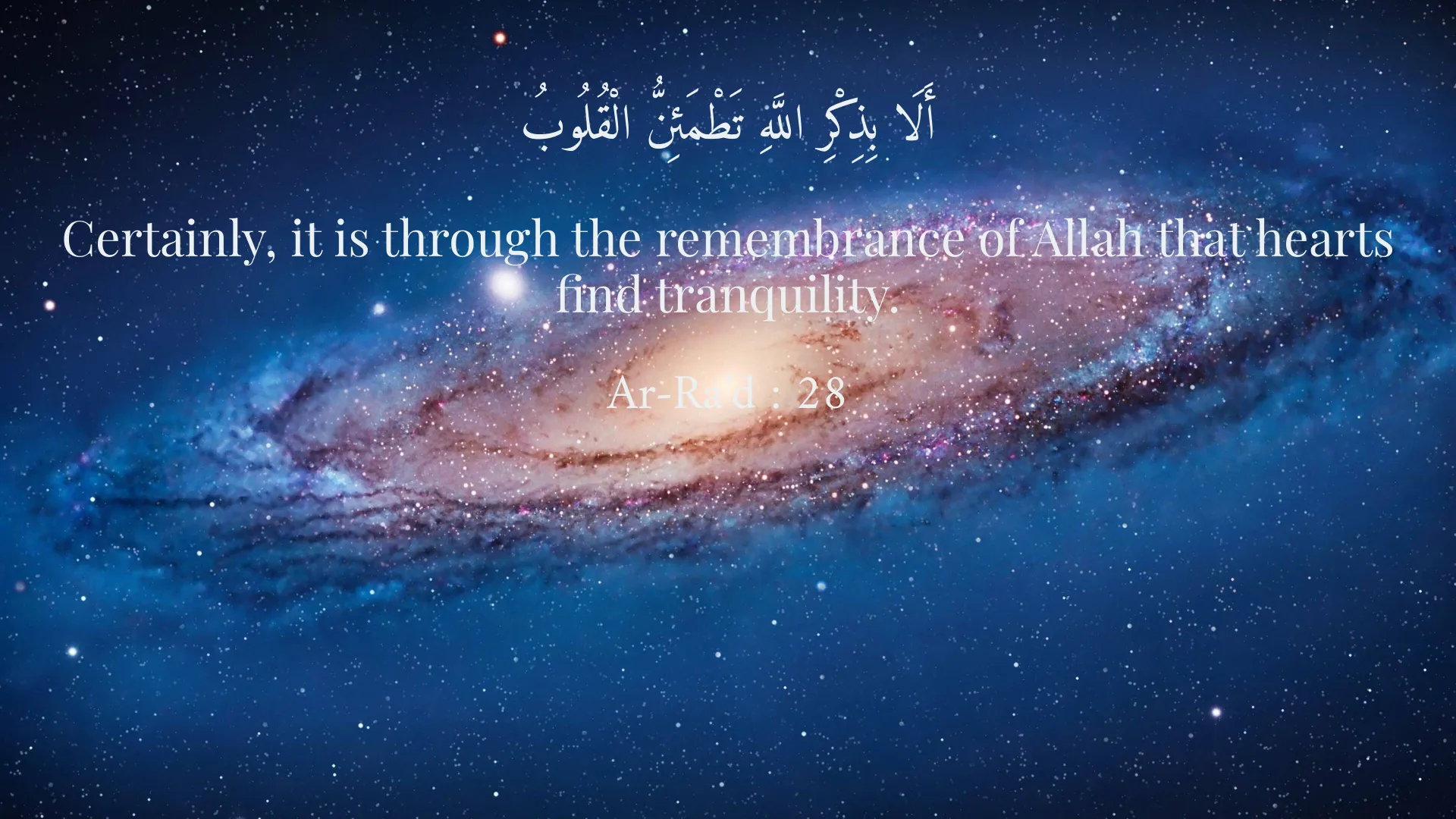
أَلَا بِذِكْرِ اللَّهِ تَطْمَئِنُّ الْقُلُوبُ
Certainly, it is through the remembrance of Allah that hearts find tranquility.
Ar-Ra’d : 28
فَاذْكُرُونِي أَذْكُرْكُمْ
Remember Me, and I will remember you.
Al-Baqarah : 152
أَفَمَن شَرَحَ اللَّهُ صَدْرَهُ لِلْإِسْلَامِ
Is one whose heart Allah has opened to Islam [like one who is in darkness]?
Az-Zumar : 22
Short Story
One day, a young man named Amin felt lost and directionless in his life. He decided to remember God and dedicate moments in his days to remembrance and prayer. Gradually, he found that God's remembrance brought him hope and peace, filling his life with profound meanings.