Quranic Answer
In the Holy Quran, a profound emphasis is placed on the concept of seeking refuge in God—a persistent theme woven throughout its verses. This practice is particularly significant when one confronts the ever-present challenges posed by the evil of Satan, the arch enemy of humanity. The Quran portrays Satan not merely as a figure of folklore but as a tangible adversary whose ultimate aim is to steer humans away from the righteous path and into the abyss of doubt and misguidance. Understanding these aspects of the Quran reveals the overarching message about the dichotomy between good and evil and highlights God's merciful guidance available to all believers. The imagery of seeking refuge is notably encapsulated in Surah Al-Falaq, or Chapter 113, which serves as a protective invocation against the external and internal forces of evil. The verses in Al-Falaq, particularly verses 1-5, implore Muslims to seek sanctuary in God from the malevolent whisperings of Satan, from the darkness of night, and from the jealousy and envy expressed by individuals. The Quran states: 'Say, I seek refuge in the Lord of daybreak. From the evil of that which He created, and from the evil of darkness when it settles, and from the evil of the blowers in knots, and from the evil of an envier when he envies.' This invocative plea stands as a reminder of the constant vigilance required in our lives, reinforcing the belief that God is the ultimate protector against harm. The acknowledgment of Satan's existence within the Quran serves as a crucial reminder of the realities of spiritual warfare. By understanding Satan as a deceiver who seeks to mislead humanity, believers are better equipped to recognize the subtleties of temptation and moral compromise they might face in their daily lives. Through these trials, the Quran emphasizes that one must realize that turning to God is not just a form of supplication but a vital necessity for spiritual survival. It urges believers to foster a deep connection with their Creator, framing this reliance as essential for navigating the complexities of human existence. Moreover, Surah Al-Baqarah, verse 168, provides further insight into the schemes of Satan: 'O mankind, eat from wherever is on earth [that is] lawful and good, and do not follow the footsteps of Shaytan. Indeed, he is to you a manifest enemy.' This text serves as a clear warning about the importance of discernment in one's choices and behaviors. The verse implores humanity to engage with the bounties of creation positively while remaining vigilant against the trivial pursuits encouraged by Satan, which can lead to corruption and disaster. The metaphoric and literal acts of distancing oneself from temptation underscore the necessity of maintaining one's faith and piety, emphasizing that seeking refuge in God entails active participation in one’s spiritual growth. It is not enough to merely ask for protection; believers are urged to embody the values of their faith in every aspect of their lives. This may involve community engagement, benevolence, prayer, and the pursuit of knowledge, all of which are ways to fortify one’s faith against negative influences. The effects of seeking refuge in God manifest as a powerful means of enduring life's tribulations. The emotional turmoil and existential challenges that arise can often leave one feeling isolated; however, finding solace in God reinforces the belief that one is never alone in their struggles. Through regular prayer and understanding of the Quranic teachings, believers can cultivate a sense of tranquility that transcends the chaos of the world around them. The act of seeking refuge invites a profound and transformative experience, imploring one to find strength and resilience through divine assistance. Ultimately, the Quran articulates the necessity of maintaining a consistent relationship with God. This enduring connection becomes a sanctuary for the soul, where one can retreat whenever confronted by sorrow, fear, or temptation. By understanding the nature of Satan and simultaneously seeking refuge in God, believers can equip themselves with the strength to navigate adversities while nurturing their faith. The Quran's continuous exhortation to draw closer to God serves to remind us that through our devotion, we can mitigate the dangers posed by negativity and strive towards spiritual elevation. In conclusion, the Quran’s teachings about seeking refuge in God outline a comprehensive guide for believers anticipating the challenges life may present. Recognizing Satan as an external threat not only reinforces the importance of faith but also encourages a proactive approach to spiritual nurture. It is incumbent upon each believer to seek closeness to God, making the strength derived from such a relationship the cornerstone of their existence. As we navigate through life’s complexities, it becomes crucial to acknowledge the promise of solace and protection I received from God when confronted by the deceptions of Satan. Every time we recite the verses that implore us to seek refuge, we not only align ourselves with divine protection but embark on a path laden with tranquility and spiritual fulfillment. Through the continual practice of seeking refuge in God, we reaffirm our commitment to lead lives rooted in fidelity to divine guidance, ultimately helping us to build a community that recognizes the gravity of our struggles while holding steadfastly to faith.
Related Verses
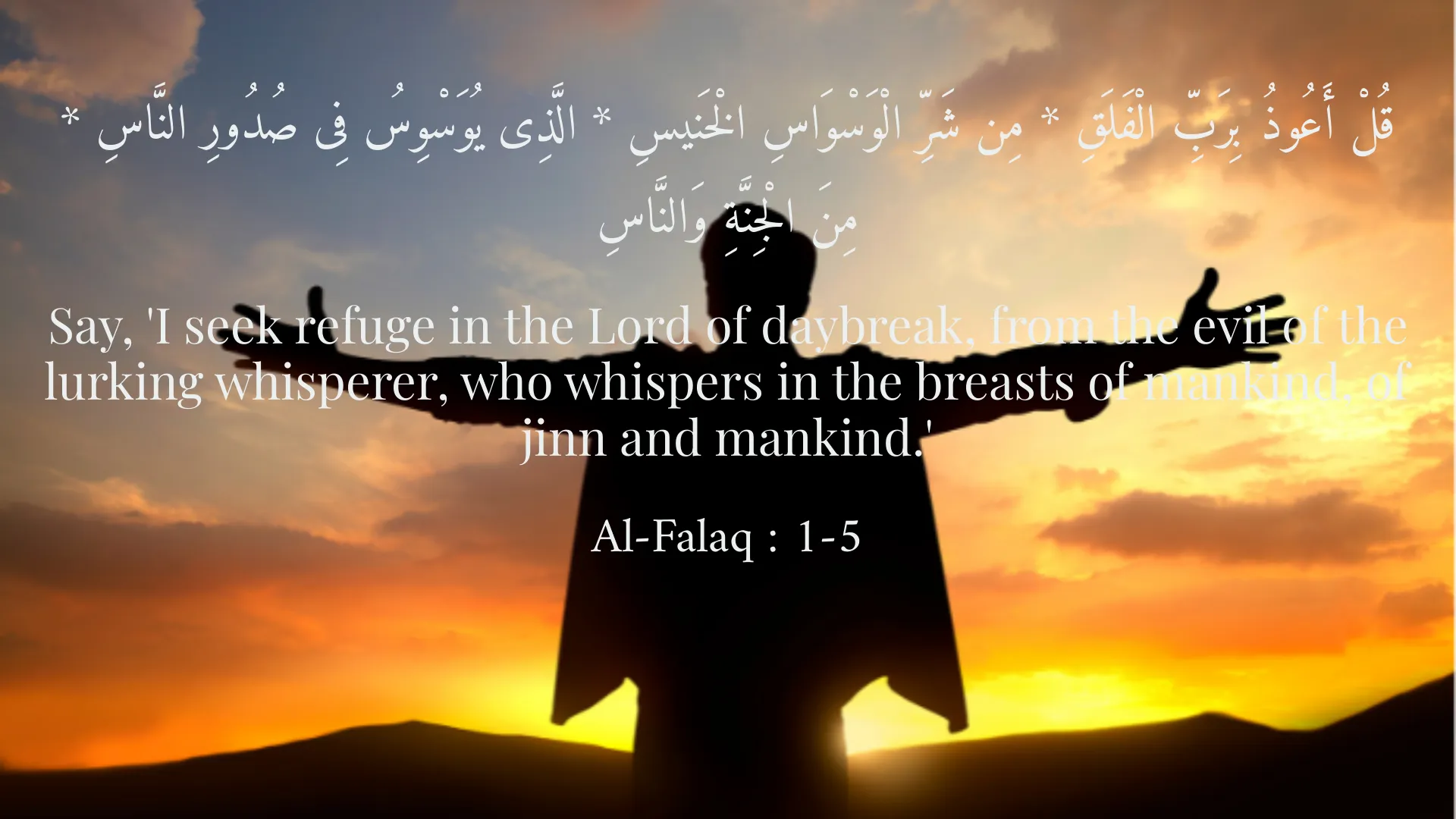
قُلْ أَعُوذُ بِرَبِّ الْفَلَقِ * مِن شَرِّ الْوَسْوَاسِ الْخَنیسِ * الَّذِی يُوَسْوِسُ فِی صُدُورِ النَّاسِ * مِنَ الْجِنَّةِ وَالنَّاسِ
Say, 'I seek refuge in the Lord of daybreak, from the evil of the lurking whisperer, who whispers in the breasts of mankind, of jinn and mankind.'
Al-Falaq : 1-5
يَاأَيُّهَا الَّذِينَ آمَنُوا كُلُوا مِن طَيِّبَاتِ مَا رَزَقْنَاكُمْ وَلَا تَتَّبِعُوا خُطُواتِ الشَّيْطَانِ ۚ إِنَّهُ لَكُمْ عَدُوٌّ مُبِينٌ
O you who have believed, eat from the good things which We have provided for you and be grateful to Allah, if it should be Him that you worship. And do not follow the footsteps of Satan. And whoever follows the footsteps of Satan, indeed, he enjoins what is indecent and unlawful. And if it had not been for the favor of Allah upon you and His mercy.
Al-Baqarah : 168
Short Story
One day, Hasan felt a deep sense of worry and anxiety. He remembered the verses of the Quran and decided to seek help from God. Every night, Hasan prayed and sought refuge from Satan, and after a while, he felt a stronger sense of peace and confidence. He realized that remembering God gave him the strength to face challenges.