Quranic Answer
In the Holy Quran, there is significant emphasis on the role of intentions behind human actions. The concept of intention, or 'niyyah' in Arabic, serves as a cornerstone not only in the practice of Islam but also in the broader tapestry of moral and ethical conduct. Through the lens of the Quran, and particularly in Surah Al-Baqarah, verse 177, it is articulated that mere external actions do not equate to righteousness. Allah explicitly states, 'Righteousness is not that you turn your faces toward the east or the west, but [true] righteousness is in one who believes in Allah, the last day, the Angels, the Scripture, and the prophets.' This verse encapsulates a profound truth: outward actions and displays of piety may lack substance if not rooted in genuine belief and intention. The nature of righteousness is further elaborated upon, moving beyond mere ritualistic practices to encompass a holistic integration of faith into everyday life. It is the inner disposition towards belief in Allah, the acknowledgment of divine accountability, and the commitment to the tenets of faith that truly constitutes righteousness. Thus, the significance of intentions becomes even more pronounced as it affects the authenticity and acceptability of one's actions in the sight of God. To correct one’s intentions implies a re-evaluation of the motivations driving one’s actions. It is an introspective process that calls for individuals to return to their rightful mindset; a mindset that is sincere in its pursuit of Allah’s pleasure. This correction of intention enables a person’s actions to align with spiritual growth and the ultimate goal of drawing nearer to God. Moreover, this theme of correction extends predominantly within the context of acts of worship and good deeds. Each act, regardless of how noble it may appear externally, must be infused with a sincere intention to be genuinely accepted by Allah. In addition to individual acts of worship, the Quran also addresses the social dimension of intentions. For instance, in Surah Al-Hujurat, verse 11, a crucial directive is provided regarding interpersonal relations among believers. Allah cautions, 'O you who have believed, avoid much [negative] assumption. Indeed, some assumption is sin.' Here, the emphasis shifts toward the social implications of intentions. When individuals harbor pure intentions, their actions foster social harmony and positive relationships. Conversely, ill intentions or unkind assumptions can lead to conflicts, misunderstandings, and a general deterioration of communal bonds. Thus, the corrective and purifying role of intentions not only facilitates individual growth but also nurtures collective cohesion among the community of believers. The ramifications of correcting intentions are profound as they hold the potential to redirect human behavior away from pathways of corruption and wrongdoing. Without transparent intentions, even seemingly benevolent actions can inadvertently contribute to discord and chaos. Additionally, the teachings of the Prophet Muhammad (peace be upon him) reinforce the importance of intentions in human conduct. In a well-known hadith, he asserts, 'Actions are judged by intentions.' This critical assertion encapsulates that the spiritual value and reception of every action hinge on the underlying intention. A deed performed with the aim of seeking Allah’s pleasure is inherently more valuable than one done for ulterior motives or personal gain. Therefore, the quest to purify and correct one's intentions becomes not only a personal endeavor but a fundamental principle guiding the religious and moral lives of Muslims. The process of correcting intentions necessitates a continuous commitment to self-reflection and conscious mindfulness in one’s actions. It encourages individuals to frequently engage in self-assessment, questioning the motivations behind their deeds, and striving for sincerity. This discipline acts as a preventative measure against hypocrisy and paves the way for genuine adherence to faith. When individuals develop a habit of scrutinizing their intentions, they are likely to cultivate deeper connections with their faith and the divine. Moreover, achieving a state of purity in intentions leads to a more fulfilling and enriched experience of worship. Instead of merely performing acts of worship out of obligation, a believer who corrects their intentions approaches these acts as opportunities to connect with Allah and seek His mercy. This mindset fosters a sense of spiritual intimacy and profound gratitude, positioning worship as a dynamic interaction rather than a static routine. On a broader societal level, the emphasis on correct intentions empowers communities to promote ethics and morality in various aspects of life, ranging from business transactions to family relations. In essence, when a group of individuals operates under the principle of heartfelt intentions, they create an atmosphere conducive to trust, empathy, and solidarity. In conclusion, the significance of intentions in Islam cannot be overstated. From individual actions to communal relationships, the purity of intention serves as a guiding principle that shapes behavior, fosters righteousness, and nurtures spiritual growth. The Quran's teachings and the Prophet’s hadith highlight that correcting intentions is not merely an obligatory act but a fundamental aspect of cultivating a wholesome character. Therefore, Muslims are encouraged to continually refine their intentions, acting with sincerity for the pleasure of Allah, thereby enhancing their religious experience and solidifying their connection to the divine. Ultimately, the journey of intention correction aligns the believer with the core values of faith, facilitating personal transformation and contributing to a more virtuous society.
Related Verses
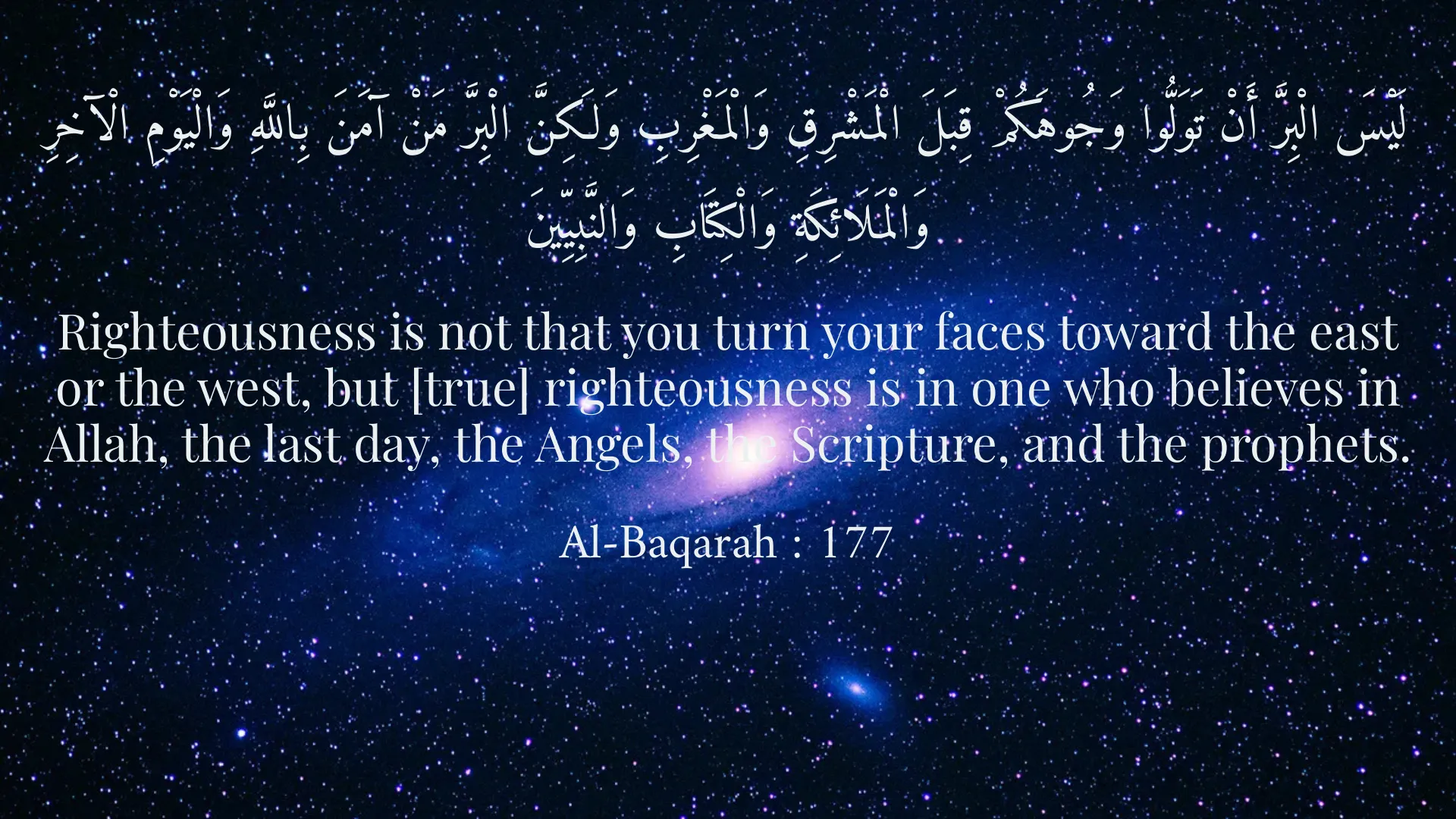
لَيْسَ الْبِرَّ أَنْ تَوَلُّوا وَجُوهَكُمْ قِبَلَ الْمَشْرِقِ وَالْمَغْرِبِ وَلَكِنَّ الْبِرَّ مَنْ آمَنَ بِاللَّهِ وَالْيَوْمِ الْآخِرِ وَالْمَلَائِكَةِ وَالْكِتَابِ وَالنَّبِيِّينَ
Righteousness is not that you turn your faces toward the east or the west, but [true] righteousness is in one who believes in Allah, the last day, the Angels, the Scripture, and the prophets.
Al-Baqarah : 177
يَاأَيُّهَا الَّذِينَ آمَنُوا اجْتَنِبُوا كَثِيرًا مِّنَ الظَّنِّ ۚ إِنَّ بَعْضَ الظَّنِّ إِثْمٌ ۖ وَلَا تَجَسَّسُوا وَلَا يَغْتَب بَّعْضُكُمْ بَعْضًا
O you who have believed, avoid much [negative] assumption. Indeed, some assumption is sin. And do not spy or backbite one another.
Al-Hujurat : 11
Short Story
One day, a man named Hasan was dissatisfied with his life and felt he could not devote himself well to his worship. He went to a religious scholar and sought guidance. The scholar told him, 'Hasan, you must correct your intentions. Every action performed with a good and pure intention is rightly accepted.' Hasan reflected on this point and decided to purify his intention for worship and daily tasks. Over time, Hasan noticed that his life became more beautiful and filled with peace.