Quranic Answer
The Nature of God's Mercy in the Holy Quran The concept of mercy holds a profound place in the teachings of the Holy Quran. Not only does it define the character of God, but it also serves as a source of hope and inspiration for believers. The representations of God's mercy in the Quran indicate that it is an essential part of His relationship with humanity, emphasizing forgiveness and redemption regardless of the magnitude or frequency of sins committed. This article explores the significance of God's mercy in the Quran, examining various verses that underscore the importance of seeking forgiveness and maintaining hope in divine compassion, particularly in light of human fallibility. One of the most striking verses that encapsulates this theme is found in Surah Az-Zumar (39:53), where Allah explicitly encourages those who have strayed from the righteous path. The verse states: "O My servants who have believed, do not despair of the mercy of Allah. Indeed, Allah forgives all sins." This verse serves as a beacon of hope for every believer who may feel overwhelmed by their transgressions. It reassures them that no matter how far they may have deviated from the righteous way, God's mercy is always within reach. The exhortation not to despair is fundamental to the human experience; mistakes and misdeeds are inherent to our nature. The very essence of human existence is riddled with imperfections, and while the Quran acknowledges this truth, it simultaneously offers a pathway to redemption. Believers are encouraged to understand that God's mercy is vast, encompassing all realms of sin. When faced with guilt and remorse, one must not succumb to hopelessness, for despair itself can lead to even greater distance from God. Instead, individuals are invited to return, to repent, and to seek forgiveness, reinforcing the notion that God’s mercy is always present, ready to envelop those who seek it sincerely. Furthermore, the nature of forgiveness in Islam is beautifully elaborated in Surah Al-Imran (3:135): "And those who, when they commit an immorality or wrong themselves by sin, remember Allah and seek forgiveness for their sins." This verse highlights two critical aspects: the human tendency to err and the necessity of remembering God, especially in our moments of weakness. The act of remembering Allah involves not only the acknowledgment of one's sins but also an active pursuit of His forgiveness. God’s willingness to forgive is intrinsically linked to the believer's own effort in recognizing their faults, demonstrating a profound partnership in the process of spiritual growth and repair. In Islam, the act of seeking forgiveness is not merely a ritualistic declaration but a heartfelt plea for mercy. It is an acknowledgment of one’s shortcomings and a sincere commitment to rectification and reformation. The Quran teaches that when a believer confesses their sins and earnestly seeks repentance, they should do so with the understanding that God's mercy is unconditional and encompassing. This element of hope is vital for the psychological and spiritual welfare of the individual. It cultivates inner peace and invigorates faith, creating a foundation for a renewed connection with God. Moreover, the impact of believing in and hoping for God's mercy permeates every aspect of a Muslim's life. It encourages a spirit of resilience in the face of life’s challenges, fostering an attitude characterized by optimism and trust in divine wisdom. When believers internalize the understanding that their God is merciful and forgiving, it cultivates a forgiving attitude toward themselves and others. This, in turn, enhances community dynamics, promoting a culture of compassion and understanding amidst human imperfections. The repeated emphasis on mercy within the Quran serves to reaffirm the idea that every soul is valuable and worthy of forgiveness. It dismantles the notion of a punitive God and instead presents a deity who is intimately concerned with the welfare of His creations. Stories within the Quran, such as those of Prophet Jonah and Prophet Adam, exemplify God's readiness to forgive and accept those who return to Him after straying. These narratives underscore the transformative power of repentance and highlight God’s unwavering love for His servants. Furthermore, the teachings of the Prophet Muhammad (peace be upon him) echo the Quranic messages about mercy and forgiveness. He actively lived out the principles of compassion and advocated for mercy in all interactions. Time and again, he demonstrated that one of the essential elements of a believer's life is to embody mercy towards oneself and towards others. The Prophet once said, "The merciful are shown mercy by the Merciful. Be merciful on earth, and you will be shown mercy from above." This encapsulates the reciprocal relationship between mercy among humans and the mercy of God, enhancing the moral fabric of society. In conclusion, hope in God's mercy is not a passive state of being but an essential aspect of a believer’s journey. It embodies the understanding that while humans are fallible, God's love and mercy are infinite. Encouragement to seek forgiveness fosters a proactive approach to personal growth and spiritual development. By embracing this message, individuals can experience profound changes in their lives, finding solace in the knowledge that they are never beyond the reach of God's compassion. Emphasizing mercy fosters a deeper relationship with the Creator, inspiring believers to strive for righteousness while navigating through their earthly challenges with faith and hope. Thus, the concept of mercy in the Quran serves as a powerful catalyst for personal transformation, societal harmony, and spiritual fulfillment, ultimately guiding humanity towards a more empathetic and understanding existence.
Related Verses
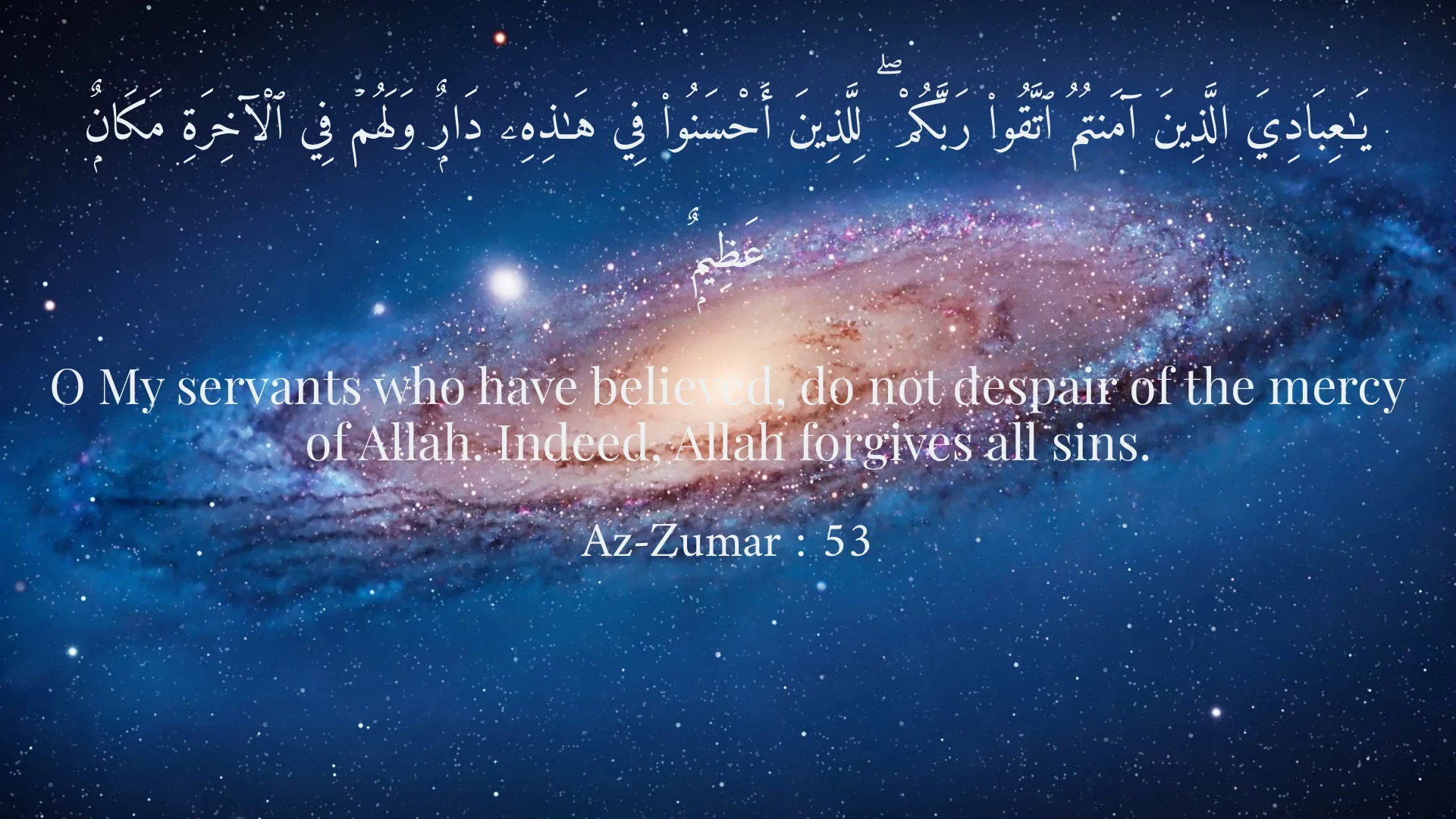
يَـٰعِبَادِيَ الَّذِينَ آمَنتُمُ ٱتَّقُوا۟ رَبَّكُمْ ۖ لِلَّذِينَ أَحْسَنُوا۟ فِي هَـٰذِهِۦ دَارٌۭ وَلَهُمۡ فِي ٱلْآخِرَةِ مَكَانٌۭ عَظِيمٌۭ
O My servants who have believed, do not despair of the mercy of Allah. Indeed, Allah forgives all sins.
Az-Zumar : 53
وَالَّذِينَ إِذَا فَعَلُوا۟ فَاحِشَةً أَوْ ظَلَمُوا۟ أَنفُسَهُمْ ذَكَرُوا۟ ٱللَّهَ فَٱسْتَغْفَرُوا۟ لِذُنُوبِهِمۡ ۖ وَمَن يَغْفِرُ ٱلذُّنُوبَ إِلَّا ٱللَّهُ ۗ وَلَم يُصِرُّوا۟ عَلَىٰ مَا فَعَلُوا۟ وَهُمْ يَعْلَمُونَ
And those who, when they commit an immorality or wrong themselves by sin, remember Allah and seek forgiveness for their sins.
Al-Imran : 135
Short Story
One day, a young man named Ehsan was feeling hopeless in his heart. He thought about his sins and felt that he had no way back to God. However, one day after hearing a verse from the Quran, light entered his heart. He realized that God does not reject any sinner and is always ready to forgive. Ehsan decided to repent and return to God. Shortly after, he felt peace and happiness and became certain of God's mercy.