Quranic Answer
Hoping for God's mercy is a central tenet of the Islamic faith, forming the cornerstone of a Muslim's relationship with their Creator. The concept of divine mercy pervades the teachings of the Quran and the traditions of the Prophet Muhammad, serving as a powerful source of comfort and hope for millions of believers around the world. In understanding the importance of God's mercy, we delve deeper into the numerous verses in the Holy Quran that emphasize this critical aspect of faith, reflecting on its significance in the daily lives of Muslims and its role in shaping their worldview. One of the most poignant illustrations of God's mercy can be found in Surah Az-Zumar, verse 53, where Allah addresses His believers with profound compassion: 'O My servants who have believed, do not despair of the mercy of Allah. Indeed, Allah forgives all sins; indeed, it is He who is the Forgiving, the Merciful.' This Quranic verse serves as a powerful affirmation that no matter how grave an individual's sins may be, they should never lose hope in the boundless mercy of Allah. This emphasizes that God's compassion knows no bounds, and His doors of forgiveness are always open for those who seek Him earnestly. The importance of maintaining hope in God's mercy cannot be overstated. In a world rife with challenges and injustices, believers often find themselves navigating through trials that test their faith and resilience. Hope in God's mercy provides solace during times of despair, reminding us that no predicament is beyond redemption. It serves as a beacon of light in the darkest hours, empowering individuals to rise above their circumstances with the strength that faith inspires. The assurance that Allah is always ready to forgive brings peace to troubled hearts, allowing believers to navigate their flaws and shortcomings while striving on the path of righteousness. Moreover, in Surah Ghafir, verse 7, a similar theme arises, praising those who harbor faith in Allah and cling to the hope of His mercy. This verse elucidates the idea that hope in divine mercy is not just encouraged; rather, it is deemed a virtue, a reflection of a believer's understanding of God's nature. Those who trust in Allah’s mercy are often described as having a strong and resilient spirit, capable of enduring adversities with grace and patience. Additionally, in Surah Al-Mu'minun, verse 118, believers are given a heartfelt promise: 'And say, "My Lord, I have entered into you by a submission of a self that is convinced."' This expression of submission and faith is interconnected with the aspiration for Allah's mercy, illuminating the spiritual path toward forgiveness and acceptance. The practice of prayer in Islam is deeply infused with supplications seeking mercy, as believers consistently turn to Allah, seeking forgiveness for their misdeeds, and expressing their dependence on His benevolence. The act of hoping for God's mercy further encourages a culture of compassion, kindness, and forgiveness among Muslims. When individuals recognize their own vulnerabilities and shortcomings, they become more empathetic toward the struggles of others. This understanding fosters a sense of community, as believers are urged to aid one another, leveraging their shared aspiration for divine mercy to build supportive networks. In essence, each believer serves as both a seeker of Allah's mercy and a conduit for distributing compassion, thereby enriching the lives of others around them. The psychological benefits of holding onto hope in God’s mercy are also profound. Many scholars and psychologists emphasize the impact of hope on mental well-being. Those who aspire to receive God’s mercy tend to develop a positive outlook, as their faith provides a framework for interpreting life events. Research has indicated that individuals with a strong sense of hope are more likely to experience lower levels of anxiety and depression, better coping strategies, and overall improved life satisfaction. Hope in God's mercy, therefore, acts as a protective factor against despair and disillusionment, fostering a healthier, happier existence. Furthermore, hope in divine mercy is not a license to sin or neglect one’s duties as a believer. Rather, it is an invitation to strive for continuous improvement and repentance. In recognizing that Allah is forgiving, believers are motivated to persist in their efforts to align their lives with the teachings of Islam. The understanding that mistakes and missteps are part of the human experience allows for a more compassionate approach to personal growth, where believers can learn from their failures without falling prey to self-deprecation. The integration of hope for God's mercy into daily life cultivates a sense of purpose and direction. It encourages believers to engage in acts of worship, charitable deeds, and good conduct, reinforcing the notion that while God's mercy is vast, so too is the responsibility of believers to embody the principles of faith in their actions. This reciprocal relationship between hope and action fosters a meaningful existence, propelling individuals toward spiritual fulfillment and a closer connection to their Creator. In conclusion, hoping for God's mercy is an indispensable aspect of a Muslim's faith, profoundly influencing their worldview and interactions with others. The numerous references to divine mercy throughout the Quran underscore its centrality in Islamic teachings, providing comfort and reassurance to believers. Through embracing this vital principle, Muslims can navigate life's challenges with resilience and cultivate a community rooted in compassion and forgiveness. Ultimately, the hope in God's mercy not only enriches the personal spiritual journey of believers but also enhances the collective moral fabric of society, offering a pathway toward a more meaningful and spiritually fulfilling life.
Related Verses
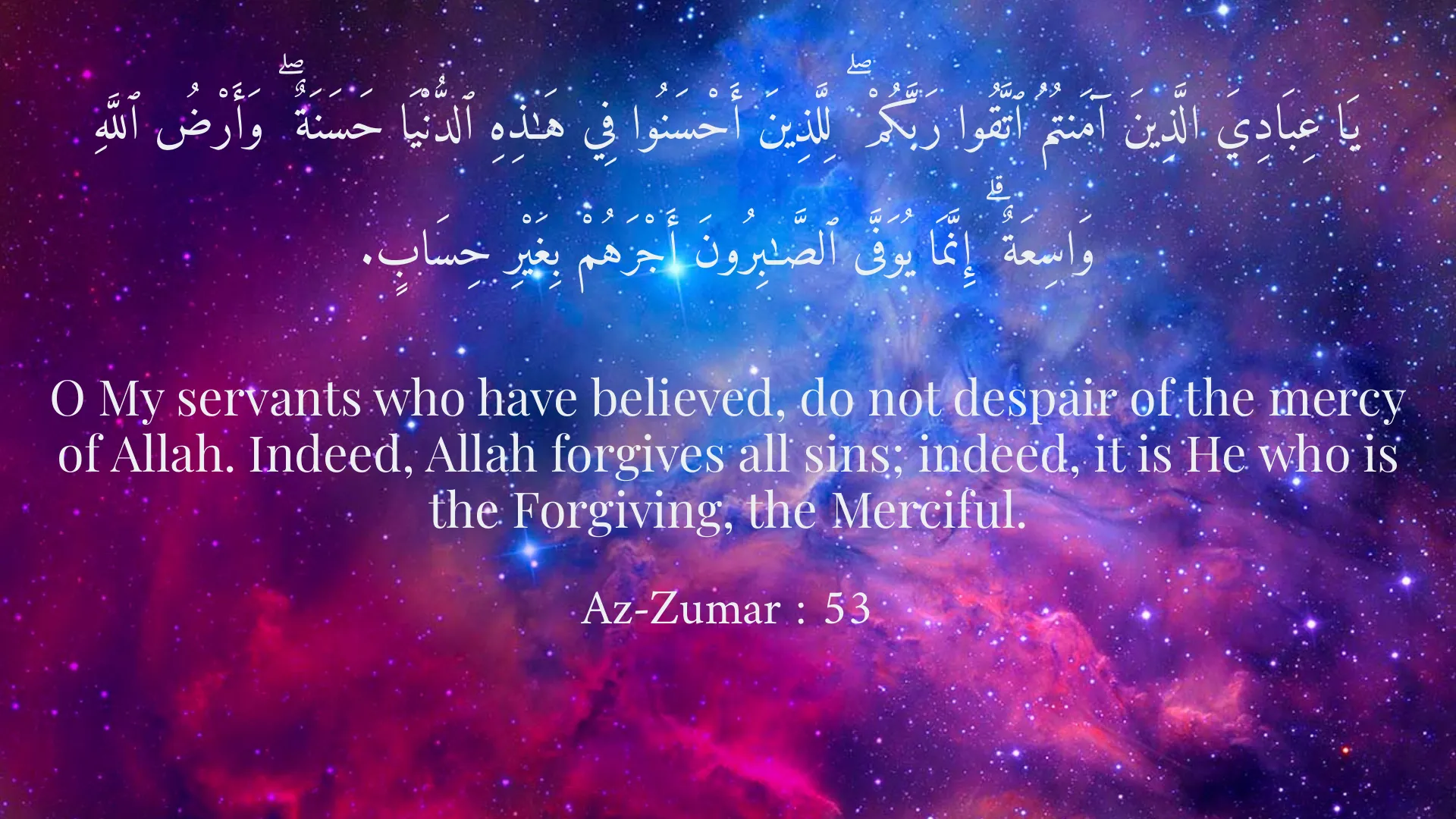
يَا عِبَادِيَ الَّذِينَ آمَنتُمُ ٱتَّقُوا رَبَّكُمْ ۖ لِلَّذِينَ أَحْسَنُوا فِي هَـٰذِهِ ٱلدُّنْيَا حَسَنَةٌ ۖ وَأَرْضُ ٱللَّهِ وَاسِعَةٌ ۗ إِنَّمَا يُوَفَّى ٱلصَّـٰبِرُونَ أَجْرَهُمْ بِغَيْرِ حِسَابٍ.
O My servants who have believed, do not despair of the mercy of Allah. Indeed, Allah forgives all sins; indeed, it is He who is the Forgiving, the Merciful.
Az-Zumar : 53
الَّذِينَ يَحْمِلُونَ ٱلْعَرْشَ وَمَن حَوْلَهُ يُسَبِّحُونَ بِحَمْدِ رَبِّهِمْ وَيُؤْمِنُونَ بِهِ ۖ وَيَسْتَغْفِرُونَ لِلَّذِينَ آمَنُوا ۚ رَبَّنَا وَأَدْخِلْهُمْ جَنَـّـٰتِ عَدْنٍ تَجْرِي مِن تَحْتِهَا ٱلْأَنْهَـٰرُ يَوْمَ لَا يُخْزِي ٱللَّهُ ٱلنَّبِيَّ وَٱلَّذِينَ آمَنُوا مَعَهُ ۚ نُورُهُمْ يَسْعَىٰ بَيْنَ أَيْدِيهِمْ وَبِأَيْمَانِهِمْ ۖ قَالُوا رَبَّنَا أَتْمِمْ لَنَا نُورَنَا وَٱغْفِرْ لَنَا ۖ إِنَّكَ عَلَىٰ كُلِّ شَيْءٍ قَدِيرٌ.
Allah grants those who have faith under His mercy and forgiveness and brings them to gardens of paradise on the Day of Judgment.
Ghafir : 7
وَقُل رَبِّ اغْفِرْ وَارْحَمْ وَأَنتَ خَيْرُ ٱلرَّاحِمِينَ.
And say, 'My Lord, forgive and have mercy, for You are the best of the merciful.'
Al-Mu'minun : 118
Short Story
Once upon a time, a young man named Ali was searching for peace in his soul. He felt unrest within himself until he turned to the Quran and read the verses about God's mercy. From that day on, he decided to never lose hope and to always hope in God's mercy. Not only did Ali find peace, but he also became a source of hope for others.