Quranic Answer
The Holy Quran, as the sacred text of Islam, serves as a guiding beacon for millions of Muslims around the world. Its verses impart divine wisdom that transcends time and place, effectively addressing the moral and spiritual dimensions of human existence. Among the many themes presented in the Quran, the paramount importance of piety and a God-fearing demeanor stands out distinctly. This concept emerges not merely as a directive for public behavior but rather as an intrinsic element of a believer's life, extending into the depths of solitude. In Surah Al-Baqarah, verse 177, Allah articulates a profound message regarding the essence of righteousness: 'Righteousness is not that you turn your faces toward the east or the west, but (true) righteousness is in one who believes in Allah, the Last Day, the Angels, the Book, and the Prophets.' This verse serves as a lens through which we can explore the multifaceted nature of piety. It suggests that mere ritualistic practices, such as outward displays of faith or adherence to specific religious customs, do not encompass the true nature of righteousness. Rather, it is the internal belief in Allah and commitment to His guidance that truly defines a righteous individual. The implication of this verse extends to the observation that piety is not restricted to specific times or situations. It reiterates the idea that one’s relationship with Allah is tested in various circumstances, including when they are alone. The essence of being pious in solitude lies in the purity of one's intention. When a person remembers Allah in the quiet of their own space, free from judgment or expectation from others, they create an environment for sincere worship. In this solitude, they are afforded the opportunity to engage in self-reflection, examine their intentions, and align their actions with their faith. This internal struggle against temptation and the constant endeavor to maintain righteousness indicate a deep and abiding commitment to being faithful to Allah. The Quran emphasizes the importance of invoking Allah even in solitude, highlighting the value of remembrance of Allah (Dhikr). Such practice helps to fortify one's faith, offering solace and guidance amid life’s trials and tribulations. In Surah Al-Imran, verse 102, Allah admonishes believers, saying: 'O you who have believed, fear Allah and be with those who are true.' This verse underscores the vital connection between piety, honesty, and community. Fear of Allah is demonstrated through authentic behavior and the pursuit of truth, both in public and private life. To be with those who are true affirms the importance of surrounding oneself with righteous company, further fortifying one’s own faith. In the context of solitude, remaining true to oneself and to Allah is particularly critical. The moments spent alone are a critical juncture where one can either succumb to negativity or cultivate a deep-rooted sense of spirituality. When believers make the conscious choice to uphold their faith even when no one is watching, they encapsulate the essence of sincerity. In such instances, the individual can engage in acts of worship, such as prayer, meditation, or reading the Quran, with an open heart and an undivided spirit. This genuine form of worship becomes a powerful source of strength, allowing the believer to connect with Allah on a deeper level. Moreover, this connection is further solidified by the awareness that solitude can serve as a mirror reflecting one’s true self. The absence of distractions and external influences allows individuals to confront their weaknesses, seek forgiveness, and strive for improvement. When faced with the choices to engage in sinful actions or to pursue righteousness in isolation, the decision to uphold piety verifies a person's commitment to living in accordance with their faith principles. Every act of resisting temptation in solitude builds a stronger spiritual foundation, urging believers toward a continual journey of self-purification and improvement. The Quran encourages this intrinsic relationship between a believer and their Creator, especially in moments of solitude. It is in these moments that believers can truly find themselves, contemplate their life's purpose, and reaffirm their faith's significance. The practice of remembering Allah in solitude nurtures the soul, enveloping it in peace and tranquility, which is often elusive in the hustle and bustle of worldly life. Additionally, the spiritual growth fostered through solitude encourages believers to approach their social interactions with grace and piety. A person who has cultivated a strong spiritual presence in solitude will naturally carry that aura into public life. Their dealings with others become a reflection of their relationship with Allah, promoting honesty, compassion, and integrity. As such, the fruits of being pious in solitude extend beyond the self, contributing to the betterment of society as a whole. Furthermore, as individuals practice piety in solitude, they become more adept at recognizing the manifestations of Allah’s signs in the world around them. These signs can serve as reminders of His greatness and mercy, reinforcing the believer's commitment to righteousness. With every prayer performed alone and every remembrance uttered in quietude, the believer cultivates a discernible sense of gratitude and humility, essential components of a faithful life. In conclusion, the teachings of the Holy Quran offer timeless guidance on the paramount importance of maintaining piety in both public and private realms. The verses reminding believers to remember Allah in solitude highlight a profound aspect of true spirituality. A person’s integrity, sincerity, and dedication to righteousness can be tested significantly when faced with the silence of solitude. However, these quiet moments serve as an opportunity for growth, purification, and renewal of faith. As believers seek to embody the values of honesty and truthfulness, both in solitude and community, they ultimately cultivate a fulfilling, meaningful relationship with Allah that enriches their spiritual journey and uplifts those around them. The call for piety transcends mere actions; it demands a heartfelt commitment to live in accordance with divine guidance across every aspect of life, fostering a legacy of faith that radiates through society.
Related Verses
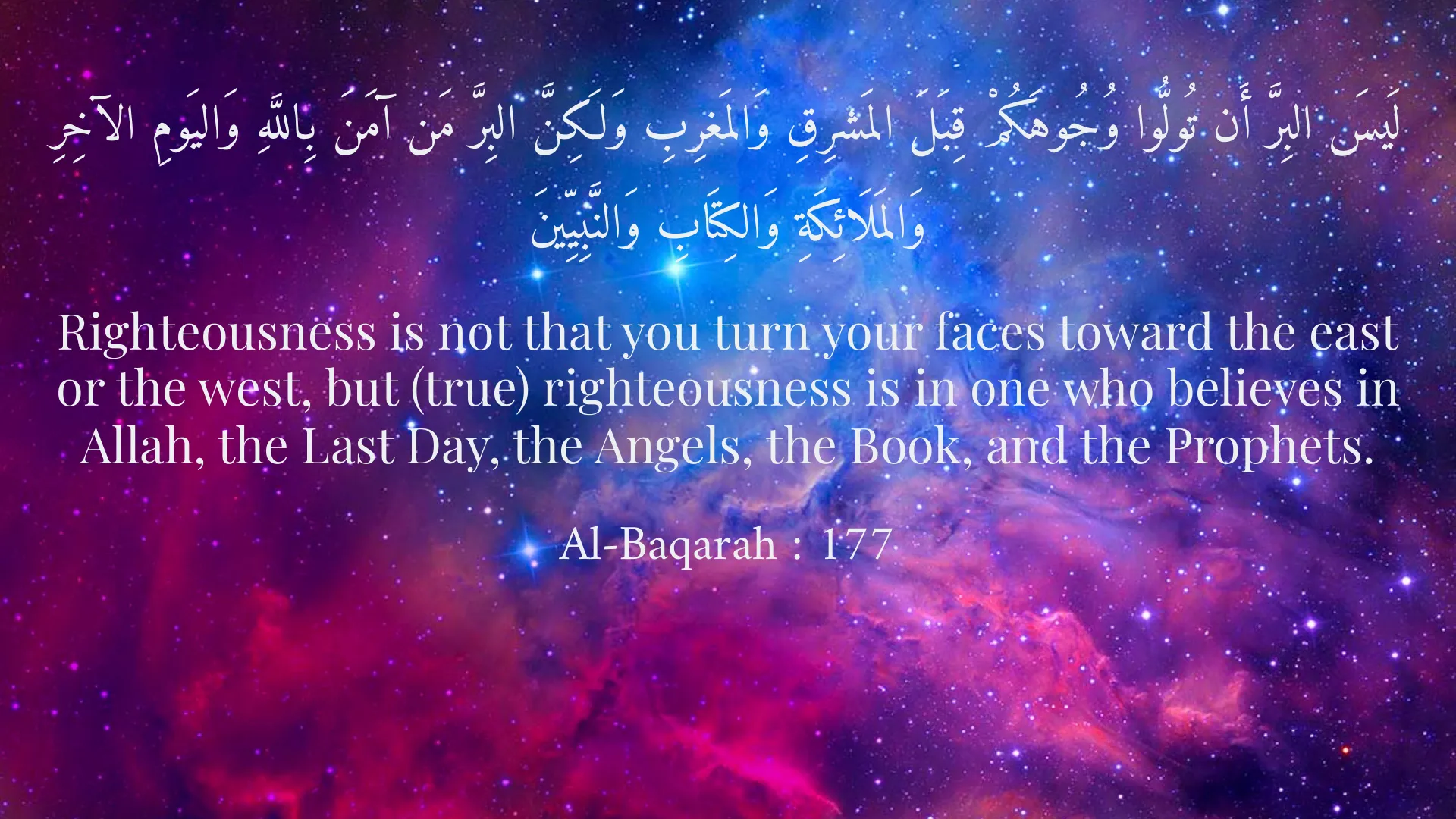
لَيسَ البِرَّ أَن تُولُّوا وُجُوهَكُمْ قِبَلَ المَشرِقِ وَالمَغرِبِ وَلَكِنَّ البِرَّ مَن آمَنَ بِاللَّهِ وَاليَومِ الآخِرِ وَالمَلَائِكَةِ وَالكِتَابِ وَالنَّبِيِّينَ
Righteousness is not that you turn your faces toward the east or the west, but (true) righteousness is in one who believes in Allah, the Last Day, the Angels, the Book, and the Prophets.
Al-Baqarah : 177
يَا أَيُّهَا الَّذِينَ آمَنُوا اتَّقُوا اللَّهَ وَكُونُوا مَعَ الصَّادِقِينَ
O you who have believed, fear Allah and be with those who are true.
Al-Imran : 102
Short Story
One day, a young man named Ali entered a moment of reflection in his solitude and felt closer to Allah. While praying and worshipping, he recalled the verses of the Quran. Ali resolved to dedicate time each day to remember Allah and refrain from sins. As time passed, Ali felt a greater sense of peace and confidence within his heart, and his life began to flourish.