Quranic Answer
The Holy Quran is a guiding beacon for Muslims, illuminating the path toward righteousness and encouraging individuals to engage in good deeds. The significance of actively doing good deeds is emphasized throughout the Quran, revealing a profound understanding of human morality and the essence of compassion. One of the most poignant verses highlighting this importance is found in Surah Al-Imran. Allah states in verse 92: "You will never attain righteousness until you spend from that which you love." This verse lays the groundwork for understanding that true righteousness is not merely about fulfilling obligations but involves giving and sharing from what one holds dear. The expression of love within good deeds reinforces the importance of intention behind actions. It is made clear that genuine good deeds emerge from a place of affection and generosity rather than coerced obligation. Moreover, this proactive approach to performing good deeds speaks to a deeper understanding of kindness and human compassion. When individuals readily engage in charitable acts, they not only enhance their personal character but also enrich the fabric of society in which they live. Altruism is often birthed from compassion for others and a recognition of shared humanity. The Quran underscores this further in Surah Al-Baqarah, where in verse 261, Allah draws a vivid analogy concerning charity: "The example of those who spend their wealth in the way of Allah is like a seed which sprouts seven spikes; in every spike, there are a hundred grains." This analogy beautifully illustrates the exponential benefits of charitable actions. The act of giving is thus transformed into a dynamic force, capable of multiplying blessings and rewards. Just as a single seed has the potential to flourish into a bountiful harvest, one's good deeds can yield significant positive impacts not only for the giver but also for the recipients. Being proactive in good deeds entwines one's individual interests with communal benefits. The Quran constantly encourages believers not just to give but to do so willingly and abundantly, reflecting a shared responsibility towards society. Allah’s guidance emphasizes that spreading kindness and generosity does not merely serve personal interests but also catalyzes societal growth. This notion is further reinforced in Surah An-Nisa, verse 36, where Allah emphasizes the importance of goodness towards parents, relatives, orphans, and those in need. The directive to care for one’s family and community encapsulates the essence of social responsibility, illustrating how good deeds are crucial to developing healthy relationships and a supportive network. Understanding the societal imperatives of good deeds reinforces the moral fabric of communities. Engaging in acts of kindness not only helps those on the receiving end but also fosters an environment of love and solidarity. When individuals are proactive in their charitable efforts, they create a ripple effect, inspiring others to partake in acts of generosity. This interconnectedness reflects the idea that when one thrives, others can too. As believers, performing good deeds carries a significant spiritual weight. When individuals actively seek opportunities to do good, they not only earn the pleasure of Allah but also enhance their standing in the eyes of society and themselves. The nurturing of one’s character through the lens of benevolence has a transformative effect on hearts and minds, guiding them toward a more righteous path. The Quran presents a holistic understanding of good deeds, illustrating that they are not limited to mere actions but are intrinsically linked to intentions and personal growth. In pursuit of righteousness, the importance of good deeds cannot be understated. When individuals commit themselves to acts of kindness, they are not only improving their own lives but also contributing to the betterment of the world around them. This blend of personal fulfillment and communal responsibility encapsulates the essence of a life lived in accordance with divine guidance. Ultimately, performing good deeds serves to elevate one's status with Allah while also paving the way for eternal salvation on the Day of Resurrection. The Quran teaches that it is through our good actions, fueled by love and compassion, that we can strive for spiritual growth and meaningful connections within our communities. In conclusion, the significance of doing good deeds within the framework of the Quran highlights the profound relationship between individual actions and broader societal impacts. This symbiotic relationship encourages not only personal development but a collective advancement towards a compassionate and just society.
Related Verses
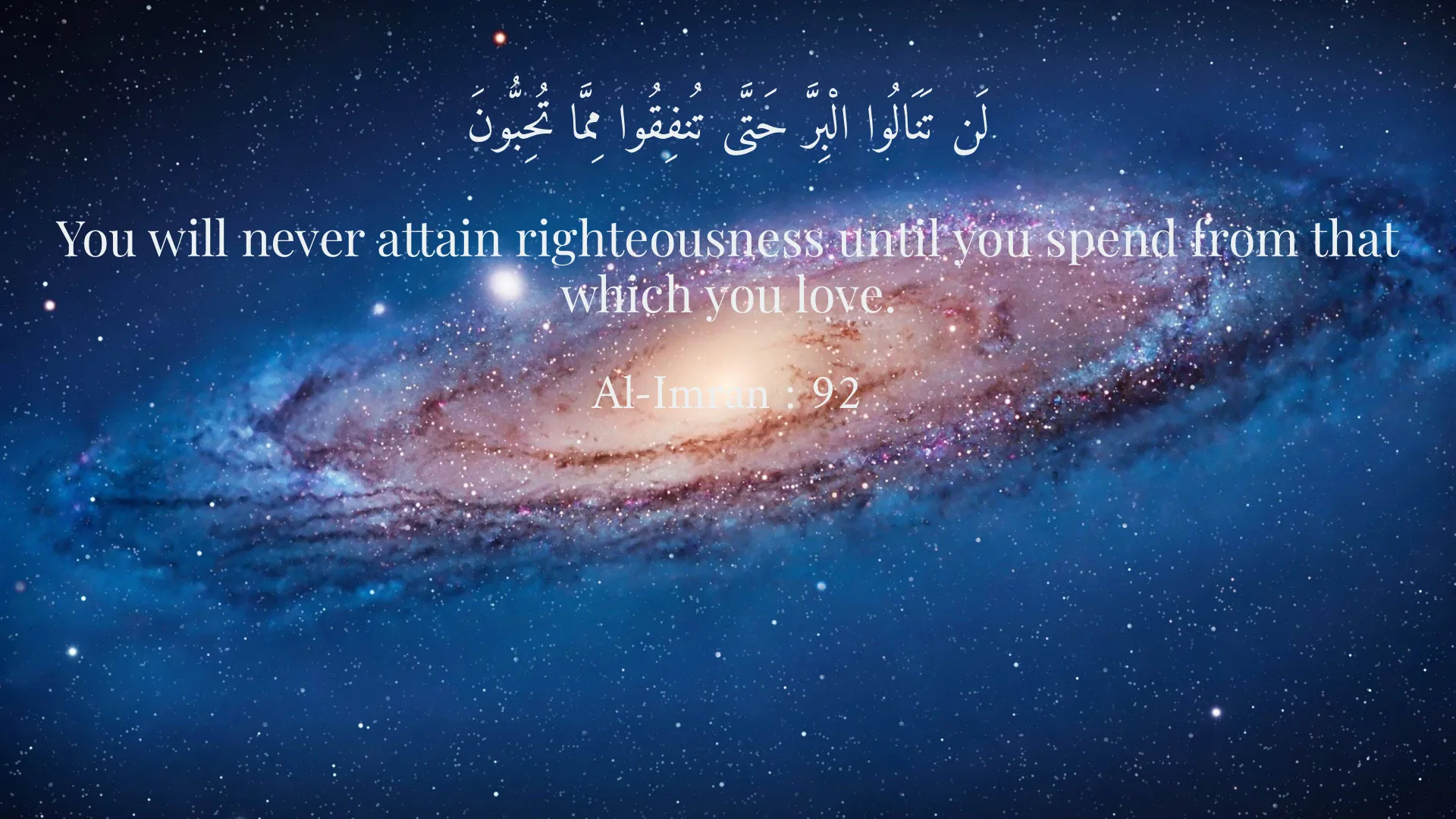
لَن تَنَالُوا الْبِرَّ حَتَّى تُنفِقُوا مِمَّا تُحِبُّونَ
You will never attain righteousness until you spend from that which you love.
Al-Imran : 92
مَثَلُ الَّذِينَ يُنفِقُونَ أَمْوَالَهُمْ فِي سَبِيلِ اللَّهِ كَمَثَلِ حَبَّةٍ أَنبَتَتْ سَبْعَ سُنبُلَاتٍ فِي كُلِّ سُنبُلَةٍ مِئَةُ حَبَّةٍ
The example of those who spend their wealth in the way of Allah is like a seed which sprouts seven spikes; in every spike there are a hundred grains.
Al-Baqarah : 261
وَاعْبُدُوا اللَّهَ وَلَا تُشْرِكُوا بِهِ شَيْئًا وَبِالْوَالِدَيْنِ إِحْسَانًا
And worship Allah and associate nothing with Him, and to parents, good treatment.
An-Nisa : 36
Short Story
One day, a young man named Omid went to his brother's house to help him. He decided to assist him in his tasks and found that extending a helping hand to others brought a wonderful feeling in his heart. After this experience, he makes it a point to be proactive in good deeds every day, feeling peace and joy in his life.