Quranic Answer
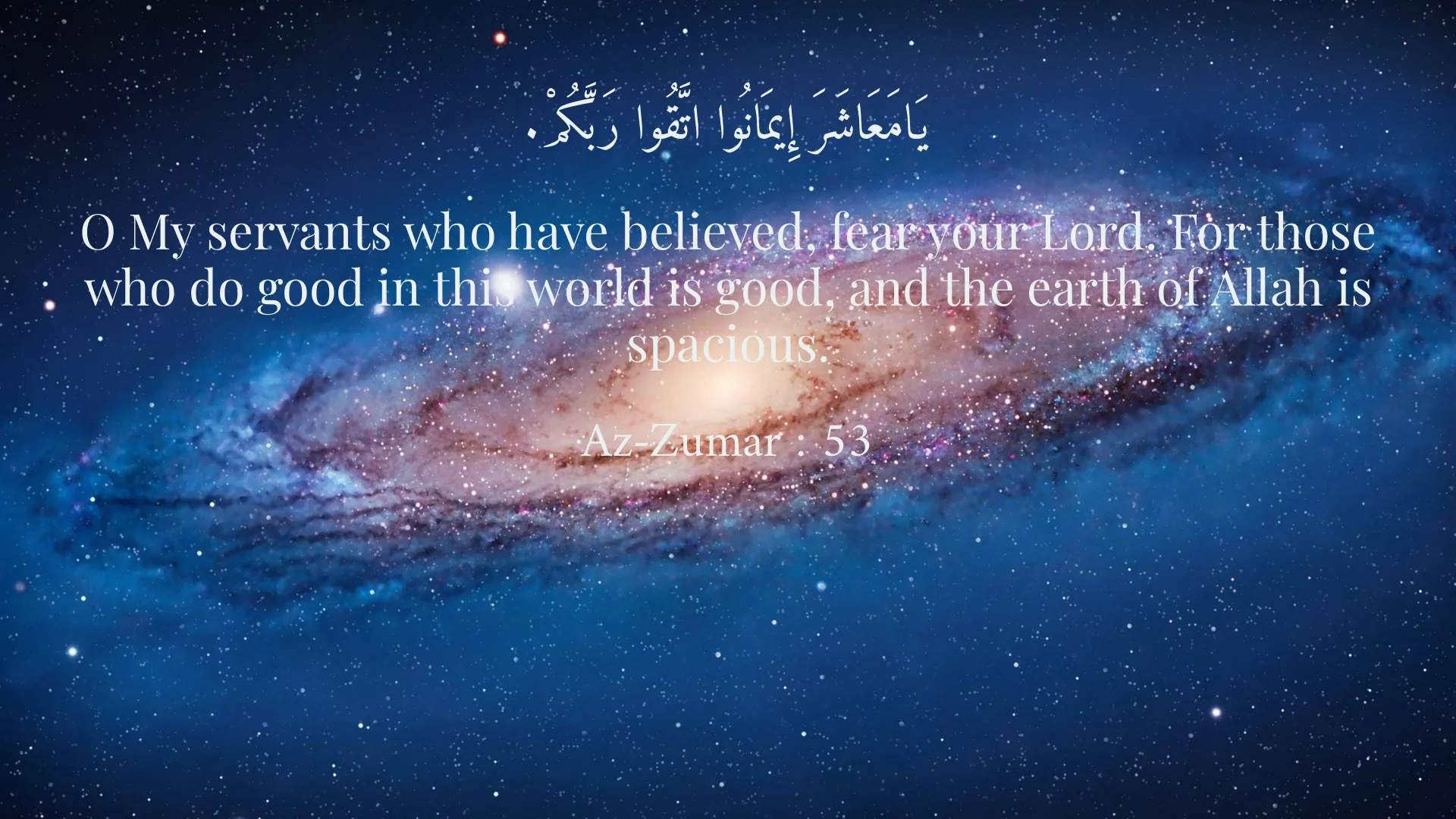
Believing in God's promises is an essential necessity for every Muslim. The significance of such beliefs is profoundly illustrated in the Holy Quran, where God's promises and assurances serve as a testament to His infinite power and mercy. For Muslims, these texts are not mere words; they are lifelines that provide hope, guidance, and a framework for understanding the experiences of life. The principles embedded within these verses encourage believers to cultivate steadfastness in their faith, even amidst the challenges they may encounter throughout their lives. In Surah Az-Zumar, verse 53, Allah proclaims, 'O My servants who have believed, fear your Lord. For those who do good in this world is good, and the earth of Allah is spacious. Indeed, the patient will be given their reward without account.' This verse poignantly reminds us that no sin is greater than God's mercy and forgiveness, showcasing His unconditional love and compassion towards His believers. The essence of this verse lies in its invitation to believers to turn towards Allah in faith and humility, recognizing their shortcomings while leaving behind an unyielding reliance on divine forgiveness. The concept of mercy is central in the teachings of Islam, as it reflects God's essence and relationship with humanity. Believing in God's promises fosters hope and confidence in a positive outcome. This foundational principle serves as a bulwark against despair and hopelessness, particularly in trying times. When believers face adversity—whether it be personal, professional, or spiritual—reminding oneself of divine promises can act as a source of comfort and strength. Believing in God's mercy equips believers to tackle life’s challenges with a resilient spirit, bolstered by the understanding that they are not alone; God’s grace is perpetually available. Moreover, the beauty of God's promises is further captured in Surah Al-Baqarah, verse 286, where Allah assures, 'Allah does not burden a soul beyond that it can bear.' This affirmation emphasizes the fundamental principle that Allah's knowledge and understanding of His creation are profound and limitless. Every trial and tribulation a person encounters has been assessed through divine wisdom, tailored to their capacities and resilience. This verse encourages believers to approach their hardships with patience and faith, trusting that Allah is aware of their struggles and has equipped them with the strength to endure. In an increasingly tumultuous world, where anxiety and uncertainty can often overshadow the human experience, the belief in God’s promises serves as a beacon of light and guidance. This faith in divine assurances nurtures a spiritually healthy mindset, encouraging believers to cultivate an attitude of gratitude. Gratitude, in turn, reinforces a positive outlook on life’s circumstances—reminding individuals of the countless blessings they often take for granted. Thus, believers draw parallels between their struggles and God’s promises, framing their experiences within the context of divine wisdom and love. The relationship between a believer and Allah is fundamentally transformative. Believing in God's promises strengthens this bond, encouraging individuals to reach out for divine assistance during challenging times. The act of trusting in God's plan fosters a sense of psychological security, allowing believers to navigate difficulties with hope and assurance. Interestingly, this reliance on Allah does not equate to passivity; rather, it inspires proactive engagement with life. Believing in God’s promises instills the motivation to take necessary actions in pursuit of personal and spiritual goals, with the understanding that ultimate success is contingent upon God's will. Moreover, the recognition that Allah's promises are grounded in His infinite wisdom fosters spiritual growth. When believers internalize the teachings of the Quran, they often find themselves reflecting on the deeper meanings of their faith, leading to greater understanding and spiritual maturity. The process of believing in God's promises is not merely about awaiting divine intervention; it involves an active participation in one’s spiritual journey, filled with the pursuit of knowledge, self-improvement, and community engagement. The promises of God not only provide solace during challenging times but also remind believers of the importance of community and mutual support. In Islam, believers are encouraged to uplift one another, to remind each other of God’s promises, and to work collectively towards the common good. This harmonious relationship among the community is evidence of faith in action, reflecting the ideals of compassion, understanding, and support rooted in Islamic teachings. Thus, the sense of belonging to a larger community, grounded in shared beliefs and values, enhances individuals' faith and provides additional layers of encouragement. Believing in God's promises undoubtedly promotes resilience, hope, and a proactive stance in life. It instorts a sense of purpose and direction, enabling individuals to face adversity head-on. Furthermore, such faith encourages believers to continuously seek knowledge, strive for personal growth, and serve their communities, contributing to a more harmonious society. Lastly, the belief in divine promises fosters a spirit of unity among believers, reinforcing their collective faith and encouraging collaboration in pursuit of ethical and moral ideals. In conclusion, the act of believing in God's promises is not merely an individual journey but rather a multifaceted experience encompassing spirituality, community engagement, personal growth, and resilience. The teachings in the Holy Quran serve as an enduring guide for Muslims, reminding them of the significance of faith in confronting life's uncertainties. By holding onto God's promises and fostering a deep sense of connection with the Divine, individuals can navigate the complexities of life with hope, strength, and unwavering confidence in their faith.
Related Verses
يَامَعَاشَرَ إِيمَانُوا اتَّقُوا رَبَّكُمْ.
O My servants who have believed, fear your Lord. For those who do good in this world is good, and the earth of Allah is spacious.
Az-Zumar : 53
لَا يُكَلِّفُ اللَّهُ نَفْسًا إِلَّا وُسْعَهَا.
Allah does not burden a soul beyond that it can bear.
Al-Baqarah : 286
Short Story
One day, a man feeling hopeless approached a religious scholar and asked him why he should believe in God's promises. The scholar replied gently, 'Dear friend! Believe that Allah is always with you and will never leave you alone.' He recounted the story of how the children of Israel were saved from the sea through God's promise. So, have faith in God's promises and do not lose hope. These words deeply impacted the man and brought him a sense of peace.