Quranic Answer
The Ahlulbayt, or the family of the Prophet Muhammad (PBUH), hold a central position in Islamic belief and practice, regarded as exemplary role models for Muslims worldwide. Derived from Arabic, 'Ahlulbayt' translates to 'People of the House,' which intimately conveys their significance not only as kin to the Prophet but also as spiritual leaders. Through their teachings, ethics, and conduct, the Ahlulbayt embody values and principles that resonate with the essence of Islam, making their influence profound and far-reaching. This article delves into the attributes of the Ahlulbayt, their representation in the Quran, the impact of their teachings, and the necessity of their role in contemporary Islamic society. ### Purity and Infallibility of the Ahlulbayt The concepts surrounding the purity and infallibility of the Ahlulbayt are clearly delineated in Islamic texts. The Quran elucidates this in Surah Al-Ahzab (33:33) with the verse: 'Indeed, Allah intends to remove from you, O you who have believed, the impurity, and to purify you with [extensive] purification.' This scriptural endorsement plays a significant role in fortifying the belief among Muslims that the Ahlulbayt are not just ordinary individuals, but markers of noble character and morality. Believers see them as paragon examples of virtue, possessing both divine protection and exemplary qualities. Such beliefs foster a deeper spiritual bond within the Muslim community as they strive to emulate these infallible models. ### Exemplary Lives and Teachings Each member of the Ahlulbayt brings unique contributions that allow Muslims to draw moral and ethical guidance. Leading figures such as Imam Ali (AS), Imam Hasan (AS), and Imam Husayn (AS) exemplify the highest standards of integrity, bravery, and scholarly prowess. #### Imam Ali (AS) Imam Ali (AS) is celebrated for his wisdom, justice, and valor. His life is a testament to the profound impact of knowledge blended with moral conduct. He serves as a source of inspiration in matters of governance, stating, 'He who has the knowledge of his own self, knows the Almighty.' This signifies the intrinsic connection between self-awareness and spirituality. His principles of justice are not merely theoretical; they were put into practice during his caliphate, where he emphasized equity regardless of race, status, or religion. #### Imam Hasan (AS) Imam Hasan (AS), known for his exemplary diplomacy, brings lessons of peaceful coexistence and reconciliation. His handling of conflicts, particularly the Treaty of Hasan and Muawiya, demonstrates the significance of prioritizing the community's welfare over personal grievances. His actions remind Muslims of the values of patience, forgiveness, and the essential pursuit of collective harmony in the face of adversity. #### Imam Husayn (AS) Imam Husayn (AS) stands as a symbol of resistance against tyranny and oppression. The Battle of Karbala, wherein he and his followers made the ultimate sacrifice, emphasizes the importance of standing against injustice, even in the face of overwhelming odds. His famous declaration 'I will not submit to tyranny' continues to evoke feelings of compassion and motivates Muslims to uphold justice and advocate for truth in all facets of life. ### Reflection of Islamic Ethics The actions and words of the Ahlulbayt reflect a rich tapestry of Islamic ethics that serves as meaningful guidelines for Muslims. They provide insight into how one should conduct themselves within society—through compassion, understanding, and justice. Their lives are an elaborate representation of Islamic morality, deeply entwined with compassion and empathy. As Muslims navigate through the complexity of modern life, the teachings of the Ahlulbayt serve as a beacon, guiding their ethical decisions and interpersonal relationships. The incorporation of their values—honesty, benevolence, and courage—within one's personal life can foster individual growth and supreme emotional intelligence, enriching the Islamic identity. ### The Role of Ahlulbayt in Contemporary Society The relevance of the Ahlulbayt extends beyond personal conduct, significantly affecting communal solidarity within the Islamic Ummah. The love and respect for the Ahlulbayt play a crucial role in fostering unity and harmony among various Islamic sects and denominations. Their shared veneration bridges gaps and helps mitigate divisions that occasionally arise within the Muslim community. By aligning with the teachings of the Ahlulbayt, Muslims can reinforce their sense of belonging within the community, nurturing an environment of support and resilience against the challenges posed by modern society. This solidarity acts as a robust counterweight to the forces of division and strife, promoting collective growth and spiritual enlightenment. Moreover, the guidance of the Ahlulbayt is pertinent against contemporary challenges such as materialism and the loss of moral compass. By internalizing their lessons, Muslims can navigate life's trials with wisdom, integrity, and profound spirituality, allowing them to lead lives rich in purpose and fulfillment. ### Conclusion In summary, the Ahlulbayt represent the epitome of moral and ethical standards in Islam. Their purity and infallibility are not only affirmed in the Quran but are manifest through their exemplary lives, showcasing values fundamental to Islamic tenets. Through the teachings and actions of figures such as Imam Ali, Imam Hasan, and Imam Husayn, Muslims find inspiring models to emulate in their daily lives. The continued engagement with Ahlulbayt's principles fosters unity, resilience, and a deeper spirituality, empowering individuals and the community to remain steadfast in their faith and in promoting justice within and beyond. As Muslims embrace and incorporate the lessons from the Ahlulbayt into their lives, they find a path illuminated by wisdom, compassion, and an unwavering commitment to morality, hence paving the way for personal and societal development infused with light and spirituality.
Related Verses
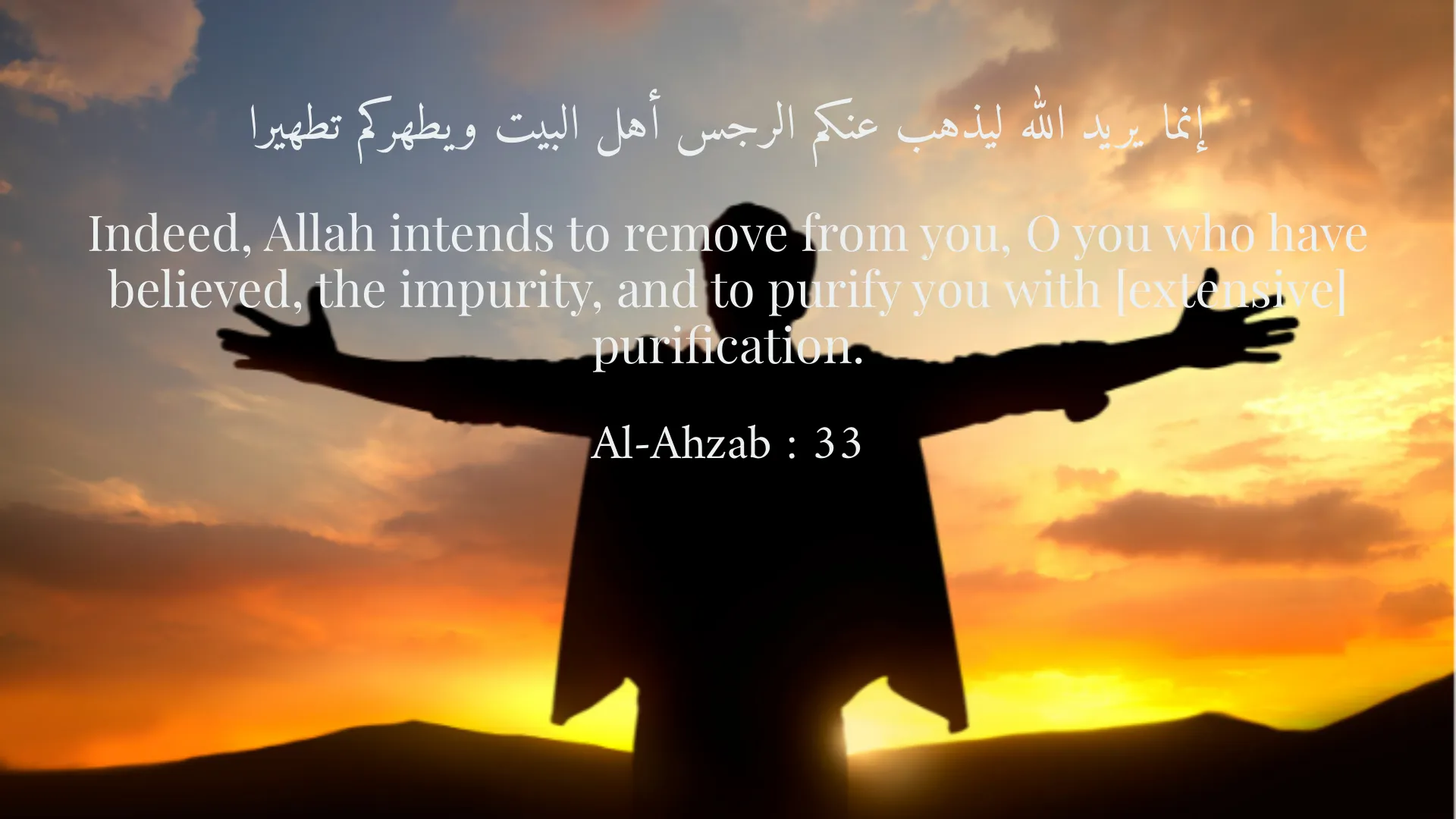
إنما يريد الله ليذهب عنكم الرجس أهل البيت ويطهركم تطهيرا
Indeed, Allah intends to remove from you, O you who have believed, the impurity, and to purify you with [extensive] purification.
Al-Ahzab : 33
إِنَّمَا وَلِيُّكُمُ اللَّهُ وَرَسُولُهُ وَالَّذِينَ آمَنُوا الَّذِينَ يُقِيمُونَ الصَّلَاةَ وَيُقْسِمُونَ الزَّكَاةَ وَهُمْ رَاكِعُونَ
Your ally is none but Allah and His Messenger and those who have believed - those who establish prayer and give zakah while they bow [in worship].
Al-Maidah : 55
وَالسَّابِقُونَ الأَوَّلُونَ مِنَ الْمُهَاجِرِينَ وَالْأَنْصَارِ وَالَّذِينَ اتَّبَعُوهُمْ بِإحسانٍ رَّضِيَ اللَّهُ عَنْهُمْ وَرَضُوا عَنْهُ ۚ ذَٰلِكَ هُوَ الْفَوْزُ الْعَظِيمُ
And the first forerunners among the Muhajirin and the Ansar and those who followed them with good conduct - Allah is pleased with them and they are pleased with Him. That is the great attainment.
At-Tawbah : 100
Short Story
One day, a boy named Adel asked his teacher, 'Are there good role models for life?' His teacher smiled and replied, 'Yes, the Ahlulbayt of the Prophet Muhammad (PBUH) are the best role models.' He then shared stories of their noble conduct and encouraged Adel to learn from them. Adel decided to follow their example in his actions and gradually felt a greater sense of peace within his heart.