Quranic Answer
In the Holy Quran, the concept of sin is deeply intertwined with the moral fabric of individual and societal conduct. The guidance provided by Allah (SWT) transcends mere prohibition of wrongdoing; it serves as a comprehensive framework designed to cultivate righteousness, ethical behavior, and a sense of accountability among believers. The delicate balance between divine mercy and justice is reflected throughout the Quranic verses, with specific emphasis on the consequences of sin and the paths available for those who seek redemption. ### The Nature of Sin in Islamic Teachings The term 'sin' in Islam refers to actions that violate the commandments of Allah. It is established that every action carries with it a moral weight, and the understanding of sin provides believers with a clear delineation of acceptable behavior in accordance with divine will. Sin is not simply an act of disobedience; it represents a severance from Allah's guidance and mercy. Surah Al-Baqarah, verse 81, serves as a poignant reminder of the gravity of wrongdoing, stating: 'Indeed, those who have done wrong to themselves, if they wish to repent, they can.' This verse underscores the notion that individuals possess the autonomy to choose repentance. Sin is portrayed as detrimental, not only to one’s spiritual well-being but also to one's essence as a servant of Allah. Such transgressions divert an individual from the straight path—a path that leads to ultimate success in this life and the Hereafter. ### The Consequences of Sin The Quran elucidates that engaging in sinful behavior leads a person away from Allah's mercy. The consequences of sinning go beyond personal repercussions; they permeate societal structures, leading to corruption, injustice, and decay. In Surah Al-An'am, verse 120, it is stated: 'And he who does wrong will not find for himself any protector.' This verse highlights the isolation that results from sinful behavior, suggesting that the sinner loses the divine protection that one enjoys through righteousness. Sins not only alienate individuals from their Creator but also disrupt communal harmony and moral integrity. When individuals prioritize personal gratification over collective well-being, the societal fabric weakens. Therefore, the consequences of individual sins manifest as broader issues within the community, contributing to a cycle of wrongdoing that can be challenging to overcome. ### The Role of Remembrance and Forgiveness The importance of remembrance and seeking forgiveness is a recurrent theme in the Quran. In Surah Al-Imran, verse 135, it is articulated: 'And those who, when they commit an immorality or wrong themselves by harm, remember Allah and seek forgiveness for their sins—and who can forgive sins except Allah?' This verse assures believers that the act of remembering Allah serves as an essential counter to the temptation of sin. This reminder instills a consciousness of accountability—an awareness that one’s actions are subject to divine scrutiny. The process of seeking forgiveness is not merely a ritualistic occurrence; it is an act filled with humility and sincerity that demonstrates the believer's acknowledgment of their shortcomings and their desire to return to Allah’s grace. ### The Path to Repentance Repentance, or 'Tawbah,' holds great significance in the realm of Islamic teachings. The ability to seek forgiveness marks a crucial aspect of the relationship between individuals and their Creator. Allah’s mercy is vast and encompassing, providing ample opportunity for those who stray to rectify their misdeeds. As highlighted in Surah Al-Baqarah, the encouragement to repent is given, indicating that individuals can always turn back to Allah, no matter how grave their sins may be. This concept fosters a spirit of hope and resilience, encouraging believers to break free from the shackles of guilt and shame that may accompanied sin. ### The Societal Impact of Sin Escaping from sin is not only a matter of personal salvation; it also carries significant implications for society as a whole. When individuals strive to seek righteousness and avoid sinful behavior, they contribute to the cultivation of a virtuous community. This ripple effect can initiate transformative changes that uplift moral standards and enhance collective well-being. Furthermore, Islamic teachings stress the importance of communal responsibilities, where believers are encouraged to remind one another of the moral principles outlined in the Quran. This collective effort to uphold justice, compassion, and integrity creates environments where sin is neither tolerated nor normalized, fostering a sense of accountability that permeates throughout the community. ### Conclusion In conclusion, the Quranic perspective on sin paints a comprehensive picture that goes beyond individual accountability. The clarion call to recognize the harmful impacts of sinful actions not only serves the purpose of personal salvation but also aims at nurturing a just and ethical society. The verses in the Quran resonate with a timeless message: that the remembrance of Allah and the pursuit of forgiveness play pivotal roles in the lives of believers. The concept of sin, while heavy with consequences, ultimately leads to the opportunity for growth and redemption, reinforcing the importance of striving towards righteousness, both individually and collectively. By embracing this divine guidance, individuals not only enhance their spiritual journey but also contribute positively towards the upliftment and integrity of society.
Related Verses
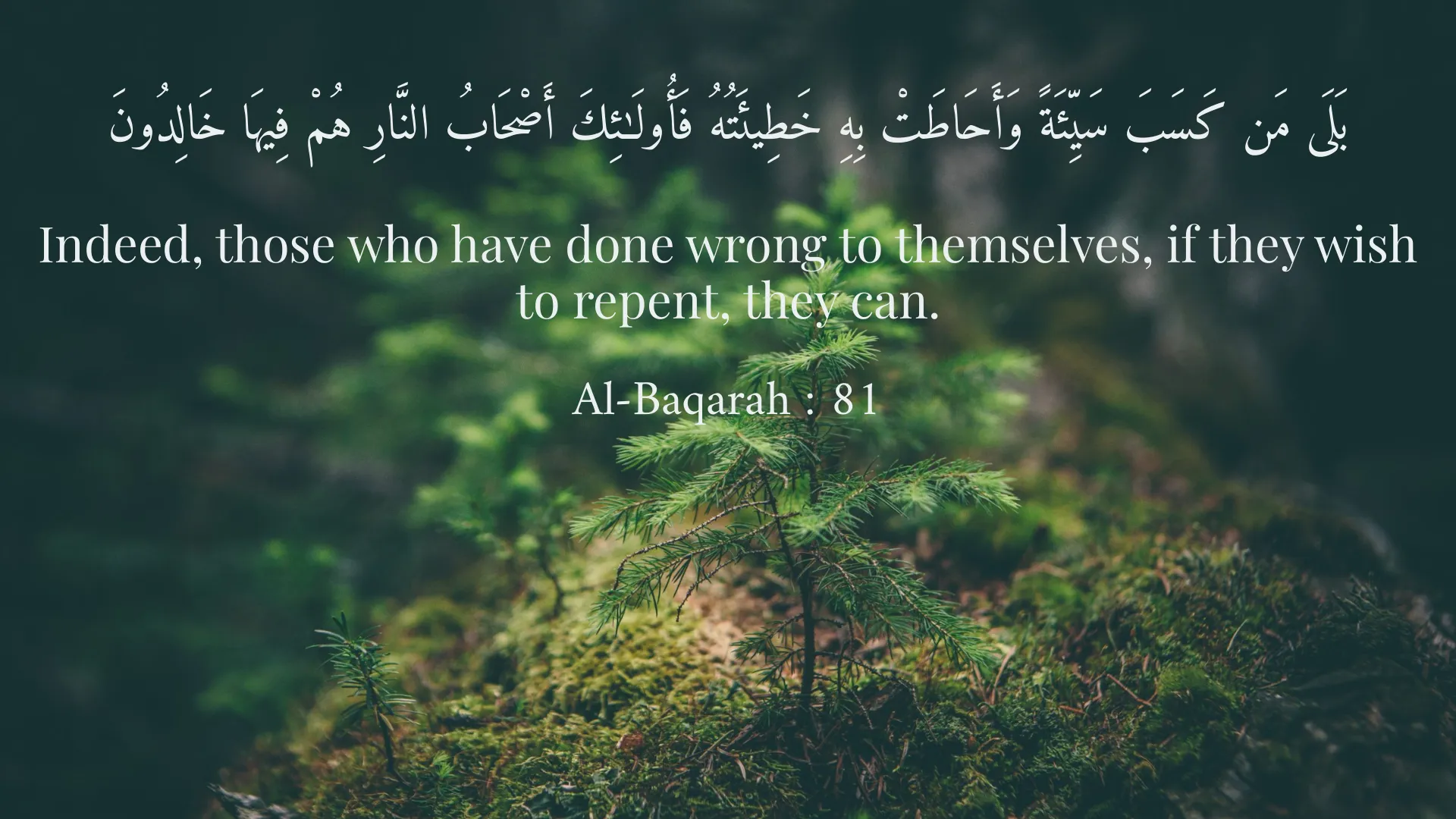
بَلَى مَن كَسَبَ سَيِّئَةً وَأَحَاطَتْ بِهِ خَطِيئَتُهُ فَأُولَـٰئِكَ أَصْحَابُ النَّارِ هُمْ فِيهَا خَالِدُونَ
Indeed, those who have done wrong to themselves, if they wish to repent, they can.
Al-Baqarah : 81
وَالَّذِينَ إِذَا فَعَلُوا فَاحِشَةً أَوْ ظَلَمُوا أَنفُسَهُمْ ذَكَرُوا اللَّهَ فَاسْتَغْفَرُوا لِذُنُوبِهِمْ ۖ وَمَن يَغْفِرُ الذُّنُوبَ إِلَّا اللَّهُ
And those who, when they commit an immorality or wrong themselves by harm, remember Allah and seek forgiveness for their sins—and who can forgive sins except Allah?
Al-Imran : 135
وَإِذَا مَرَّتْ بِهِمْ مَرَّةٌ مِّنَ النَّارِ كَانُوا مِن حَذَرِهِمْ وَيَخْشَوْنَ زِيَادَةً فِي مَا يُعَذَّبُونَ
And he who does wrong will not find for himself any protector.
Al-An'am : 120
Short Story
Once upon a time, there was a man named Hasan who struggled with numerous sins in his life. He recalled the verses of the Quran, and a vivid image of divine punishment formed in his mind. Regretting how far he had drifted from God's mercy, he was compelled to reflect. He decided to escape from sin and embark on a righteous path towards God. Hasan joined the community of believers and endeavored to compensate for his sins with good deeds. Gradually, his life transformed, and he experienced true peace.