Quranic Answer
Hope in God's Mercy: A Fundamental Principle of Faith and Its Impact on Human Lives In the Holy Quran, hope in God's mercy is one of the fundamental principles of faith and religious life, serving as a guiding light for millions around the world. This concept permeates various aspects of a believer's life and is woven throughout the fabric of Islamic teachings. Allah frequently mentions His mercy and forgiveness in numerous verses, reassuring His servants that they should never despair of His mercy. This assurance is not just a mere statement but a profound truth that can shape the lives of believers in significant ways. For instance, in Surah Az-Zumar, verse 53, Allah states: 'Say, O My servants who have believed, fear your Lord. For those who do good in this world is good, and the earth of Allah is spacious. Indeed, the patient will be given their reward without account.' This verse illustrates the intrinsic connection between faith, righteous deeds, and hope in God's mercy. It assures believers that no matter the trials they face, maintaining faith and performing good actions can lead to divine rewards, making life a canvas on which they can paint their hopes and aspirations. Moreover, the concept of God's mercy is deeply embedded in Surah An-Naml, verse 56, where Allah emphasizes: 'And the greatest mercy of Mine will include my servants.' This verse encapsulates the essence of mercy, as it suggests that God's compassion is vast and inclusive, leaving no room for hopelessness. It emphasizes that even those who may feel lost or burdened by their sins have a pathway to redemption. The belief that God's grace can encompass everyone, regardless of their shortcomings, is what instills a sense of hope and motivates believers to seek forgiveness and strive for personal growth. Hope in God's mercy is not merely a passive sentiment; rather, it serves as a catalyst for personal and communal transformation. Believers are encouraged to cultivate their character in alignment with God's attributes, embodying qualities such as compassion, justice, and kindness in their interactions with others. When believers hold onto the hope of God's mercy, they are compelled to extend that mercy to those around them. This perspective fosters a nurturing environment where individuals can thrive, exemplifying the principles of love and compassion central to Islamic teachings. In the face of life's inevitable challenges and setbacks, hope becomes a vital resource that enables believers to remain resilient and optimistic. It empowers them to confront adversities without losing faith, encouraging an attitude of patience and perseverance. The Quran often underscores the importance of patience, linking it with the promise of divine rewards. The understanding that challenges serve as tests of faith motivates believers to rise above their difficulties, reinforcing their hope and trust in God's mercy. Furthermore, contemplating God's mercy can lead to an increased sense of accountability among believers. The recognition that God is merciful yet just instills a balanced perspective towards one's actions. This dual understanding encourages individuals to strive for excellence while also being mindful of their moral responsibilities to themselves and others. In a world often filled with judgments and condemnation, the concept of mercy becomes a beacon of hope, offering a more compassionate approach to human imperfections. On a communal level, the teaching of hope in divine mercy fosters an environment conducive to social justice and harmony. When individuals embrace the idea that they are part of a larger community bound by mercy, they are more likely to engage in altruistic behavior. Acts of charity, support for the marginalized, and a commitment to resolving conflicts become natural extensions of a belief system rooted in hope and mercy. This not only strengthens interpersonal bonds but also fortifies communal resilience when faced with social issues and injustices. To further understand the transformative power of hoping for God's mercy, we can examine the stories of various prophets as depicted in the Quran. Figures such as Prophet Noah, Prophet Job, and Prophet Jonah exemplified unwavering hope in God's mercy during their trials. Their narratives serve as case studies highlighting that even in the darkest times, maintaining hope can lead to divine intervention. These stories resonate with believers, reinforcing the idea that hope should never be extinguished, no matter how dire the circumstances may seem. In addition, the concept of repentance plays a crucial role in the framework of divine mercy. The Quran describes how sincere repentance is not only accepted by God but is also a vital component in receiving His mercy. The act of turning back to God with a humble heart emphasizes personal responsibility and the power of change. This dynamic empowers the individual, assuring them that no matter how far they may have strayed, they can always return to the path of righteousness. Thus, hope in God's mercy serves a dual function in the lives of believers: it provides personal solace while also inspiring action towards societal betterment. It nurtures the spirit and emboldens individuals to pursue justice, compassion, and kindness in their daily lives. This holistic understanding encourages believers to embody the principles of their faith, creating a ripple effect that can uplift entire communities. In conclusion, hope in divine mercy and forgiveness is indeed one of the important pillars in human life that must be given due attention. Its implications extend beyond personal spirituality, influencing interpersonal relationships and societal transformations. By embracing this principle, individuals can cultivate a life filled with hope, resilience, and compassion, positively impacting themselves and those around them. The messages of the Quran continue to serve as a guiding light for believers, reaffirming their journey towards divine connection and encouraging a legacy of mercy and goodwill. Through hope in God's mercy, believers not only navigate their own paths with grace but also contribute to a more compassionate and just world.
Related Verses
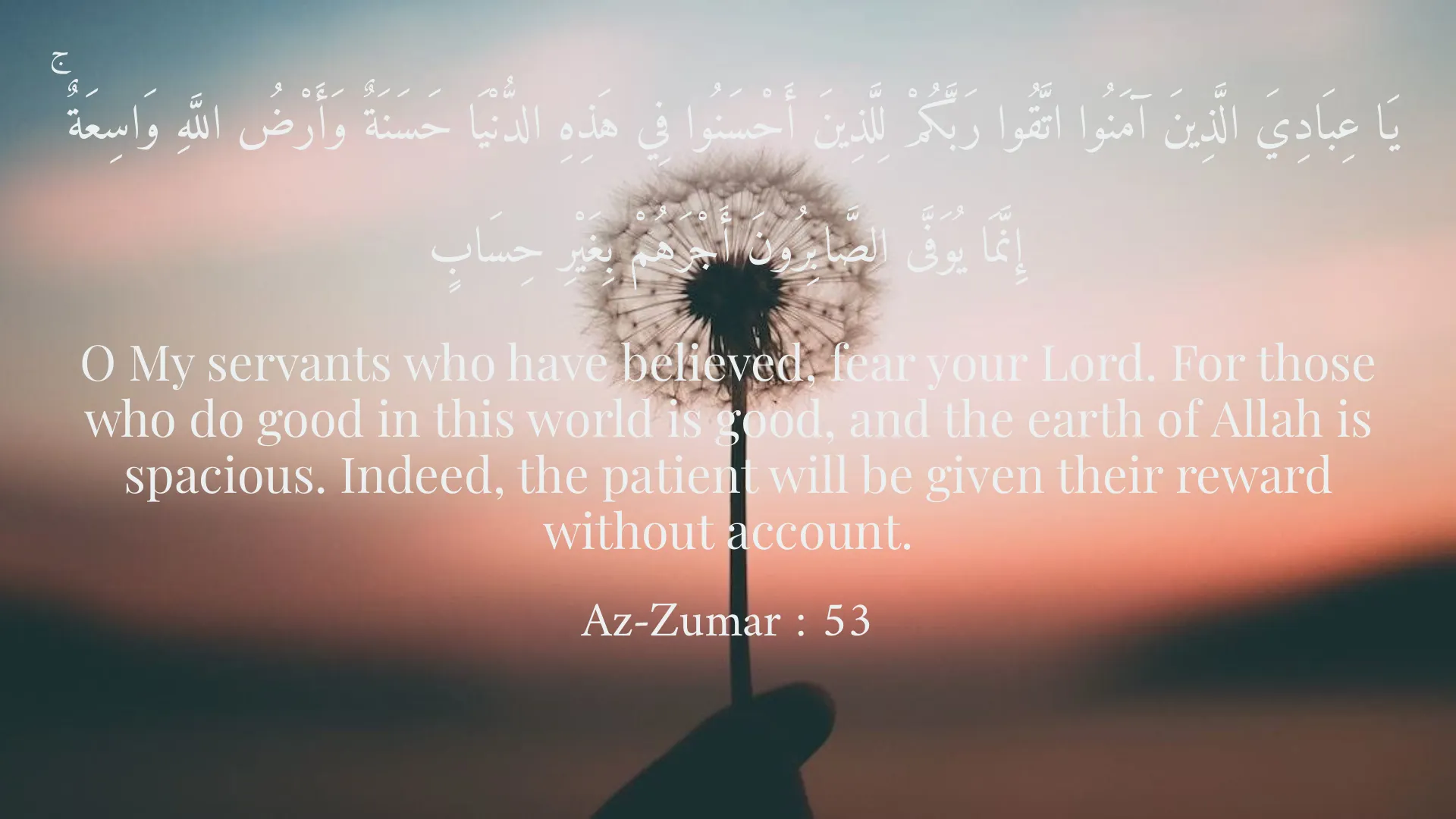
يَا عِبَادِيَ الَّذِينَ آمَنُوا اتَّقُوا رَبَّكُمْ لِلَّذِينَ أَحْسَنُوا فِي هَذِهِ الدُّنْيَا حَسَنَةٌ وَأَرْضُ اللَّهِ وَاسِعَةٌ ۚ إِنَّمَا يُوَفَّى الصَّابِرُونَ أَجْرَهُمْ بِغَيْرِ حِسَابٍ
O My servants who have believed, fear your Lord. For those who do good in this world is good, and the earth of Allah is spacious. Indeed, the patient will be given their reward without account.
Az-Zumar : 53
وَأَكْثَرُ رحْمَتي تَشْمَلُ عِبَادِيَ
And the greatest mercy of Mine will include my servants.
An-Naml : 56
Short Story
Once upon a time, there was a young man named Ali who felt overwhelmed by his sins and believed he would never attain God's mercy. One day, he went to the mosque for some reason, and during the Friday sermon, the Imam spoke about God's mercy. The Imam read Quranic verses and emphasized that even the greatest sins can be forgiven. Ali remembered the verses and felt that God still desired his heart. From that day on, he made an effort to return to goodness and worked on his character. He realized that hoping for God's mercy could change his life.