Quranic Answer
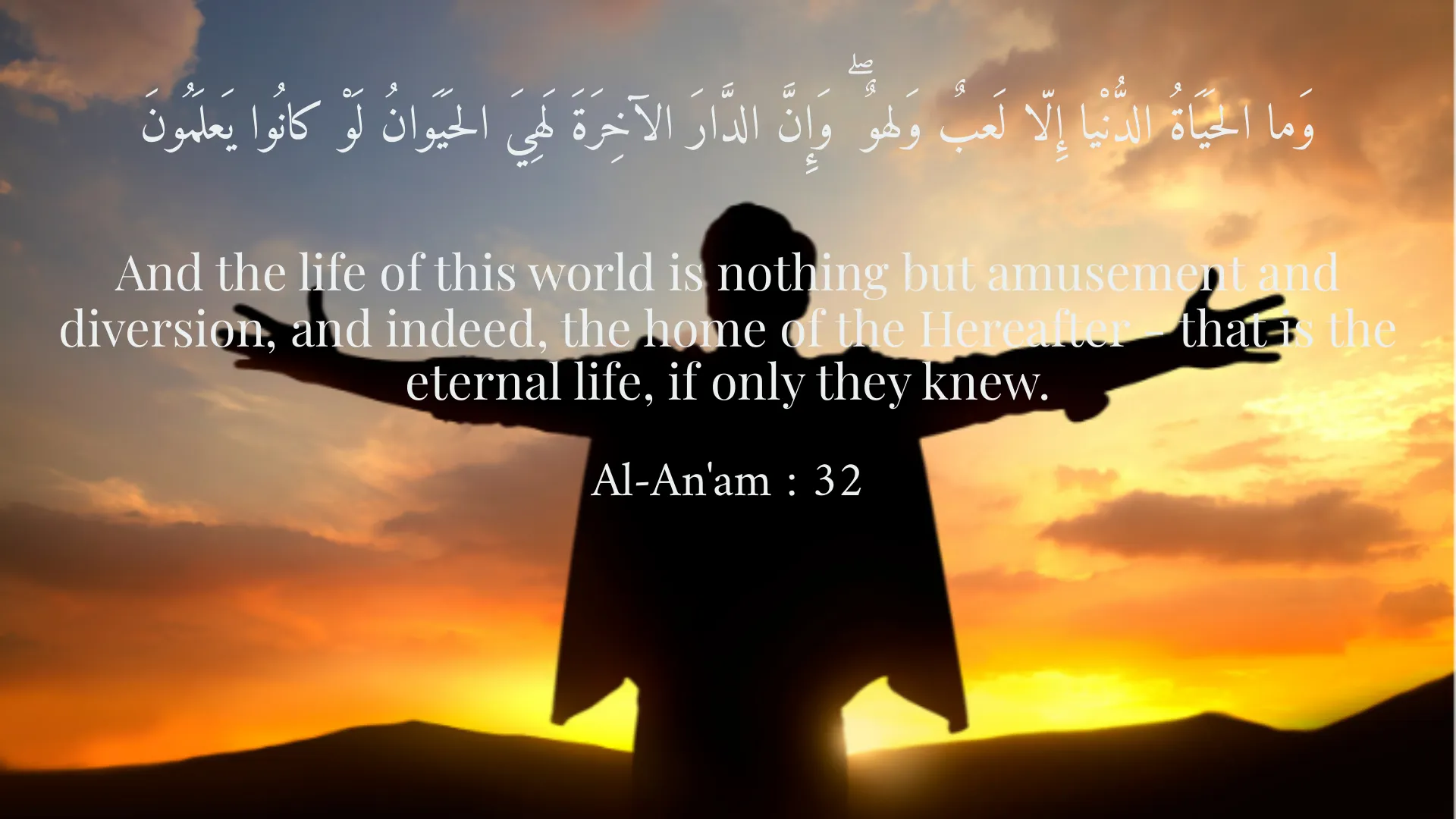
The Holy Quran invites us to look more closely at the world. This profound call encourages us to reflect on the transient nature of life and to awaken our consciousness about the eternal truths that lie beyond the ephemeral distractions of daily existence. One of the most striking verses that encapsulates this message appears in Surah Al-An'am, verse 32, which states: "And the life of this world is nothing but amusement and diversion, and indeed, the home of the Hereafter - that is the eternal life, if only they knew." In this statement, the Quran delineates the stark contrast between worldly life and the promise of the afterlife, highlighting a crucial tenet that one should not be deceived by the superficial allure of materialism. The very essence of this verse serves as a reminder that our experiences in this world are fleeting. The allure of amusement, entertainment, and the pursuit of worldly pleasures, while often enticing, are ultimately transient. They serve as distractions that could lead one away from the path of righteousness and spiritual fulfillment. The appeal of worldly life can often blind individuals to the more significant truths of existence, prompting one to chase shadows rather than the essence of life itself. Moreover, the Quran provides further insight into this profound subject in Surah Al-Imran, verse 185, where it is said: "Every soul will taste death. And you will be compensated your full rewards on the Day of Resurrection. So he who is drawn away from the Fire and admitted to Paradise has certainly succeeded." Here, the inevitability of death is emphasized as a fundamental reality of life. The verse underscores that every individual will face death, but it is what follows that truly matters. The distinction between success and failure is made clear by the ultimate destinations that await souls after their earthly journey. This verse also calls upon humanity to cultivate a deeper awareness of their actions and intentions while living, for life’s true purpose is not just in the pursuit of fleeting pleasures but in preparing for the afterlife. It incentivizes believers to focus on their deeds, advocating for a life lived in accordance with divine guidance that leads toward the eternal reward of Paradise. Balancing our worldly engagements with a sincere endeavor to uphold the values and teachings outlined in God's final revelation is a recurring theme throughout the Quran. This balance enables believers to navigate the complexities of life while maintaining their spiritual integrity. Understanding that our time on this planet is limited should instill a sense of urgency to act righteously, to engage in good deeds, and to seek forgiveness for our shortcomings. In this contemplative journey that acknowledges both worldly life and the Hereafter, Surah Taghabun, verse 15 further expands on the concept of life’s trials, stating: "Indeed, your wealth and your children are but a trial." In this verse, Allah essentially paints a picture of life as a series of tests, where wealth and progeny may serve to distract individuals from their true purpose in life. These blessings can shift one's focus away from spiritual pursuits and toward material accumulation, leading to an imbalance that undermines one's spiritual journey. The Quran calls us to strive for a greater understanding of our existence, emphasizing that detachment from the material might be necessary to achieve clarity in our purpose. The reference to wealth and children as trials suggests that, while they are indeed blessings from Allah, they also bear potential risks. People can become overly attached to their possessions, families, and the ensuing responsibilities, thereby losing sight of the larger picture of life and the Hereafter. The discrepancy between worldly allure and spiritual enlightenment necessitates a conscious effort to seek balance in our lives. Muslims are encouraged to enjoy the bounties of life but not allow these pleasures to distract them from their divine obligations. Acknowledging that life is temporary allows believers to prioritize their spiritual growth, foster relationships grounded in sincerity and truth, and act with compassion and grace. The essence of these teachings invites individuals to cultivate an understanding of what constitutes true success. Believers are reminded that achieving a higher state of being—marked by wisdom, morality, and a commitment to uphold divine principles—is the truest form of prosperity. Realigning one’s focus towards the Hereafter not only brings solace but also drives individuals to seek knowledge, understanding, and ultimately the love of Allah. In conclusion, the Holy Quran serves as a light guiding us through the complexities of life, urging us to reflect on the transient nature of worldly existence and the everlasting truth of the afterlife. Voices from within its sacred verses resound with clarity, reminding us that while we engage with the world around us, we must also remember that our actions are a preparation for eternity. As we tread through life's journey, let us heed the divine message embedded in the Quran and strive for balance, truly understanding the significance of life beyond its fleeting appearances. By doing so, we not only enhance our spiritual well-being but contribute positively to the world, fulfilling our purpose as stewards of both the earthly realm and our eternal fate.
Related Verses
وَما الحَيَاةُ الدُّنْيا إِلّا لَعبٌ وَلهوٌ ۖ وَإِنَّ الدَّارَ الآخِرَةَ لَهِيَ الحَيَوانُ لَوْ كانُوا يَعلَمُونَ
And the life of this world is nothing but amusement and diversion, and indeed, the home of the Hereafter - that is the eternal life, if only they knew.
Al-An'am : 32
كُلُّ نَفْسٍ ذَائِقَةُ الْمَوْتِ ۗ وَلَتُوفَّنَّ أُجُورُكُمْ يَوْمَ الْقِيَامَةِ ۗ فَمَن زُحْزِحَ عَنِ النَّارِ وَأُدْخِلَ الْجَنَّةَ فَقَدْ فَازَ
Every soul will taste death. And you will be compensated your full rewards on the Day of Resurrection. So he who is drawn away from the Fire and admitted to Paradise has certainly succeeded.
Al-Imran : 185
إنما أموالكم وأولادكم فتنة
Indeed, your wealth and your children are but a trial.
Taghabun : 15
Short Story
One day, Mehran was reflecting on the world around him and how much he was influenced by its glitz and glamour. He decided to remind himself by reading the Quran that this world is transient and that he must think about his Hereafter. After some time, he realized he was freed from many worries, and his focus had shifted towards his real and eternal life.