Quranic Answer
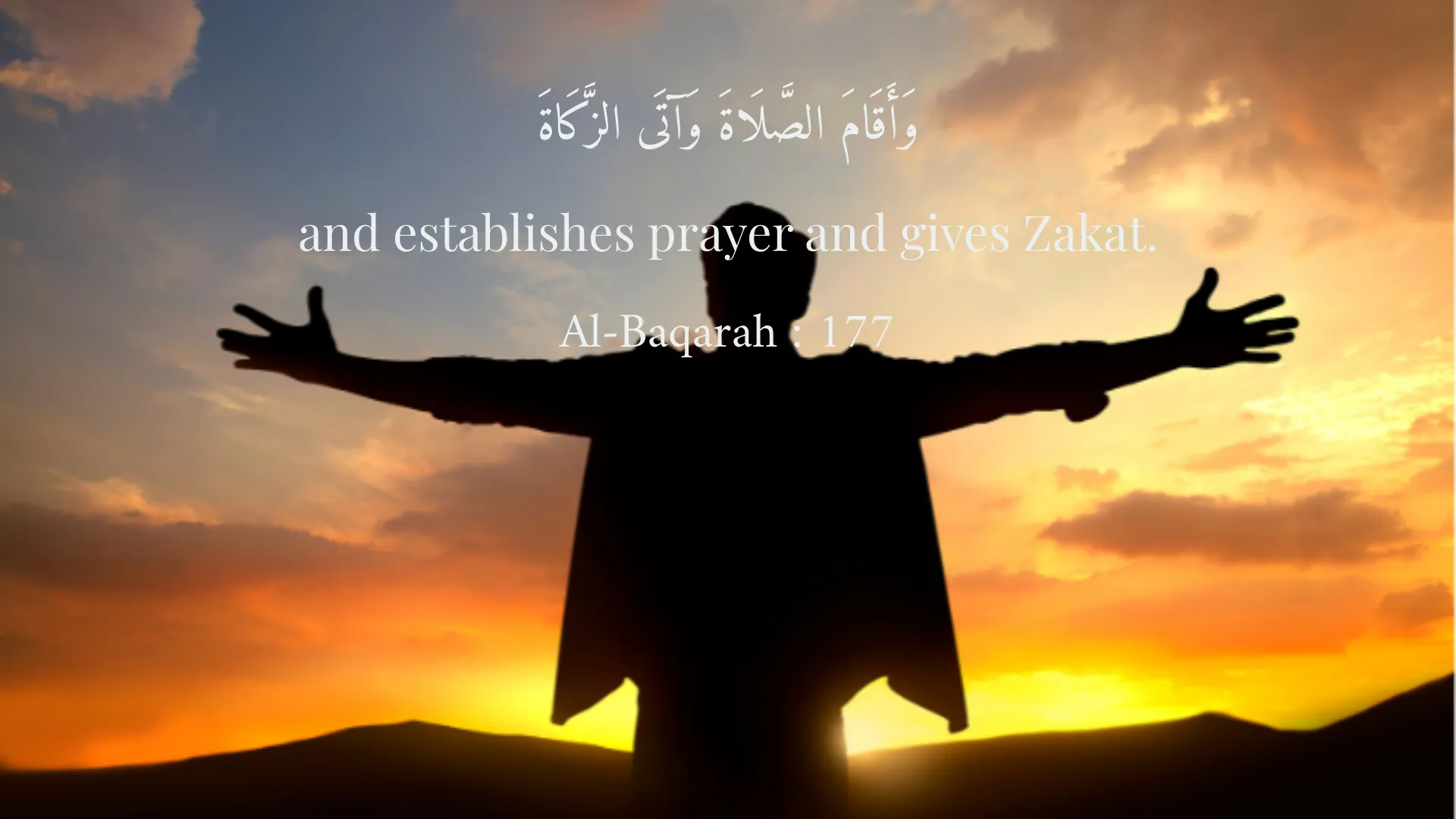
Zakat, a profound and essential component of Islamic teachings, serves as one of the five pillars of Islam, symbolizing a commitment to social responsibility and the betterment of society. This obligation impels Muslims to share their wealth with those in need, fostering a sense of community, solidarity, and compassion among individuals. The concept of Zakat transcends mere monetary contribution; it envelops a philosophy of altruism and moral duty that is deeply ingrained in Islamic belief systems. The foundation of Zakat is clearly articulated in the Holy Quran, where it is set forth as a fundamental religious duty. In Surah Al-Baqarah, verse 177, Allah states: 'and establishes prayer and gives Zakat.' This declaration emphasizes the indispensable nature of Zakat, placing it on par with the core act of prayer, a practice that is central to a Muslim's life. By coupling Zakat with prayer in this verse, it becomes evident that fulfilling this obligation is both an act of worship and a means to cultivate social justice and equity. Zakat plays a pivotal role in alleviating poverty and combating social injustices. In a world rife with inequality, the act of giving Zakat helps bridge the gap between the wealthy and the impoverished. By redistributing wealth within the community, Zakat enables those in need to access resources that can empower them to improve their living conditions and achieve a dignified existence. The implementation of Zakat can result in substantial societal transformations, fostering an environment where everyone has the opportunity to thrive. Furthermore, the act of giving Zakat is not merely about financial transactions; it encompasses a deep sense of gratitude towards Allah. Muslims believe that sharing their wealth through Zakat leads to a greater abundance in life. This belief is rooted in the Quranic lesson conveyed in Surah At-Tawbah, verse 60, which specifies: 'The alms are only for the poor and the needy and those who work on [collecting them]...'. This verse illustrates that Zakat serves a dual purpose: not only does it provide assistance to those who are less fortunate, but it also supports the administrative frameworks that facilitate the collection and distribution of Zakat. Consequently, Zakat not only addresses immediate needs but also strengthens social infrastructure. In addition to its ethical and social ramifications, Zakat culminates in blessings that extend into the financial realm. The Quran elucidates this by stating in Surah Al-A'raf, verse 96: 'And if the people of those towns had believed and been conscious of Allah, We would have opened up to them blessings from the heavens and the earth.' This verse highlights a fundamental principle in Islam: that faith and piety invoke divine blessings. Hence, by performing Zakat with sincerity and intention, individuals not only fulfill their religious obligation but also unlock the potential for their wealth to flourish in ways beyond material accumulation. In contemporary society, the relevance of Zakat is more pronounced than ever. With increasing rates of poverty, homelessness, and socioeconomic disparity, the power of Zakat to create a positive impact cannot be overstated. In many Muslim-majority countries, the systematic collection and distribution of Zakat have been institutionalized, thereby enabling communities to mobilize resources effectively and address pressing social issues. Such institutional frameworks help ensure that Zakat reaches the most vulnerable populations, thereby fulfilling its intended purpose. Moreover, the notion of Zakat extends beyond the mere act of giving; it incorporates principles of transparency, accountability, and informed giving. In ideal circumstances, recipients of Zakat are often educated about financial management, entrepreneurship, and self-sufficiency, empowering them to transcend their circumstances. This holistic approach to Zakat ensures that recipients do not remain dependent on aid but instead emerge as productive members of society. The effects of Zakat are not just confined to the beneficiaries but resonate throughout the entire community. As individuals engage in charitable giving, it cultivates a culture of compassion and empathy, instilling moral values that encourage collective welfare. Such communal responsibility leads to a more harmonious and cohesive society, underscoring the idea that one’s wealth should serve a greater purpose—enhancing the lives of others and contributing to communal prosperity. Moreover, the practice of Zakat often inspires other forms of charitable engagements within the Muslim community. It can lead to increased awareness about social issues and an expansion of philanthropic initiatives, driving collective efforts to uplift the underprivileged. In this way, Zakat not only fulfills its obligation as a religious duty but also catalyzes broader movements toward social equity and justice. To summarize, Zakat stands as a cornerstone of Islamic faith, manifesting in a societal obligation that encourages Muslims to share their fortunes with the less fortunate. Its significance transcends financial aid, embedding itself in the fabric of social cohesion, ethical stewardship, and spiritual fulfillment. The Quranic teachings that emphasize the importance of Zakat reveal its vital role in fostering a just and equitable society. As we navigate through contemporary issues of inequality and injustice, the values instilled by Zakat encourage individuals to act with compassion, embracing a philanthropic spirit that benefits not just the recipients but the entire community as a whole. In essence, Zakat is not merely a duty; it is a profound expression of faith, solidarity, and commitment to the well-being of humanity. By embracing Zakat, Muslims not only fulfill a religious obligation but also partake in a transformative journey toward creating an inclusive and prosperous society for all.
Related Verses
وَأَقَامَ الصَّلَاةَ وَآتَى الزَّكَاةَ
and establishes prayer and gives Zakat.
Al-Baqarah : 177
إنما الصدقات للفقراء والمساكين والعاملين عليها...
The alms are only for the poor and the needy and those who work on [collecting them]...
At-Tawbah : 60
ولو أن أهل القرى آمنوا واتقوا لفتحنا عليهم بركات من السماء والأرض.
And if the people of those towns had believed and been conscious of Allah, We would have opened up to them blessings from the heavens and the earth.
Al-A'raf : 96
Short Story
One day, a man named Hasan was working in the marketplace. He always gave Zakat and helped those in need. One day, Allah blessed him with a great amount of wealth, allowing him to assist even more needy individuals and provide them with a better life. Hasan believed that Zakat was a bridge to divine blessings and mercy.