Quranic Answer
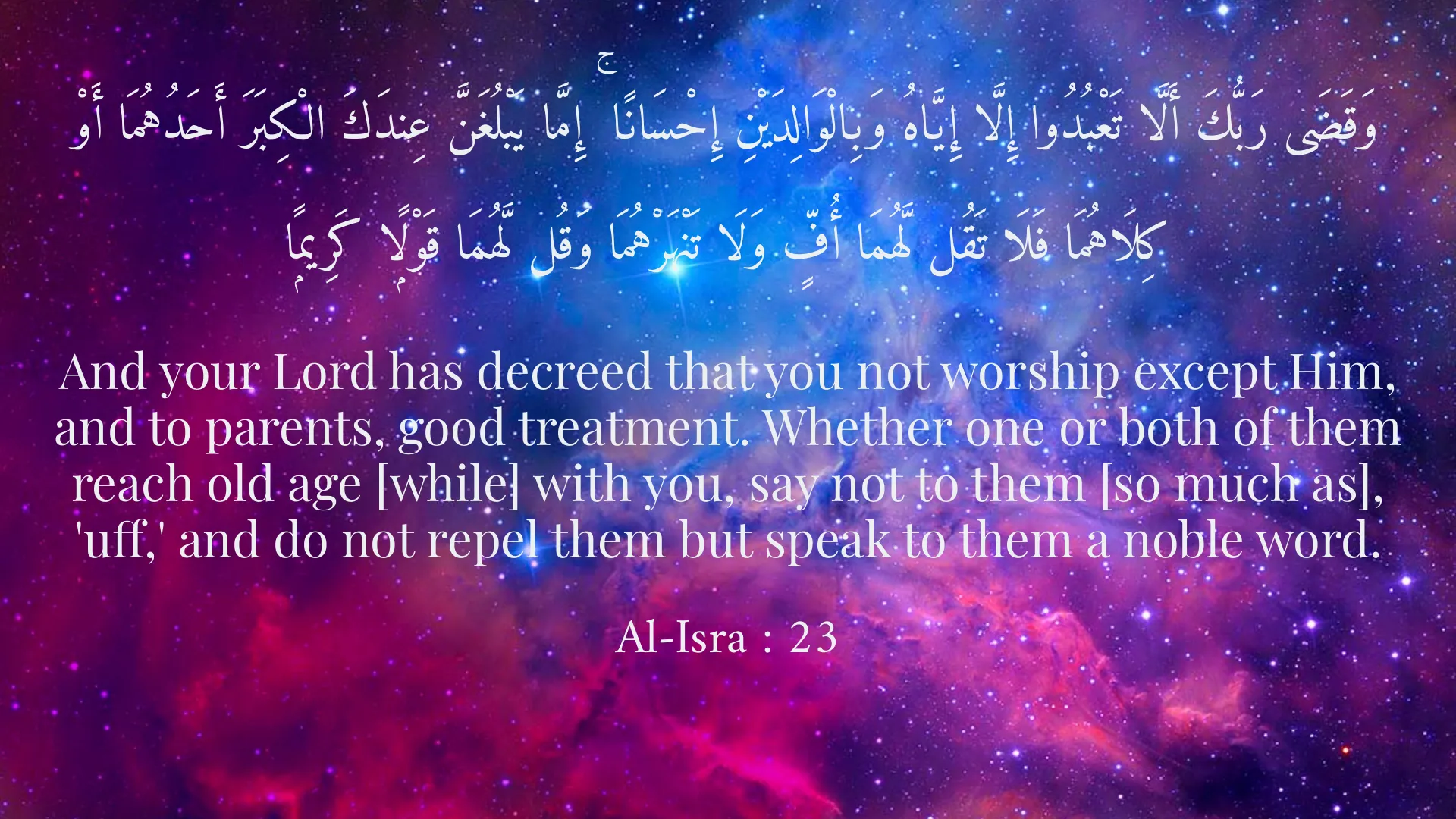
In the Holy Quran, praying for parents is described as a virtuous and obligatory act for children. This divine command underscores the importance of maintaining strong familial ties and shows the high regard Islam places on the relationship between a child and his or her parents. The Quranic injunction mentioned in Surah Al-Isra, verse 23 states: 'And your Lord has decreed that you not worship except Him, and to parents, good treatment...' This verse clearly displays that after the fundamental tenet of worshiping Allah, the moral duty of treating parents with kindness and respect comes next in line. This profound statement emphasizes that showing love, care, and respect towards parents is not merely recommended but is indeed a strong obligation for every child. Praying for one's parents is a manifestation of this benevolence, and it signifies a child's recognition of their sacrifices and efforts. It embodies traits of respect and kindness, two essential qualities in performing one's duty towards family members, especially parents. Furthermore, the act of praying for parents serves as a moral compass for children, helping them navigate through the complexities of life while being rooted in values that honor family bonds and traditions. In another significant verse, Surah Al-Furqan, verse 74 commands believers to pray: 'And those who say, 'Our Lord, grant us from among our wives and offspring comfort to our eyes and make us an example for the righteous.' This prayer illustrates the importance of family and the necessity of maintaining good relations with parents. It reflects the child's desire not only for personal well-being but also for the wellness of their family as a whole. Such prayers are vital since they cultivate a supportive and loving environment that can aid in the spiritual and emotional growth of each family member. The act of praying for parents not only brings happiness and peace into the lives of these venerable figures but also carries profound implications for the children praying for them. By engaging in such spiritual acts, children are aligning themselves with the teachings of Islam, thereby inviting blessings and mercy upon themselves. The mutual benefit derived from this prayer reinforces familial bonds, helping cultivate a strong sense of community and love. Additionally, the recognition of parental contributions and the act of praying for their well-being can serve as a means of nurturing one’s own spiritual journey. The significance of praying for parents intensifies, particularly during times of hardship and challenges. Life is replete with trials, and it is during these strenuous moments that children must turn to prayer as an outlet for expressing their love and concern for their parents. Offering prayers becomes a refuge for children, manifesting their admiration and gratitude for their parents' support during difficult times. This act of empathy not only alleviates their parents' burdens but also reinforces a child's own moral and ethical development. In essence, when a child prays for their parents, it acts as a conduit through which love, respect, and care are channeled. This spiritual practice reinforces the significance of family ties and positions the child as a responsible individual keenly aware of their obligations. It emphasizes the idea that the well-being of parents is intrinsically linked to the well-being of children, as the health of family relationships contributes to the overall happiness and spiritual satisfaction of the community. In Islamic teachings, it has been noted in various traditions that the prayer of a child for their parents brings blessings, comfort, and tranquility to the lives of the parents. This concept underscores the reciprocal relationship inherent in family bonds. Prayers serve not only to invite divine blessings but also create a sense of cohesion among family members. It manifests the ideal of solidarity, transforming familial dynamics into a source of strength and unity that withstands the tests of time and circumstance. Children who internalize the importance of praying for their parents often grow to become reflective individuals who value relationships and understand the implications of their actions on others. This understanding is vital in cultivating empathy in society—an attribute that is increasingly necessary in a world that can sometimes appear disconnected and self-centered. In conclusion, the practice of praying for one's parents is a cornerstone of Islamic moral and ethical values. It signifies respect, love, and kindness, forming the bedrock of healthy familial relationships. By adhering to this practice, children cultivate a sense of responsibility towards their parents, recognizing their sacrifices and lifelong efforts. Through prayer, children not only fulfill a divine obligation but also create a harmonious family environment that fosters love, compassion, and spiritual growth. The teachings of the Holy Quran underscore the necessity of this practice, instilling values in future generations that honors not only their parents but also the very fabric of society. As a result, it serves as a conduit for blessings, ensuring that love and kindness flow freely within families and beyond.
Related Verses
وَقَضَى رَبُّكَ أَلَّا تَعْبُدُوا إِلَّا إِيَّاهُ وَبِالْوَالِدَيْنِ إِحْسَانًا ۚ إِمَّا يَبْلُغَنَّ عِندَكَ الْكِبَرَ أَحَدُهُمَا أَوْ كِلَاهُمَا فَلَا تَقُل لَّهُمَا أُفٍّ وَلَا تَنْهَرْهُمَا وَقُل لَّهُمَا قَوْلًۭا كَرِيمًۭا
And your Lord has decreed that you not worship except Him, and to parents, good treatment. Whether one or both of them reach old age [while] with you, say not to them [so much as], 'uff,' and do not repel them but speak to them a noble word.
Al-Isra : 23
وَالَّذِينَ يَقُولُونَ رَبَّنَا هَبْ لَنَا مِنْ أَزْوَاجِنَا وَذُرِّيَّاتِنَا قُرَّةَ أَعْيُنٍ وَاجْعَلْنَا لِلْمُتَّقِينَ إِمَامًا
And those who say, 'Our Lord, grant us from among our wives and offspring comfort to our eyes and make us an example for the righteous.'
Al-Furqan : 74
Short Story
One day, a young man named Amir decided to learn more about the Quran. He looked at various verses and realized that praying for parents was one of the virtuous acts. Being inherently compassionate and kind, he prayed for his parents' comfort and health after every prayer. After some time, he noticed that his parents were in a better condition, and their relationship grew stronger. Amir felt a deeper sense of satisfaction and peace in his own life through his prayers.