Quranic Answer
Thinking about the Hereafter is a fundamental aspect of faith in Islam, serving as a guiding principle that informs the moral and ethical framework of Muslims around the world. The concept of the Hereafter, or Akhirah, is deeply embedded in Islamic teachings and plays a crucial role in shaping the beliefs, actions, and spiritual outlook of believers. This essay will delve into the significance of the Hereafter in Islam, discuss its implications on personal conduct and societal behavior, and explore how it nurtures a sense of accountability and purpose in life. The Holy Quran, the sacred scripture of Islam, frequently references the Hereafter, presenting it as the ultimate destination for humanity. In Surah Al-Imran, verse 185, Allah clearly states, 'Every soul will taste death,' which serves as a poignant reminder that the world and material life are transient. This verse prompts believers to reflect on the temporary nature of earthly existence and to understand that death is an inevitable reality that they must face. It calls upon individuals to prepare for what lies beyond this life, emphasizing that it is not merely an end, but a transition to an eternal state where everyone will be accountable for their actions and choices made during their earthly life. The importance of contemplating the Hereafter lies not only in the acknowledgment of its existence but also in the guidance it provides for a meaningful life. Reflecting on the Hereafter can inspire individuals to lead a spiritual life, encouraging them to perform good deeds, engage in acts of kindness, and abstain from sins. In Surah Al-Mu’minun, verse 115, Allah questions, 'Did you think that We created you in vain and that you would not be brought back to Us?' This verse serves as a powerful reminder that worldly life is not an aimless existence; rather, it has a greater purpose. Muslims are urged to consider that their actions have consequences, and that they will ultimately have to account for their deeds in the Hereafter. The notion of accountability is central to Islamic belief, and it significantly influences how a person conducts themselves in daily life. When one contemplates the Hereafter, they become cognizant of the moral weight of their actions, leading them to evaluate their behavior critically. This self-reflection fosters a desire to improve oneself both morally and ethically, resulting in a greater commitment to righteousness and virtuous behavior. The awareness of an afterlife instills responsibility in individuals, urging them to act justly and uphold the tenets of Islam in all aspects of their lives. Moreover, thinking about the Hereafter serves as a source of encouragement and hope for believers. In Surah Taha, verse 74, the promise of Paradise and its secrets is extended to the faithful, which creates a sense of motivation and aspiration. This divine promise acts as a beacon of hope, guiding individuals towards righteous conduct and perseverance in their efforts to lead a life that pleases Allah. The thought of an eternal life filled with peace and happiness in Paradise helps individuals withstand trials and tribulations in this world, as they see them as temporary hardships that pale in comparison to the eternal joys of the Hereafter. The Hereafter also has societal implications, shaping the collective conscience of communities. When the concept of accountability and life after death is ingrained in the social fabric, it fosters a culture of responsibility, justice, and compassion. Individuals are less likely to engage in harmful behaviors when they recognize that their actions will ultimately have repercussions beyond their immediate circumstances. This awareness can lead to a more harmonious society where people strive to uplift one another, engage in altruism, and seek justice. Furthermore, interfaith discussions often reveal that the idea of the Hereafter is not unique to Islam, but is common in many religious traditions. The understanding that life on Earth is temporary and that there is something greater that follows speaks to a universal quest for meaning and purpose. The commonality of this belief can serve as a bridge between different faiths, fostering dialogue and mutual respect among diverse religious communities. In addition to providing a moral framework, the contemplation of the Hereafter challenges individuals to transcend the mundane aspects of life. It encourages believers to prioritize their spiritual development over material pursuits, directing attention towards actions that foster personal growth and community well-being. This focus on spiritual elevation correlates with the Islamic tenet of Tazkiyah, or purification of the soul, which is an essential goal for every Muslim. Moreover, the notion of eternal reward and punishment in the Hereafter fundamentally shapes the Islamic worldview. It impacts how believers respond to life's challenges, moral dilemmas, and ethical queries. The understanding that a person's choices in this life will determine their fate in the Hereafter acts as a powerful incentive for many to engage in selfless acts and to prioritize the welfare of others. In conclusion, contemplating the Hereafter is not merely a theological exercise in Islam; it is a vital component that informs beliefs, guides behavior, and shapes ethical standards. It cultivates a deep sense of accountability, purpose, and hope, leading Muslims toward spiritual and moral improvement. By reflecting on the transient nature of life and the promise of what lies beyond, individuals are inspired to engage in good deeds and strive for a life that aligns with the divine principles outlined in the Quran. The Hereafter, therefore, emerges as a cornerstone of Islamic faith, illuminating the path toward righteousness and ultimately leading humanity towards its ultimate destiny.
Related Verses
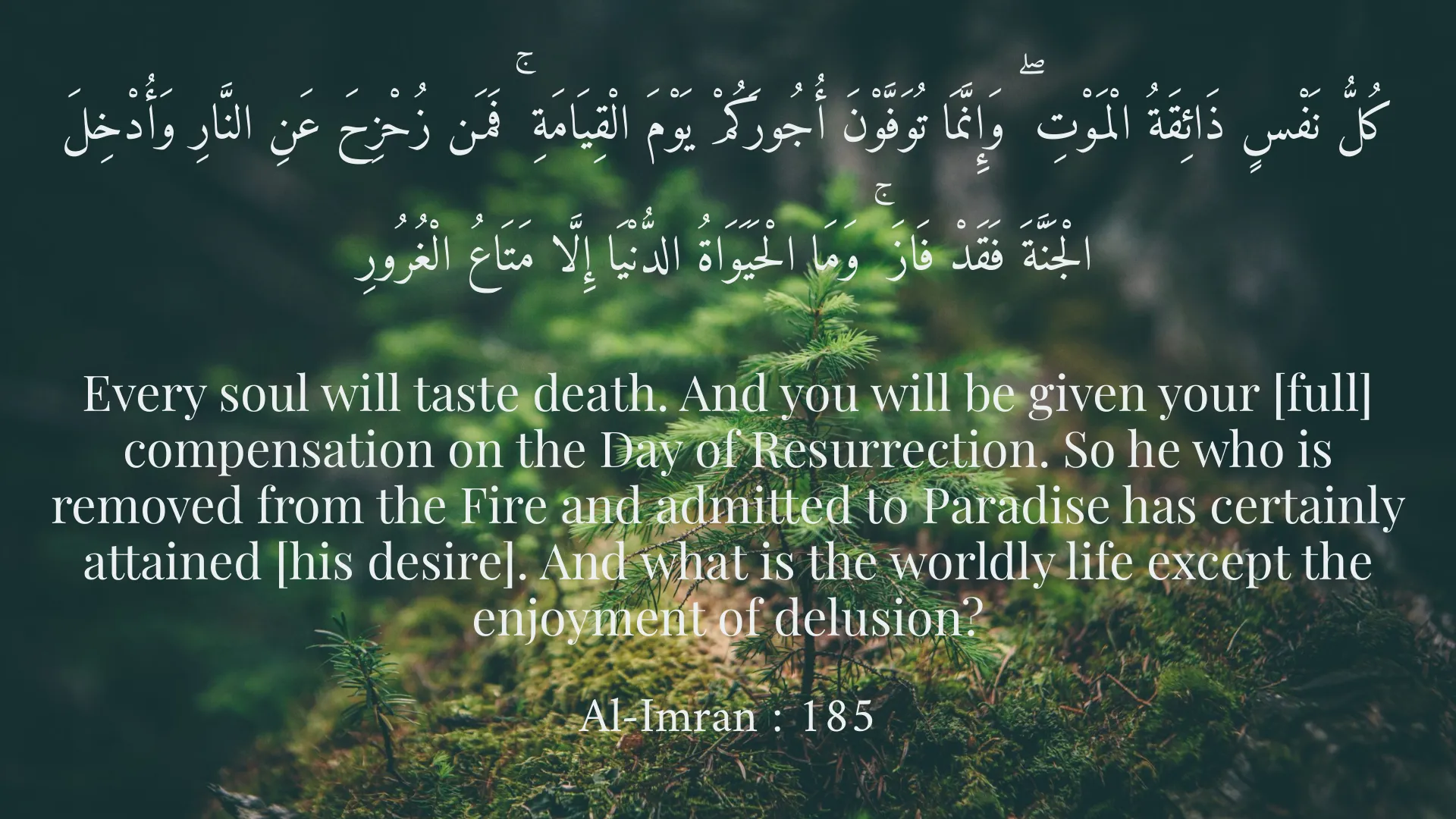
كُلُّ نَفْسٍ ذَائِقَةُ الْمَوْتِ ۖ وَإِنَّمَا تُوَفَّوْنَ أُجُورَكُمْ يَوْمَ الْقِيَامَةِ ۚ فَمَن زُحْزِحَ عَنِ النَّارِ وَأُدْخِلَ الْجَنَّةَ فَقَدْ فَازَ ۚ وَمَا الْحَيَوَاةُ الدُّنْيَا إِلَّا مَتَاعُ الْغُرُورِ
Every soul will taste death. And you will be given your [full] compensation on the Day of Resurrection. So he who is removed from the Fire and admitted to Paradise has certainly attained [his desire]. And what is the worldly life except the enjoyment of delusion?
Al-Imran : 185
أَمْ حَسِبْتُمْ أَنَّا خَلَقْنَاكُمْ عَبَثًا وَأَنَّكُمْ إِلَيْنَا لَا تُرْجَعُونَ
Did you think that We created you in vain and that you would not be brought back to Us?
Al-Mu'minun : 115
إِنَّ الَّذِينَ آمَنُوا وَعَمِلُوا الصَّالِحَاتِ كَانَتْ لَهُمْ جَنَّاتُ النَّعِيمِ
Indeed, those who have believed and done righteous deeds will have gardens of Paradise.
Taha : 74
Short Story
Once upon a time, a man named Hasan pondered over his life, wondering if he was living just for this world or if he should think about something greater. When he glanced at the Quran, he realized that the Hereafter is not only a truth that exists but also a purpose and motivation for good behavior. Hasan decided to dedicate more time to worshiping Allah and performing righteous deeds, while also helping others along the way. After some time, he noticed positive changes in his life, his relationships with others, and a sense of inner peace.