Quranic Answer
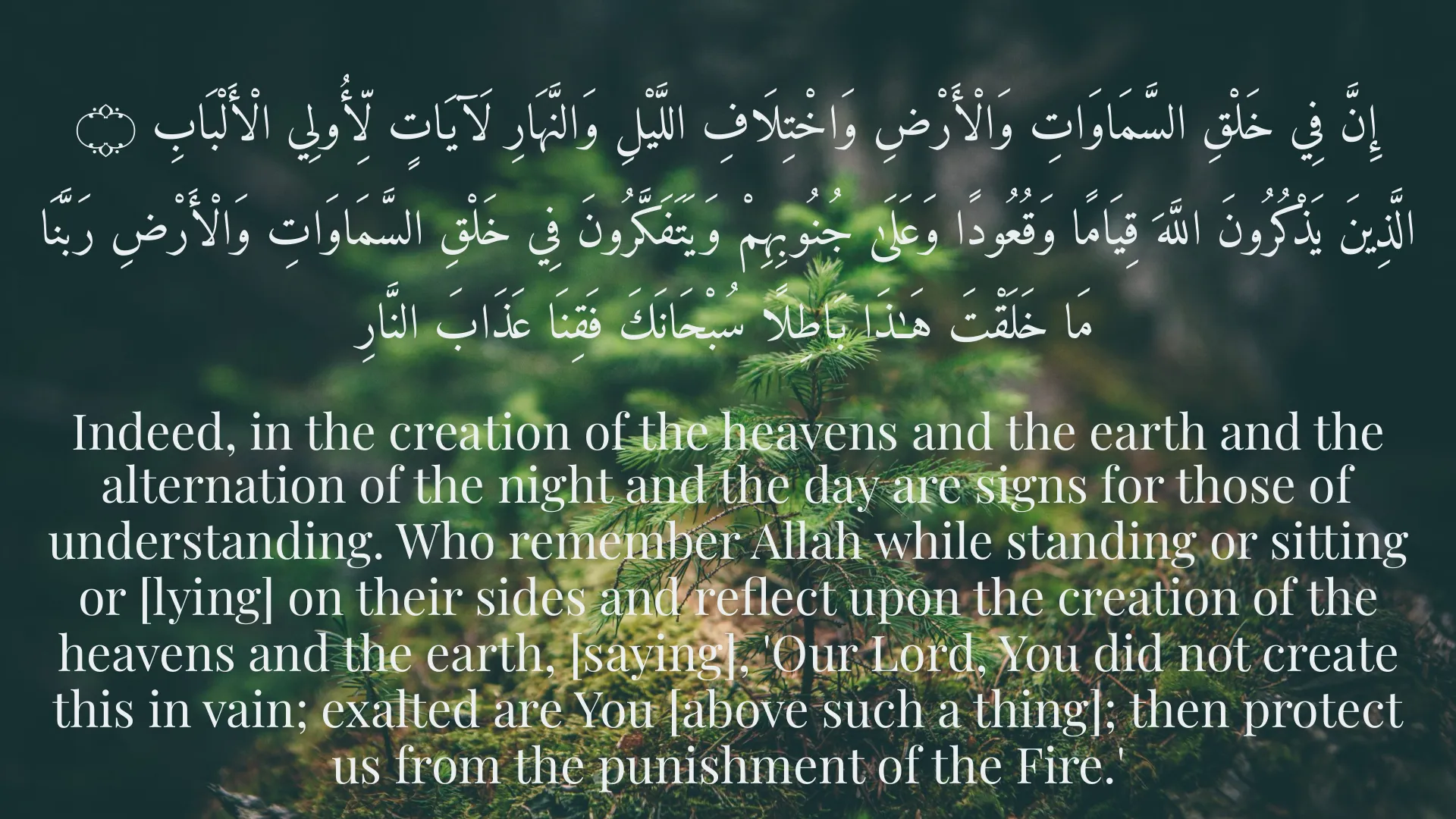
From the perspective of the Holy Quran and authentic Islamic teachings, science and faith are not only non-contradictory but are always complementary, guiding humanity towards a deeper understanding of existence and its Creator. The Quran consistently invites humans to reflect, contemplate, and study the universe (the horizons) and themselves (the souls). This invitation to research and ponder the divine signs in the cosmos forms the very foundation of science and knowledge. Indeed, every scientific discovery that uncovers the mysteries of creation does not weaken faith; rather, it reveals countless manifestations of the Creator's power, wisdom, and grandeur, thereby increasing the believer's certainty. Science is a tool to unveil the astonishing order and laws governing the universe, all of which are signs of a wise and powerful Creator. Almighty God, in numerous verses of the Holy Quran, invites humanity to a deep and contemplative look at natural phenomena and their own creation. For instance, in Surah Al-Imran, verses 190 and 191, He states: “Indeed, in the creation of the heavens and the earth and the alternation of the night and the day are signs for those of understanding. Who remember Allah while standing or sitting or [lying] on their sides and reflect upon the creation of the heavens and the earth, [saying], ‘Our Lord, You did not create this in vain; exalted are You [above such a thing]; then protect us from the punishment of the Fire.’” This verse clearly demonstrates that contemplation of creation, which is the bedrock of science, does not contradict the remembrance of God and faith. On the contrary, it is a path to a deeper understanding of the Lord and an increase in faith. This profound reflection helps individuals understand that the astonishing order and infinite complexities of the universe cannot be accidental; rather, they originate from a wise and powerful Creator. The very first divine command revealed in the Quran is “Iqra” (Read/Recite) in Surah Al-Alaq. This command itself testifies to the irreplaceable importance of acquiring knowledge, studying, and discovering truths. Reading and learning are the backbone of any scientific progress. In these verses, God explicitly states that the pen and learning are tools that lead humans from ignorance to knowledge, and this is precisely the path that science follows. Islam has never prohibited the search for truth; rather, it has always encouraged it. The Prophet Muhammad (PBUH) said: “Seeking knowledge is an obligation upon every Muslim, male and female.” This emphasis on acquiring knowledge is a clear sign of the deep harmony between science and religion in Islam. Science is the eye with which we can see the world, and faith is the heart with which we can feel the world and understand its meaning. When we look at the history of Islamic civilization, we find that during the Islamic Golden Age, Muslim scientists such as Ibn Sina, Al-Khwarizmi, Al-Razi, and Ibn al-Haytham, while deeply committed to their faith and religious beliefs, achieved remarkable advancements in medicine, mathematics, astronomy, physics, and chemistry. These great figures never saw a contradiction between their scientific activities and their religious convictions; rather, they considered science a way to better understand the Creator's magnificence and faith as an inspiration for discovery and service to humanity. For them, the laboratory and the mosque were both places of worship and closeness to God. This historical period serves as a shining example of the peaceful coexistence, and even synergy, between science and faith, where scientific advancements were accompanied by spiritual and ethical motivations, yielding immense benefits for humanity. Of course, sometimes apparent contradictions may arise between certain scientific theories (which are not yet definitively proven) and some superficial or erroneous interpretations of religious texts. However, these contradictions do not stem from the true nature of science and religion but are rooted in human limitations in understanding both divine truth and complex natural phenomena. Science is constantly progressing and self-correcting; what is a theory today may change tomorrow with new evidence. On the other hand, religious interpretations may also require re-examination and deeper contemplation to avoid conflict with established scientific facts. The Quran is a comprehensive and timeless book that has presented many scientific truths in an indicative manner and through simple examples, the depth of which becomes more apparent with the advancement of science. For instance, stages of human creation in the womb, the expansion of the universe, and the orbits of celestial bodies are allusions found in Quranic verses that have later been confirmed by modern science. This correlation signifies the unity of the source of revelation and the source of creation, emphasizing that divine truths and scientific facts cannot be in conflict, as both originate from the same ultimate source. Faith provides a holistic view of existence and guides science. Without faith, science might become an aimless and sometimes destructive tool. Faith gives profound meaning to scientific research and reminds humanity that all discoveries ultimately lead to a better understanding of the Creator's majesty and the realization of the ultimate purpose of creation. Science answers the 'how' of phenomena, and faith answers the 'why' and 'for what purpose' of them. These two questions are two sides of the same coin, and answering one complements the other. Consequently, from the Quranic perspective, science and faith are not contradictory; rather, they are two sides of a single coin, both necessary and complementary for the complete understanding of truth and the attainment of true human prosperity. Faith illuminates the path of science with guidance, and science paves the way for the manifestation of the wonders of faith. As Martyr Motahhari said: “Science without religion is blind, and religion without science is lame.” This expression perfectly illustrates the inseparable bond between these two truths in the Islamic intellectual system, providing guidance for future generations in simultaneously developing science and spirituality.
Related Verses
إِنَّ فِي خَلْقِ السَّمَاوَاتِ وَالْأَرْضِ وَاخْتِلَافِ اللَّيْلِ وَالنَّهَارِ لَآيَاتٍ لِّأُولِي الْأَلْبَابِ الَّذِينَ يَذْكُرُونَ اللَّهَ قِيَامًا وَقُعُودًا وَعَلَىٰ جُنُوبِهِمْ وَيَتَفَكَّرُونَ فِي خَلْقِ السَّمَاوَاتِ وَالْأَرْضِ رَبَّنَا مَا خَلَقْتَ هَٰذَا بَاطِلًا سُبْحَانَكَ فَقِنَا عَذَابَ النَّارِ
Indeed, in the creation of the heavens and the earth and the alternation of the night and the day are signs for those of understanding. Who remember Allah while standing or sitting or [lying] on their sides and reflect upon the creation of the heavens and the earth, [saying], 'Our Lord, You did not create this in vain; exalted are You [above such a thing]; then protect us from the punishment of the Fire.'
Al-Imran : 190-191
اقْرَأْ بِاسْمِ رَبِّكَ الَّذِي خَلَقَ خَلَقَ الْإِنسَانَ مِنْ عَلَقٍ اقْرَأْ وَرَبُّكَ الْأَكْرَمُ الَّذِي عَلَّمَ بِالْقَلَمِ عَلَّمَ الْإِنسَانَ مَا لَمْ يَعْلَمْ
Recite in the name of your Lord who created - Created man from a clinging substance. Recite, and your Lord is the Most Generous - Who taught by the pen - Taught man that which he knew not.
Al-Alaq : 1-5
وَمِنْ آيَاتِهِ خَلْقُ السَّمَاوَاتِ وَالْأَرْضِ وَاخْتِلَافُ أَلْسِنَتِكُمْ وَأَلْوَانِكُمْ ۚ إِنَّ فِي ذَٰلِكَ لَآيَاتٍ لِّلْعَالِمِينَ
And of His signs is the creation of the heavens and the earth and the diversity of your languages and your colors. Indeed in that are signs for those of knowledge.
Ar-Rum : 22
Short Story
Once upon a time, a wise king asked a scholar of his age: 'O sage, what brings a person closer to truth?' The scholar replied: 'O King, there are two wings that elevate humanity to the pinnacle of understanding: one is the wing of knowledge, and the other is the wing of faith. Knowledge opens one's eyes to the wonders of creation, and faith connects one's heart to the Creator of these wonders. If you try to fly with only one wing, your flight will be incomplete. Therefore, always cherish both, for science without faith is like a lamp that illuminates the path but does not show the destination, and faith without science is like a destination whose path is dark.' The king was delighted by this saying and understood that to achieve perfection, one must pursue both knowledge and faith.