Quranic Answer
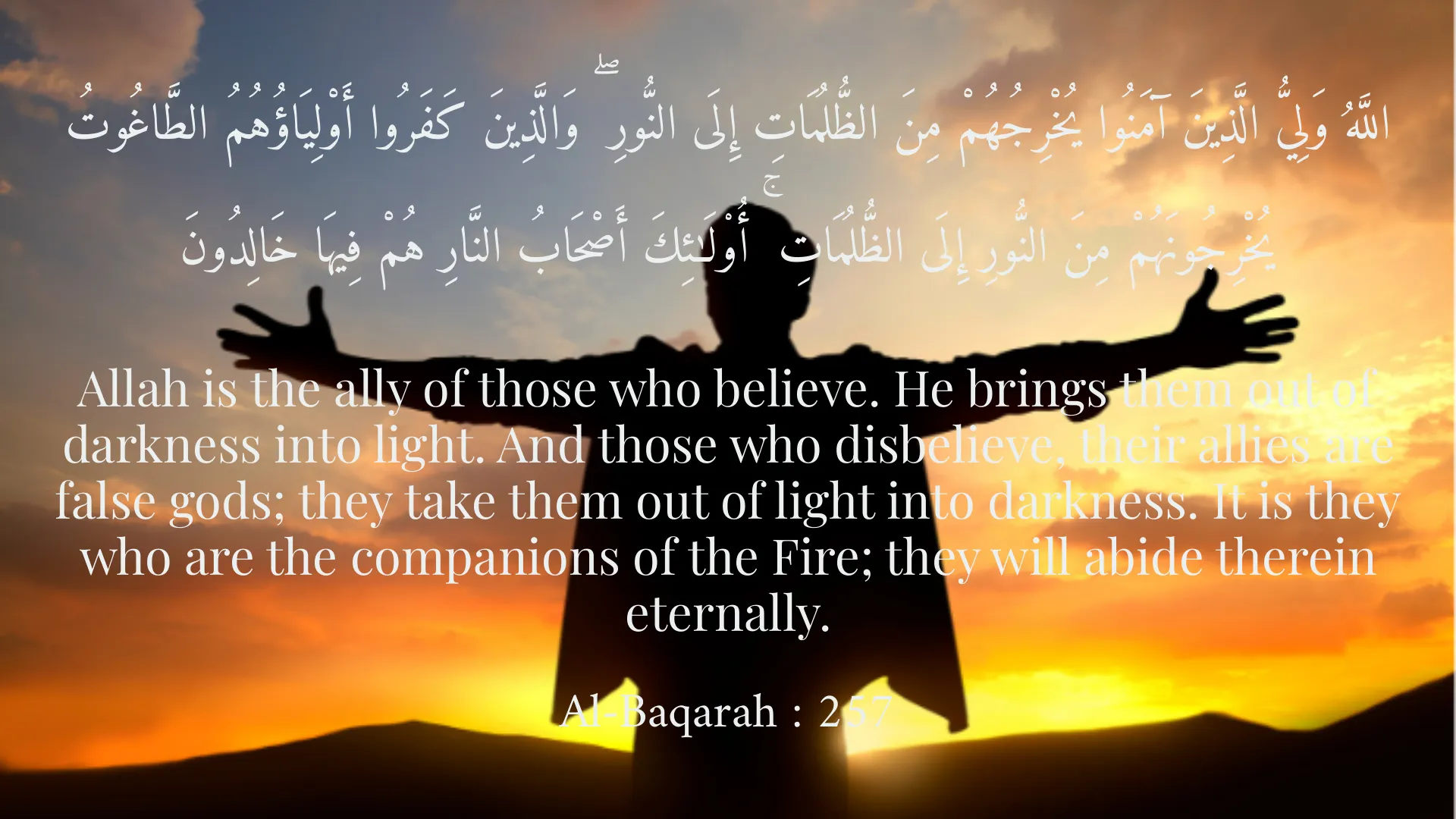
The topic of salvation, and specifically whether a non-believer can attain it, is a deeply complex and profound issue within many faith traditions, particularly in Islam. The Holy Quran, revered as the word of God by Muslims, addresses this issue directly. Central to the Islamic understanding of salvation is the belief that faith in God, or Allah, accompanied by righteous deeds, is essential for an individual to achieve salvation from the torments of the afterlife. One of the clear explanations regarding the conditions for salvation is found in Surah Al-Baqarah, verse 257. In this verse, Allah clearly indicates that He is the ally of those who believe, stating, 'Allah is the ally of those who believe. He brings them out of darkness into light. And those who disbelieve, their allies are false gods; they take them out of light into darkness. It is they who are the companions of the Fire; they will abide therein eternally.' This verse underscores the stark contrast between believers and non-believers, suggesting that faith is a crucial determinant of one's ultimate fate in the afterlife. The use of the imagery of ‘darkness’ and ‘light’ also hints at a deeper spiritual understanding of the connection between faith in God and personal transformation, illustrating the idea that belief in the divine leads to enlightenment and a righteous life. Moreover, in Surah Al-Kahf, verse 110, the Quran articulates further what it means to prepare for one's meeting with God. The verse reads, 'So whoever expects the meeting with his Lord, let him do righteous work and not associate in the worship of his Lord anyone.' This reinforces the premise that in addition to faith, righteous actions are equally significant. The notion of expecting a meeting with Allah serves as a reminder of accountability. It prompts believers to conduct themselves under the knowledge that their actions affect their standing in the eyes of God. This verse highlights personal responsibility and the imperative for individuals to embody faith through their deeds. From these Quranic passages, it becomes evident that Islam teaches that individuals are judged according to their actions — a principle that is central to Islamic teachings. The balance between faith and deeds is integral to the Islamic conception of the afterlife and salvation. It conveys that merely professing belief is insufficient if it is not accompanied by actions that reflect that belief. Hence, those who are non-believers, in the absence of faith and righteous deeds, are seen to have a minimal hope of salvation. This belief aligns with the Islamic notion of divine justice, where everyone is held accountable for their choices and actions. It's also essential to consider the broader context of Islamic teachings around salvation and the availability of guidance. While the Quran presents clear stipulations for saving faith, it is equally emphasized that the call to faith is extended to all individuals, irrespective of their past beliefs or actions. Islam is regarded as the final revelation to humanity, and it invites all, including non-believers, to embrace faith and live righteously. The compassionate nature of Allah is highlighted through numerous verses emphasizing His attribute as ‘The Most Merciful’ (Al-Rahman). This understanding encourages Islamic scholars to often discuss the concept of salvation beyond a binary perspective of believers versus non-believers. While the foundational texts position faith as a requisite for salvation, the overarching vision of Islam is one of inclusivity and mercy. As with many religious doctrines, interpretations and understandings can vary significantly over time, contexts, and cultural backgrounds. Different Islamic scholars may provide varied insights and perspectives on the complexities surrounding salvation, especially concerning individuals who may not identify as believers. Islamic theology encourages thoughtful discourse, dialogue, and exploration, which facilitate a better understanding of one's role in the divine framework. Moreover, there are various narratives and teachings within Islamic tradition that showcase the importance of sincerity in one's actions and the quest for truth. For instance, the teachings of the Prophet Muhammad emphasize the value of intentions behind actions, underscoring that what matters in the eyes of God often revolves around the heartfelt sincerity of the individual. Thus, there are discussions within Islamic theology about the possibility of individuals who may not adhere to the belief system of Islam, yet lead ethical lives and exhibit virtues that resonate with Islamic values. Some scholars argue that these attributes could yield a special consideration from God. In conclusion, the question of whether a non-believer can be saved is layered and multifaceted. Within the confines of Islamic belief, faith in Allah and adherence to righteous deeds are fundamental for salvation. While the Quran underscores these tenets decisively, it also embodies a message of mercy and inclusivity, stressing that the opportunity for redemption is open to all. Ultimately, the unique nature of Divine judgment ensures that every individual's heart, intentions, and actions will be fully understood by Allah on the Day of Resurrection. Thus, the manner in which one engages with the call to faith and the resulting actions taken will determine one's ultimate fate in the afterlife. Islam calls for humankind to reflect, engage in righteous deeds, and seek understanding, leaving the door open for salvation for all who earnestly aspire to it.
Related Verses
اللَّهُ وَلِيُّ الَّذِينَ آمَنُوا يُخْرِجُهُمْ مِنَ الظُّلُمَاتِ إِلَى النُّورِ ۖ وَالَّذِينَ كَفَرُوا أَوْلِيَاؤُهُمُ الطَّاغُوتُ يُخْرِجُونَهُمْ مِنَ النُّورِ إِلَى الظُّلُمَاتِ ۚ أُو۟لَـٰئِكَ أَصْحَابُ النَّارِ هُمْ فِيهَا خَالِدُونَ
Allah is the ally of those who believe. He brings them out of darkness into light. And those who disbelieve, their allies are false gods; they take them out of light into darkness. It is they who are the companions of the Fire; they will abide therein eternally.
Al-Baqarah : 257
فَمَن كَانَ يَرْجُو لِقَاءَ رَبِّهِ فَلْيَعْمَلْ عَمَلًۭا صَالِحًۭا وَلَا يُشْرِكْ بِعِبَادَةِ رَبِّهِ أَحَدًۭا
So whoever expects the meeting with his Lord, let him do righteous work and not associate in the worship of his Lord anyone.
Al-Kahf : 110
Short Story
In ancient times, a hermit lived in the mountains. He often pondered whether people without faith could attain salvation. One day, a non-believer approached him for advice. With kindness, the hermit said, 'Dear brother, salvation lies in faith in God and righteous deeds. If you wish, you can come from darkness to light.' The man, reflecting on the hermit's words, turned towards faith, and as a result, his life changed.