Quranic Answer
In the intricate relationship between humanity and the divine, the Quran presents a profound understanding of the dynamics involved. It emphasizes that individuals are not only allowed but also encouraged to seek clarity and understanding from God. This notion is rooted deeply in the fabric of Islamic teachings, where the pursuit of knowledge and dialogue with the divine play a vital role in spiritual development and personal growth. ### The Encouragement to Ask Questions The Quran suggests that individuals should not shy away from asking God for explanations regarding their lives and the circumstances they find themselves in. Surah Yunus, verse 44 reminds us that 'Indeed, Allah does not do injustice to the people, but the people are unjust to themselves.' This verse serves as a foundation for understanding one's struggles; it reflects the belief that the challenges and hardships that people face are not punishments from God but rather opportunities for learning and growth. As humans navigate through the complexities of life, it is only natural to encounter moments of doubt, confusion, and despair. The first reaction often is to question the circumstances that lead to these feelings. The Quran validates this inclination, pointing towards a relationship where individuals actively engage with their Creator. It is within this context that asking questions becomes a vital engagement that fosters a deeper understanding of oneself and one's relationship with God. ### The Wisdom Behind Suffering Life is full of ups and downs, and particularly during times of grief or loss, individuals may grapple with questions that weigh heavily on their souls. Why did this happen? What does this experience mean? What purpose does my pain serve? These inquiries are significant as they represent a person's search for meaning and understanding in the face of adversity. Surah Al-Baqarah, verse 186 states: 'And when My servants ask you concerning Me, indeed I am near.' This divine assurance highlights God's proximity to those who seek Him, underscoring a fundamental principle of the Islamic faith: God is always responsive to the inquiries of His servants. It encourages us to remember that not only does God hear our questions, but He is also present to provide comfort and guidance. This reinforces the idea that the act of asking questions is indeed a sign of one's closeness to God, reflecting a relationship built on trust, dependence, and spiritual intimacy. ### The Role of Trust in Divine Wisdom When individuals pose questions to God, they are engaging in a dialogue that signifies more than mere inquiry; it symbolizes trust in God's wisdom and a belief in the underlying purpose behind every experience. Trust is integral to this process; it is the compass that guides one through the uncertainties of life. The Quran teaches that the nature of God's wisdom can sometimes be beyond human comprehension, yet this should not deter individuals from seeking answers. Instead, this mystery can deepen one's faith and resolve to seek understanding. The journey of seeking knowledge from God, accompanied by trust, becomes a transformative process leading to spiritual maturity. Moreover, being open to God's guidance also means accepting that the answers may not always align with one's expectations or desires. This acceptance is a part of spiritual growth, as it involves surrendering to a greater plan that may not be immediately apparent. ### Navigating Challenges Through Faith For those facing challenges, engaging with God through questions can be cathartic and revealing. It allows individuals to confront their emotions and experiences head on and fosters reflection. Alongside this, the responses gained—or even the silence experienced—can provide profound insights into one's circumstances. It may lead to a greater understanding of personal resilience, encourage introspection, and help refine one's character. People who have established a habit of turning to God in moments of uncertainty often emerge with a renewed sense of purpose and direction. They learn to interpret their experiences through a spiritual lens, wherein trials are significant components of their personal narratives—contributing to the overarching story of growth, faith, and understanding. ### A Call to Action The Quran's invitation to ask questions serves as a call to action for believers to deepen their relationship with God actively. This pursuit of understanding should not be a one-time event limited to moments of crisis, but rather a continuous dialogue throughout life’s journey. By developing this habit, individuals cultivate a spiritual practice that allows for both growth and healing. In conclusion, the Quran emphasizes a unique and transformative relationship between humanity and God, wherein individuals are encouraged to ask their questions and seek understanding. This dialogue fosters a deeper connection with the divine, nurturing faith, trust, and resilience. As life presents its inevitable challenges, the words of the Quran remind us that questions are not just welcomed but essential pathways to personal and spiritual understanding. Embracing this perspective transforms hardships into opportunities for growth and learning, guiding individuals on their journey toward enlightenment and closer communion with God.
Related Verses
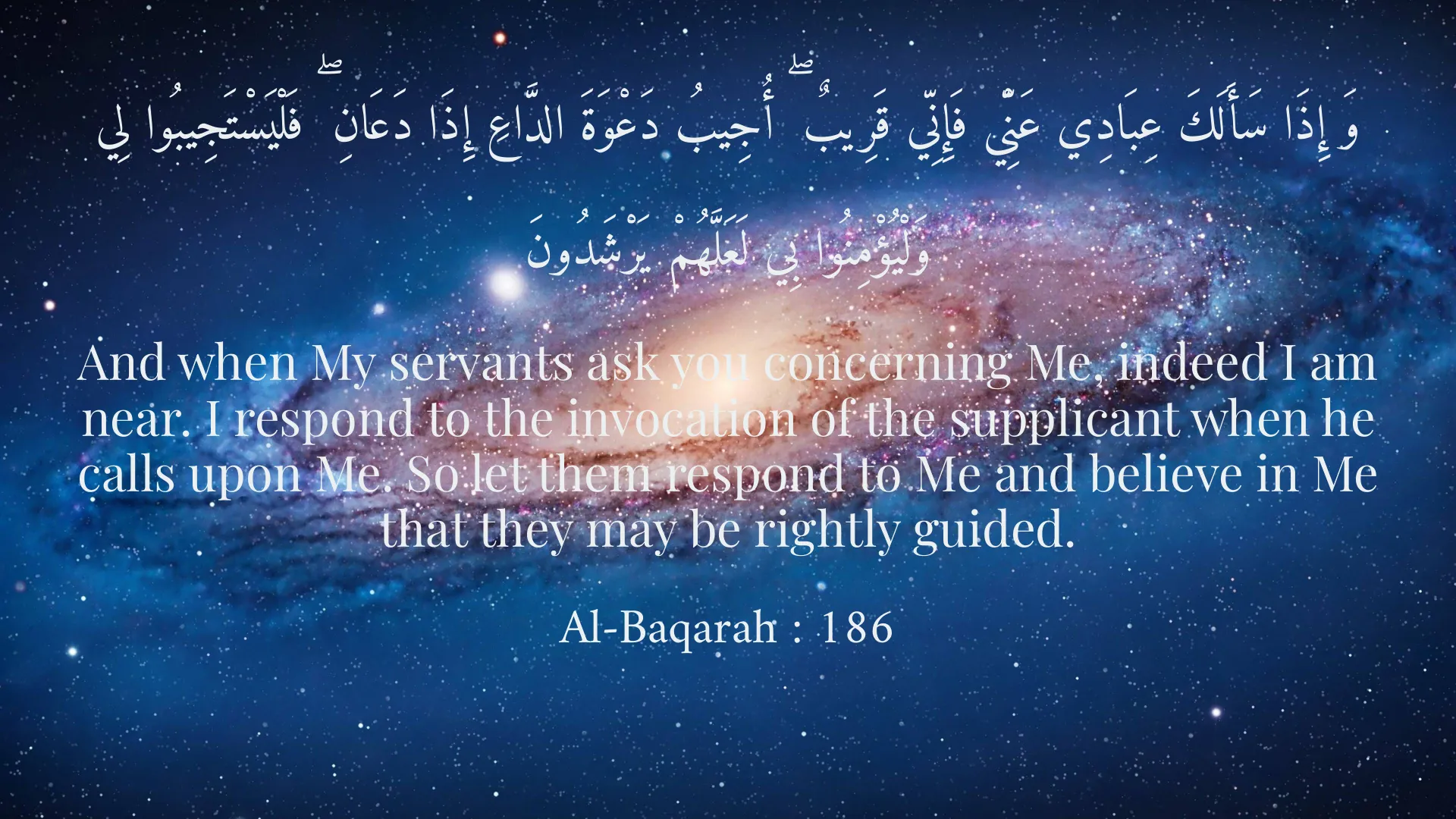
وَ إِذَا سَأَلَكَ عِبَادِي عَنِّْي فَإِنِّي قَرِيبٌ ۖ أُجِيبُ دَعْوَةَ الدَّاعِ إِذَا دَعَانِ ۖ فَلْيَسْتَجِيبُوا لِي وَلْيُؤْمِنُوا بِي لَعَلَّهُمْ يَرْشَدُونَ
And when My servants ask you concerning Me, indeed I am near. I respond to the invocation of the supplicant when he calls upon Me. So let them respond to Me and believe in Me that they may be rightly guided.
Al-Baqarah : 186
إِنَّ اللّهَ لاَ يَظْلِمُ النَّاسَ شَيْئًا وَلَكِنَّ النَّاسَ أَنفُسَهُمْ يَظْلِمُونَ
Indeed, Allah does not do injustice to the people, but the people are unjust to themselves.
Yunus : 44
Short Story
One day, Adel was sitting and reflecting on his life. He often posed questions to God but never seemed to find a clear answer. After a while, he decided to pray with more faith and ask God for clarity. Eventually, he realized that God revealed His answers through the signs and experiences in his life, and this was the secret of his connection with his Creator.