Quranic Answer
In the Holy Quran, the relationship between action and faith is profoundly interconnected. This connection highlights a fundamental truth about the Islamic belief system: true faith is not merely a matter of belief but must manifest through actions and moral behavior in the world. This theme resonates throughout various chapters and verses of the Quran, establishing that faith without action is incomplete, and actions devoid of faith lack divine value. Understanding this relationship can empower believers to strengthen their spirituality and appreciate the comprehensive nature of worship in Islam. One noticeable instance of this intricate relationship is found in Surah Al-Ma'idah, verse 54, where Allah addresses the believers directly, stating: 'O you who have believed! Whoever of you should revert from his religion - Allah will bring forth [for] a people He will love and who will love Him.' This verse serves as a powerful reminder that faith is dynamic and requires continuous commitment and dedication. The term "revert" indicates the potential for believers to stray from their path, emphasizing the importance of remaining steadfast in both belief and practice. The subsequent promise of divine affection to those who embody faith emphasizes that genuine love for Allah leads to a reciprocal love from Him—a concept that illustrates the reciprocity fundamental to the believer's spiritual journey. Additionally, Surah Aal-e-Imran, verse 86 elaborates on this theme: 'And what [is the matter] with them that Allah would not punish them while they avert [people] from the Sacred Mosque and they were not its guardians?' This verse suggests that actions taken without the backing of sincerity and faith are not only ineffective but could provoke divine displeasure. It emphasizes the gravity of leading others astray and highlights the responsibility of believers to act in accordance with their faith. When individuals perform actions such as visiting sacred places or performing rituals without genuine faith, their actions become hollow and devoid of spiritual merit. Thus, efforts conducted outside the framework of faith not only lack value in Allah’s eyes but also may ultimately lead individuals further away from their intended spiritual guidance. This divine perspective on faith and actions aligns with fundamental Islamic principles, where belief is a driving force for moral conduct. The Quran teaches that faith is tested through action, and righteousness is assessed by the intentions behind each deed. Surah Al-Baqarah, verse 177 elucidates this point further: 'Righteousness is not that you turn your faces toward the east or the west, but [true] righteousness is in one who believes in Allah, the Last Day, the Angels, the Book, and the Prophets.' This verse asserts that mere compliance with outward rituals, such as facing a certain direction during prayer, is insufficient for true righteousness. Instead, integrity in faith, characterized by belief in key tenets such as the oneness of Allah and accountability on the Day of Judgment, is integral to achieving righteousness. Consequently, it is essential to recognize that actions alone, without the underpinning of faith, are perceived as lacking by Allah. Actions can be evaluated based on the intention (Niyyah) behind them, highlighting that even the most outwardly beneficial acts hold no merit unless they are grounded in authentic belief. Islam preaches that faith must be exemplified in both intention and practice; thus, every good action should be an expression of an underlying faith that seeks to please Allah. Without this alignment, the actions may appear virtuous on a superficial level but will ultimately fall short of fulfilling their divine purpose. Moreover, the authentic manifestation of faith through actions contributes to a spiritually enriched community. Believers who cultivate their faith through acts of worship, charity, kindness, and justice positively influence those around them and foster an ecosystem of ethical behavior driven by the principles of Islam. This, in turn, strengthens the bonds of society, facilitates mutual support, and inspires others to reflect on their own spiritual journeys, leading them closer to faith and action. Conversely, actions that lack faith can also result in societal disarray, as individuals may engage in selfish or misguided pursuits that prioritize personal gain over communal welfare. This functioning illustrates how divine guidance is necessary for ethical behavior and righteousness. Without it, the actions taken, even if they appear constructive in nature, may inadvertently lead to negative consequences—both personally and collectively. In light of these teachings, it is essential for Muslims to continuously foster their faith and ensure that their actions align with their beliefs. Engaging in prayer, seeking knowledge, and nurturing a sincere relationship with Allah are vital components of this journey. Concurrently, believers must remain vigilant against the pitfalls of hypocrisy, where outward appearances deceive, and actions do not reflect true faith. Ultimately, the completion of faith is entwined with action, necessitating a harmonious relationship between belief and behavior. Allah's promise of loving those who embody true faith reinforces this concept, elucidating that divine satisfaction lies not in hollow rituals but in genuine actions inspired by sincere belief. As such, the Islamic tenets invite believers not only to believe but also to act in accordance with their beliefs to fully realize the depth of their faith. Strengthening this relationship between faith and action emerges as a pivotal pursuit in a believer’s life, wherein every good deed, however small, refracts the light of faith into a broader canvas, drawing others towards the mercy and guidance of Allah.
Related Verses
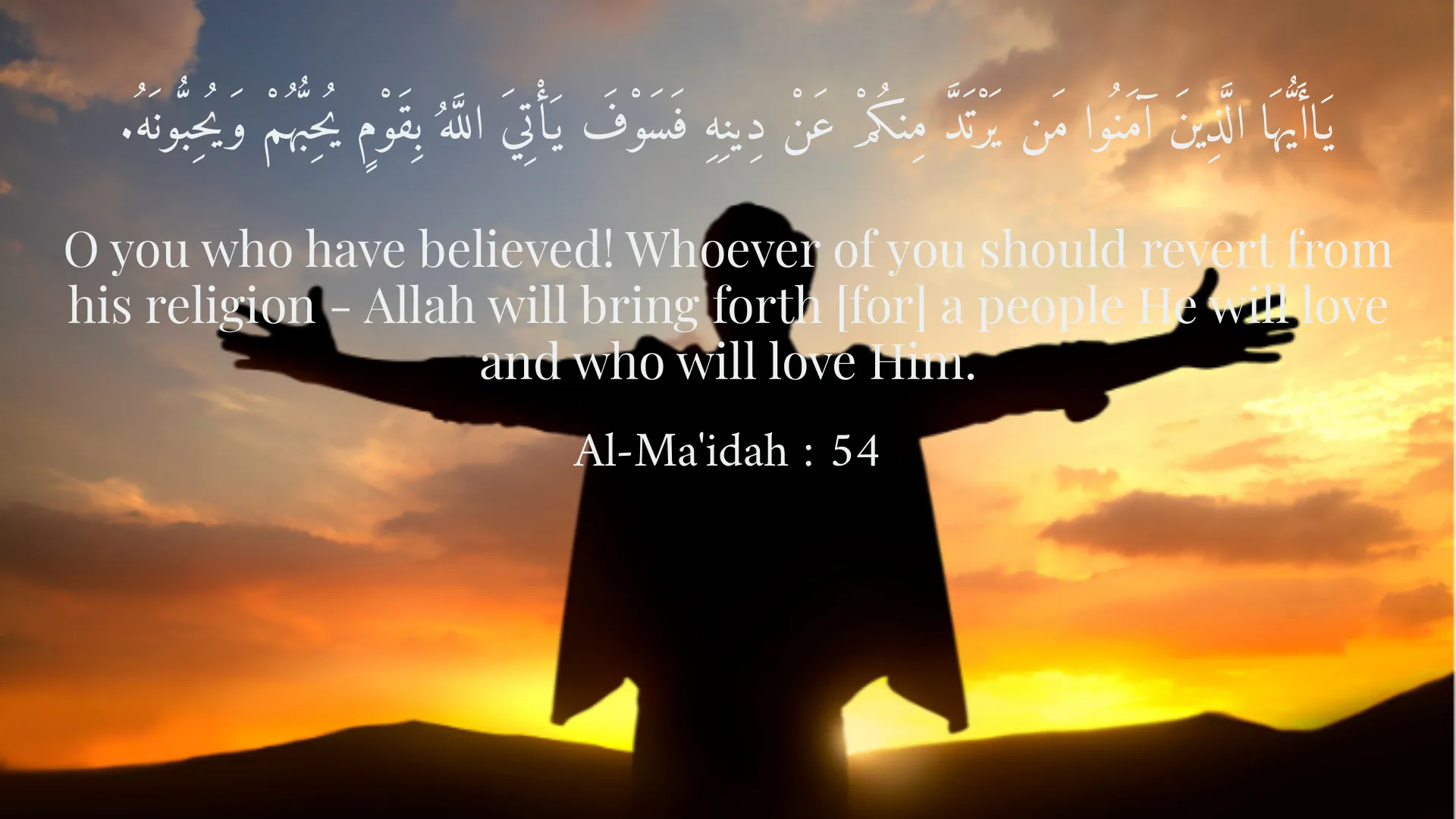
يَاأَيُّهَا الَّذِينَ آمَنُوا مَن يَرْتَدَّ مِنكُمْ عَنْ دِينِهِ فَسَوْفَ يَأْتِيَ اللَّهُ بِقَوْمٍ يُحِبُّهُمْ وَيُحِبُّونَهُ.
O you who have believed! Whoever of you should revert from his religion - Allah will bring forth [for] a people He will love and who will love Him.
Al-Ma'idah : 54
وَمَا لَهُمْ أَلَّا يُعَذِّبَهُمُ اللَّهُ وَهُمْ يَصُدُّونَ عَنِ الْمَسْجِدِ الْحَرَامِ وَهُمْ لَمْ يَكُونُوا أَوْلِيَاءَهُ.
And what [is the matter] with them that Allah would not punish them while they avert [people] from the Sacred Mosque and they were not its guardians?
Aal-e-Imran : 86
لَيْسَ الْبِرَّ أَنْ تُوَلُّوا وُجُوهَكُمْ قِبَلَ الْمَشْرِقِ وَالْمَغْرِبِ وَلَكِنَّ الْبِرَّ مَنْ آمَنَ بِاللَّهِ وَالْيَوْمِ الْآخِرِ وَالْمَلَائِكَةِ وَالْكِتَابِ وَالنَّبِيِّينَ.
Righteousness is not that you turn your faces toward the east or the west, but [true] righteousness is in one who believes in Allah, the Last Day, the Angels, the Book, and the Prophets.
Al-Baqarah : 177
Short Story
One day, there was a man named Ali who sought to understand what was most important in his life. He realized that his actions must be accompanied by faith and pure intention. He decided to perform good deeds with his faith in God. From that day forward, Ali felt that his thoughts and behaviors had changed, and he found a greater sense of peace.