Quranic Answer
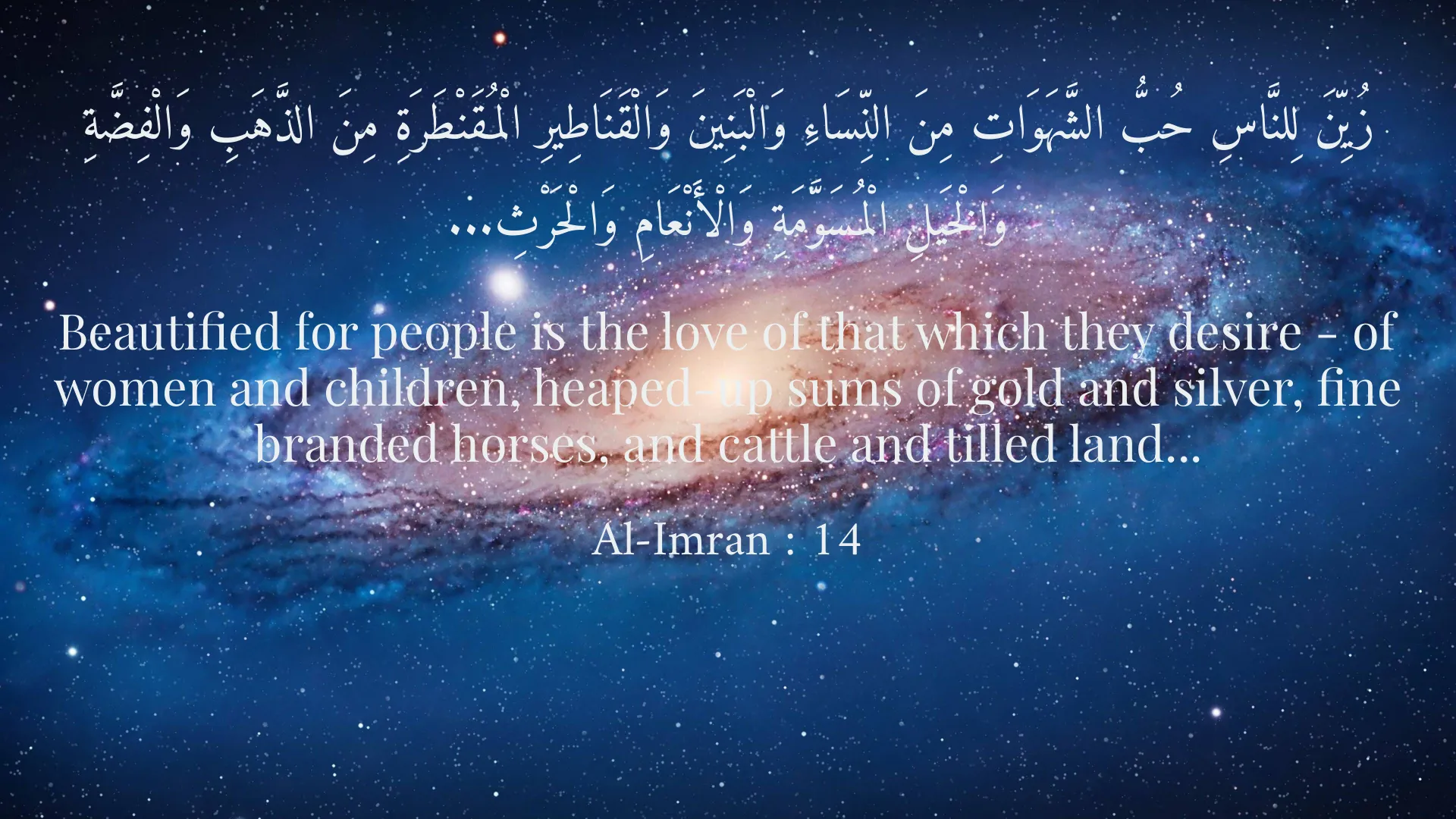
In the light of the Holy Quran, the concept of love and affection is intricately woven into the fabric of human experience, highlighting its significance in both earthly and spiritual dimensions. Love, as depicted in the Quran, is not merely a fleeting emotion; it is recognized as a natural and inherent feeling that forms the basis of human relationships. It encompasses a broad spectrum of connections that individuals form with one another, including familial bonds, friendships, and romantic partnerships. However, while these feelings are celebrated, the Quran also emphasizes the necessity for balance, reminding believers that such earthly affections should not overshadow their faith and commitment to God. One of the Quranic verses that illustrates this delicate balance is found in Surah Al-Imran, verse 14, which states: 'Beautified for people is the love of that which they desire - of women and children, heaped-up sums of gold and silver, fine branded horses, and cattle and tilled land...' In this verse, Allah acknowledges the natural inclination of people towards worldly desires, including love for their families, material possessions, and the comforts of life. This acknowledgment is crucial as it reflects a realistic understanding of human nature; humans inherently seek love, connection, and stability in their lives. Yet, the Quran provides a critical warning regarding the potential pitfalls of succumbing too readily to these earthly affections. The verse serves as a reminder that while it is perfectly acceptable to experience love and desire for the things of this world, one must remain vigilant and resilient against allowing these feelings to distract them from their spiritual obligations. It warns believers that an excessive focus on worldly loves can lead to neglect of their relationship with God. When earthly affections and desires are placed above one’s devotion to Allah, they can quickly become barriers to one's faith, obstructing the path to spiritual fulfillment. Despite the warning against misplaced priorities, the Quran does not condemn love or affection for family, spouses, or the material world altogether. Instead, it advocates for a reality where love exists harmoniously alongside faith. Family relationships, for instance, are celebrated and held in high regard throughout the Quran. Believers are encouraged to nurture their relationships with loved ones, emphasizing the importance of kindness, compassion, and support in these interactions. In fact, in many instances, cultivating love and affection within families is seen as a means of fulfilling one’s duties to God, highlighting that devotion to faith and love for family are not mutually exclusive. Moreover, the Quran underscores the value of love in fostering unity and connection within communities. Love encourages empathy, mutual respect, and support among individuals, enabling the formation of strong, cohesive societies. This perspective is pivotal, as it illustrates that love serves not only as a personal experience but as a communal strength that can drive individuals towards righteous actions and collective well-being. Furthermore, love in the Quran transcends mere emotional attachment; it encompasses a deeper commitment to uphold moral values, provide support, and engage in acts of kindness. The Quran encourages believers to extend their love beyond familial ties to encompass compassion for the wider community, including neighbors and even strangers. It instills a sense of responsibility towards nurturing relationships and emphasizes that love should inspire actions that contribute to societal welfare. The balance between love for worldly matters and one's spiritual devotion is a recurring theme throughout the Quran. The extensive treatment of love serves as a reminder that while earthly attachments are part of the human experience, they must always be approached with the understanding that they are secondary to one's relationship with Allah. True fulfillment is found not merely in the attainment of worldly desires but in realizing that these desires should lead a person closer to their faith rather than away from it. Furthermore, the stories of the prophets and the righteous in the Quran often exemplify this harmony between love and faith. The tales of various prophets showcase their relationships with their families, communities, and followers, demonstrating how they navigated their earthly affections while maintaining unwavering devotion to God. For instance, the love shown by the Prophet Muhammad (peace be upon him) towards his family and companions exemplifies how one can embrace love while serving as a servant of God. His life serves as a quintessential model of balancing earthly affections and spiritual commitment — a lesson that resonates with believers across generations. In conclusion, the Holy Quran delineates a comprehensive perspective on love that encompasses both earthly and spiritual dimensions. Love is acknowledged as an innate human emotion that can foster profound connections and bring joy to life. However, the Quran also provides a clear and cautionary reminder that love for worldly matters must not take precedence over one’s faith in Allah. Instead, it emphasizes that love, when channeled appropriately, can coexist harmoniously with faith, enriching one’s spiritual journey rather than detracting from it. Ultimately, the Quran invites believers to embrace love in all its forms while reminding them of their primary commitment to God. By nurturing relationships while staying anchored in their faith, believers can find a balance that leads to a fulfilling and meaningful life.
Related Verses
زُيِّنَ لِلنَّاسِ حُبُّ الشَّهَوَاتِ مِنَ النِّسَاءِ وَالْبَنِينَ وَالْقَنَاطِیرِ الْمُقَنْطَرَةِ مِنَ الذَّهَبِ وَالْفِضَّةِ وَالْخَیلِ الْمُسَوَّمَةِ وَالْأَنْعَامِ وَالْحَرْثِ...
Beautified for people is the love of that which they desire - of women and children, heaped-up sums of gold and silver, fine branded horses, and cattle and tilled land...
Al-Imran : 14
Short Story
One day, a man named Farhad was walking in the forest, carefully listening to the birds' songs. He often thought about his human needs and love for his family. However, he always had a question in his heart: could these loves influence his virtuous faith? He decided that he had to maintain a balance and view his love for his family and love for God alongside each other. After some time, Farhad felt that these two loves could even contribute to his spiritual growth and bring him more peace.