Quranic Answer
Hope is a vital human emotion that plays a significant role in shaping our outlook towards life. It is an essential aspect of our mental well-being that inspires and motivates individuals to strive for better futures, to overcome challenges, and to achieve their goals. In many religious texts, including the Holy Quran, hope is portrayed as a powerful and uplifting emotion that can guide believers through difficult times and instill a sense of perseverance. However, the challenge that arises is the question of whether excessive hope may lead to unrealistic expectations from Allah. This article delves into the notion of hope, its significance in the Quran, and the delicate balance that must be maintained between hope and expectations in our relationship with the divine. In the Holy Quran, hope is depicted as a fundamental aspect of faith and consciousness. Allah emphasizes the importance of never losing hope in His mercy. One of the poignant verses that capture this essence is found in Surah Yusuf, verse 87, where it is stated, "None despairs of the mercy of his Lord except the disbelieving people." This verse serves as a reminder to believers that despair is inappropriate and that they must maintain hope in Allah's compassion and mercy. It underscores the idea that hope should be a perpetual flame in the hearts of believers, and abandoning this hope is closely associated with disbelief. This teaches us that even in the direst circumstances, we should never cease to believe in the possibility of divine mercy and intervention. However, while hope is a comforting and essential part of faith, there lies a potential pitfall—expecting that Allah will fulfill all requests and desires. In Surah Ghafir, verse 60, Allah assures His believers, stating, "Call upon Me; I will respond to you." This powerful promise indicates that Allah is ever-listening and will respond to the prayers of His servants. Yet, it also opens up a contemplation on the nature of that response. Believers are encouraged to understand that Allah knows what is best for them and may respond in ways that differ from their expectations. This brings us to the core of the discussion: the balance between hope and expectations. Hope fosters a positive outlook and resilience, but unrealistic expectations can lead individuals to disappointment, frustration, or even despair if their prayers are not answered in a particular way. Consequently, a mature understanding of hope involves recognizing that while Allah may respond to our prayers, He does so according to His wisdom and divine plan, which might not align with our desires. This perspective encourages believers to embrace a more profound understanding of hope that is rooted in acceptance and trust in Allah’s will. Believers, therefore, must learn to differentiate between hope and expectation. Hope signifies a yearning for something positive, a trust in Allah's justice and mercy, while expectations can often be tied to specific outcomes that may not always materialize. It is essential to cultivate hope that is grounded in the understanding that God's decisions are aligned with His wisdom, which surpasses human comprehension. Furthermore, the Quran emphasizes the intertwined relationship between hope, patience, and gratitude as characteristics of true believers. In times of trial and tribulation, it is often patience that allows individuals to navigate through challenges, while gratitude serves as a reminder of the blessings that already exist in one’s life. These qualities work hand-in-hand with hope; they reinforce each other, helping individuals maintain a healthy spiritual balance. By practicing patience when faced with delays in answers to prayers and expressing gratitude for the existing blessings, believers can sustain hope without falling into the trap of unrealistic expectations. Hope, when cultivated alongside patience and gratitude, further enriches one’s spiritual journey. It elevates one's connection with the divine and inspires a profound understanding of one's purpose in life. The believer can find solace in the knowledge that persistence in prayer and the maintenance of hope will ultimately lead to fulfillment, be it in this life or the hereafter. It is a reassurance that Allah’s timing is perfect, and with every hardship comes ease, as emphasized in the Quran. In conclusion, the emotion of hope is indeed a vital component of human existence and spirituality. It serves as a driving force that motivates individuals to look beyond their current circumstances and strive for a better future. The Holy Quran poignantly illustrates the significance of hope, while simultaneously reminding believers of the necessity to balance this hope with realistic expectations. By recognizing that Allah’s responses to prayers are subject to His divine wisdom and plan, believers can cultivate a resilient faith that is enriched by patience and gratitude. This balanced approach fosters true hope, leading to peace within and a deepened relationship with Allah. Ultimately, a life imbued with hope, patience, and gratitude not only enhances personal well-being but also reflects the profound teachings of the Holy Quran.
Related Verses
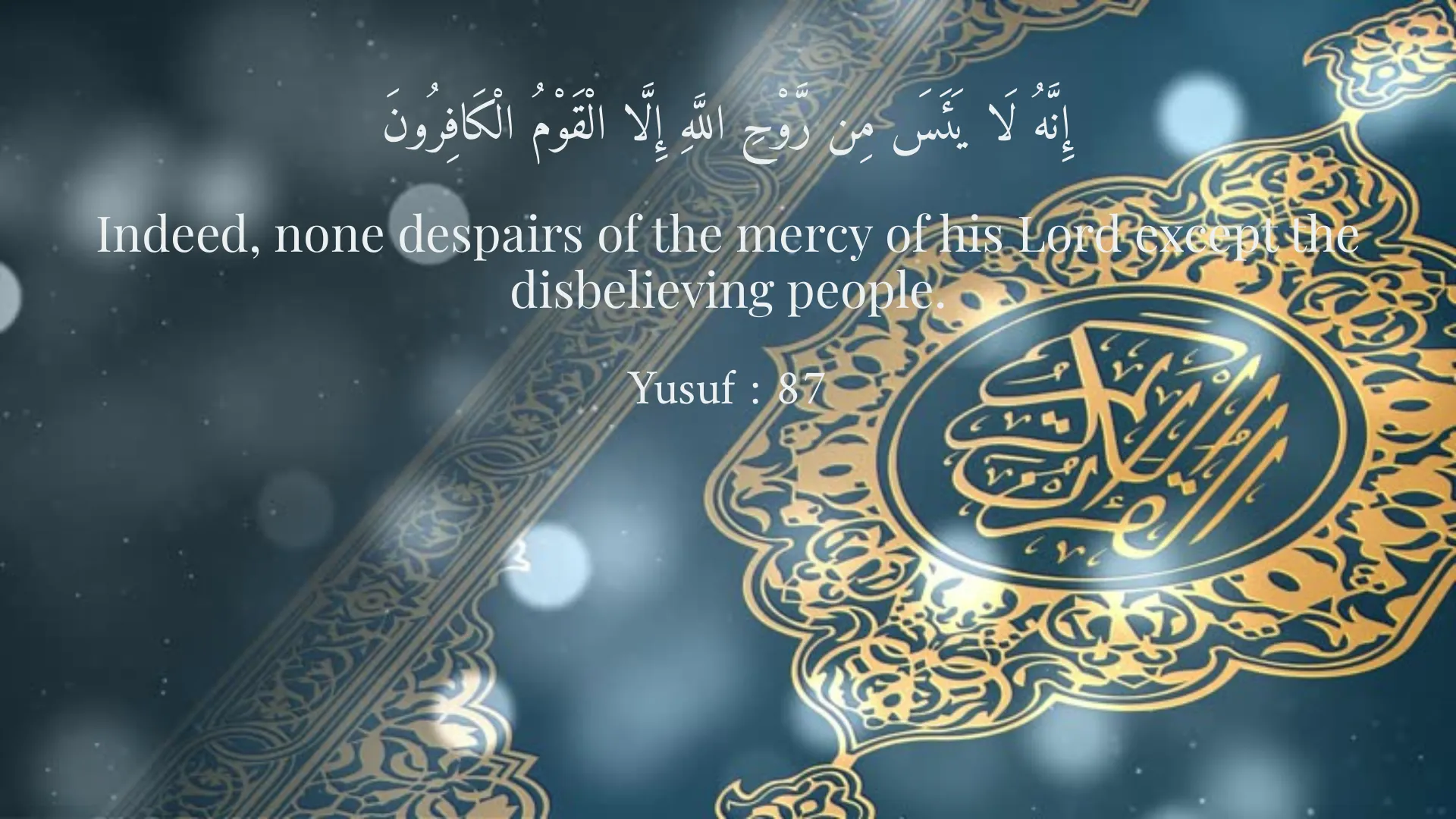
إِنَّهُ لَا يَئَسَ مِن رَّوْحِ اللَّهِ إِلَّا الْقَوْمُ الْكَافِرُونَ
Indeed, none despairs of the mercy of his Lord except the disbelieving people.
Yusuf : 87
ادْعُونِي أَسْتَجِبْ لَكُمْ
Call upon Me; I will respond to you.
Ghafir : 60
Short Story
Once upon a time, a man named Sajjad was searching for hope and peace in his life. He always prayed and made many requests from God. However, over time, he realized that his excessive hope led to unrealistic expectations. Then he decided to focus on gratitude and patience instead of endless demands. Sajjad understood that living with the right hope and accepting God's will led to greater peace. He warmly told his friends: "Allah knows how to fulfill prayers; what matters is to pray with full faith and to be patient in the face of His decree."