Quranic Answer
The concept of mercy and forgiveness is one of the cornerstone themes in the Holy Quran, serving as an essential reminder of God's compassionate nature towards humanity. The Quran emphasizes repeatedly that regardless of the depth of one's mistakes or sins, God's mercy is vast, encompassing every sin and guiding the servant back to the right path. In this article, we delve deeper into the embodiment of God's mercy and forgiveness through various verses of the Quran, exploring their meanings and implications in the lives of believers. A particularly significant verse that illustrates this divine mercy is verse 53 of Surah Al-Zumar. Here, Allah states: 'Say, O My servants who have believed, fear your Lord. For those who do good in this world is good, and the earth of Allah is spacious. Indeed, the patient will be given their reward without account.' This verse is profound for several reasons. Firstly, it directly addresses 'My servants who have believed,' creating a sense of community and belonging among believers. It serves as an affirmation to those who have faith, encouraging them to maintain a God-fearing disposition. This fear, however, is not one of dread; it's a loving fear that reminds the believers of the greatness of God's mercy. The latter part of the verse is equally significant as it encourages believers to engage in good deeds, asserting that such actions lead not only to earthly benefits but also to divine rewards without measure. The mention of being patient and the promise of rewards 'without account' show God's boundless generosity and readiness to forgive. This illustrates that God perceives the struggles and efforts of His servants, encouraging them to remain steadfast in the face of trials. The patience rewarded here hints at the understanding that trials are part of life and that enduring them is not just a test, but a pathway to greater reward and forgiveness. Another critical verse that emphasizes the theme of repentance is found in Surah At-Tawbah, verse 104: 'Do they not know that Allah accepts repentance from His servants and takes the charity?' This verse offers a comforting reminder that God's doors for repentance are always open. It emphasizes that no matter how far a person might stray, there exists the possibility of returning and being accepted back by God. This open invitation reflects God's relentless pursuit of a relationship with His creation. The act of repentance is a powerful testament to God's love, highlighting that He awaits the return of His wayward servants with open arms. The act of seeking forgiveness through repentance is described as a pivotal moment in a believer's life. The Quran teaches that repentance is not merely a verbal acknowledgement of sins but requires a sincere intention to change and rectify one's actions. In essence, genuine repentance denotes a transformation of the heart, leading to reformation of behavior and a commitment to living righteously. Without a doubt, God not only forgives the sins of the one who repents but also elevates their status, replacing their ill deeds with good ones, as indicated in numerous hadith and teachings of the Prophet Muhammad (peace be upon him). An essential aspect of forgiveness and mercy in Islam is the notion that believers should also practice forgiveness toward one another. Just as God extends His mercy and affirms that He forgives all sins, believers are encouraged to adopt a mindset of mercy and compassion in their interactions. This reciprocal nature of mercy cultivates a supportive community, fortifying relationships among individuals and promoting societal harmony. When believers understand the accepting nature of God's forgiveness towards them, they are often more willing to emulate that virtue in their relationships with others. Furthermore, the concept of hopelessness is alien to the teachings of the Quran. It explicitly guides individuals to never despair of God's mercy, indicating that regardless of their past, there always remains a glimmer of hope for redemption. In Surah An-Nisa, verse 48, Allah states: "Indeed, Allah does not forgive associating with Him, but He forgives what is less than that for whom He wills." This verse is often cited to highlight that even the gravest of sins can be forgiven if the sinner turns back sincerely towards God, reinforcing the idea that no sin is beyond God's reach of mercy. The narrative of repentance and mercy evident in the Quran has profound implications on a personal level. For many believers, these verses serve as reminders that life is inherently flawed. The emphasis on repentance creates a culture of self-reflection and personal growth while underscoring the importance of accountability. When believers regard their mistakes through the lens of hope rather than despair, it fosters resilience and a stronger resolve to strive for personal improvement. In conclusion, the Quran paints a vivid and reassuring picture of God's mercy and forgiveness. Verses such as those in Surah Al-Zumar and Surah At-Tawbah provide timeless guidance and encouragement, urging believers to turn back to God with sincere regret for their misdeeds. They emphasize the crucial notion that repentance is not viewed as a last resort but as a cherished act that brings the servant closer to their Creator. The divine mercy portrayed in these scriptures is boundless; thus, believers are called never to lose hope in God's forgiveness. Instead, they should embrace their journey of faith with optimism, recognizing that the doors of mercy are perpetually open, inviting all to seek a second chance.
Related Verses
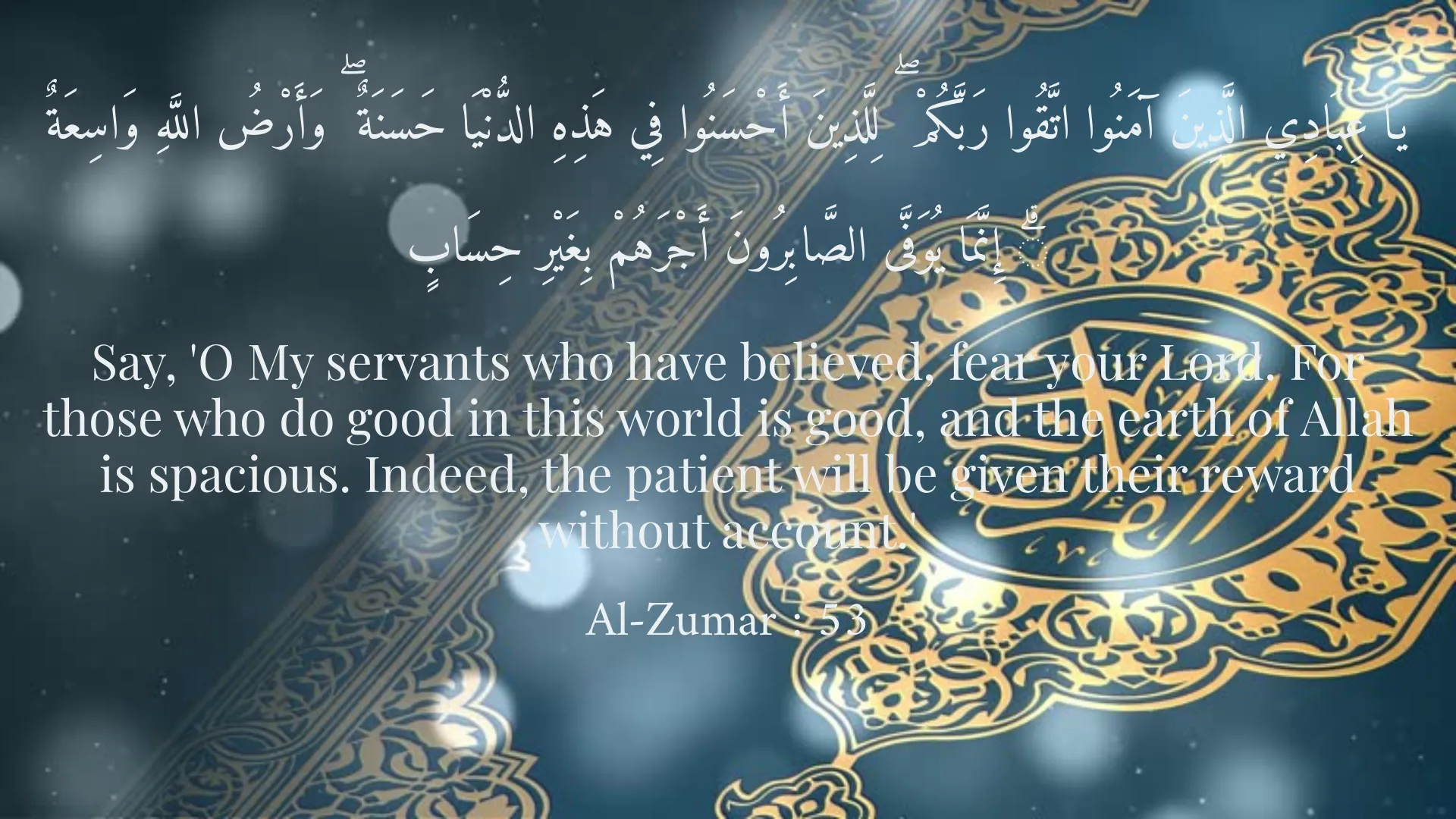
يَا عِبَادِي الَّذِينَ آمَنُوا اتَّقُوا رَبَّكُمْ ۖ لِلَّذِينَ أَحْسَنُوا فِي هَذِهِ الدُّنْيَا حَسَنَةٌ ۖ وَأَرْضُ اللَّهِ وَاسِعَةٌ ۗ إِنَّمَا يُوَفَّى الصَّابِرُونَ أَجْرَهُمْ بِغَيْرِ حِسَابٍ
Say, 'O My servants who have believed, fear your Lord. For those who do good in this world is good, and the earth of Allah is spacious. Indeed, the patient will be given their reward without account.'
Al-Zumar : 53
أَلَمْ يَعْلَمُوا أَنَّ اللَّهَ يَقبلُ تَوْبَةَ عِبَادِهِ وَيَأْخُذُ الصَّدَقَاتِ ۗ وَأَنَّ اللَّهَ هُوَ التَّوَّابُ الرَّحِيمُ
Do they not know that Allah accepts repentance from His servants and takes the charity? And Allah is Accepting of Repentance, Merciful.
At-Tawbah : 104
Short Story
One day, a young man named Hasan was wandering in the city. He felt a deep sense of guilt and worried about whether God would accept his repentance. Suddenly, he came across a place where a group of people were engaged in prayer and repentance. Hasan approached and listened to them. They were reading Quranic verses and speaking about God's mercy. Hasan no longer felt alone, and his heart filled with hope. He decided to return to God and repent. After some time, he found a deep sense of peace and joy within him and understood that his God had always been waiting for him.