Quranic Answer
The Holy Quran, the divine text of Islam, serves as a guiding light for millions of believers around the world. Among its myriad themes, the concepts of mercy and forgiveness stand out as prominent pillars of God's relationship with humanity. This article delves deeply into these themes, particularly focusing on references from specific verses in the Quran, and offers insights into how these divine principles foster hope and healing among the faithful, especially during moments of spiritual turmoil and regret. The Quran explicitly articulates God's mercy and boundless forgiveness towards His servants in several instances. In Surah Az-Zumar (The Troops), verse 53, Allah conveys a powerful and reassuring message: "O My servants who have believed! Fear your Lord. For those who do good in this world is good, and the earth of Allah is spacious. Indeed, the patient will be given their reward without account." This verse serves as a beacon of hope, encouraging believers to maintain their faith and commitment to righteousness, regardless of their past misdeeds. The phrase "O My servants who have believed!" indicates a direct address to those who have faith, inviting them to reflect on their relationship with their Creator. The exhortation to "Fear your Lord" underscores the importance of being conscious of God’s presence and guidance in every aspect of life. However, the verse swiftly transitions to an affirmation of divine benevolence, indicating that doing good deeds, even amidst one's imperfections, is met with the promise of reward. The notion that “the earth of Allah is spacious” symbolizes the vast opportunities for repentance and the mercy that envelops all of creation. It suggests that one is never too far from God's grace, and the door to forgiveness is always ajar, waiting for those willing to seek it. Moreover, Allah's declaration that "the patient will be given their reward without account" provides a profound insight into the nature of divine justice; it reassures believers that their patience and perseverance are recognized and rewarded abundantly in the sight of God. Another pivotal verse emphasizing divine compassion is found in Surah Al-Baqarah, verse 286: "Allah does not burden a soul beyond that it can bear." This particular statement serves as a source of great consolation for those wrestling with guilt and shame stemming from their sins. It embodies the essence of hope that Allah, in His infinite wisdom and mercy, understands the human condition and its frailties. When believers falter and feel the weight of their missteps, this verse affirms that challenges and struggles, including the struggles against sin, are not insurmountable. God, in His mercy, has crafted a path where believers can rise above their trials, seeking forgiveness and eventual redemption. Moreover, during moments of heartbreak, particularly after committing sins, the Quran emphasizes that Allah is attentive to the cries of His servants. In the realm of spirituality, feelings of despair and regret are normal human experiences. However, these feelings shouldn't push individuals away from God; rather, they should draw them closer. The sacred hadith that states, "I am as My servant thinks of Me. If he comes to Me walking, I go to him running," encapsulates this sentiment beautifully. This hadith illustrates that when individuals turn towards Allah in sincerity and repentance, they are met with overwhelming compassion and understanding. Allah's willingness to draw near to those who seek Him signifies a relationship based on love and mercy. This divine promise encourages the broken-hearted to seek healing through faith rather than retreat in shame. When immersed in regret over past deeds, it is essential for the believer to remember that turning back to Allah is not just welcomed but celebrated. Such movements towards divine mercy, as indicated in the hadith, signify the nurturing relationship between Allah and His creation; it fosters a sense of belonging and reassurance that no one is beyond the scope of mercy. In understanding Allah's mercy towards the broken-hearted, it is crucial to reflect on the transformative power of seeking forgiveness. The act of repentance is not merely a ritual but a profound journey towards self-redemption. Engaging in sincere prayer, reflecting on one's actions, and desiring to change can act as stepping stones toward restoring one's faith in God. The Quran repeatedly invites believers to engage in this process, offering clear paths to forgiveness and reconciliation with the Creator. The emphasis on mercy and forgiveness within the Islamic tradition nurtures a culture of empathy and understanding among individuals. Recognizing one's own faults fosters humility, while witnessing the divine mercy extended towards oneself inspires believers to extend similar love and compassion towards others. This cyclical relationship—between divine mercy, human forgiveness, and communal love—creates a supportive spiritual environment conducive to growth and healing. In conclusion, the Quran's discourse on mercy and forgiveness is foundational to the Muslim faith. The verses from Surah Az-Zumar and Surah Al-Baqarah, alongside the sacred hadith, offer profound insights into God's nature and His relationship with humanity. Allah's readiness to forgive and His limitations on burdens elevate the believer's experience of life’s challenges and moral failures, transforming feelings of despair into hope and renewal. Therefore, it is essential for every individual stricken with regret to understand that Allah's arms are always open wide in welcome and love, waiting to embrace them once more. Ultimately, the message is clear: no matter how lost one may feel, there is always a path back to Allah, marked by His infinite mercy and compassion.
Related Verses
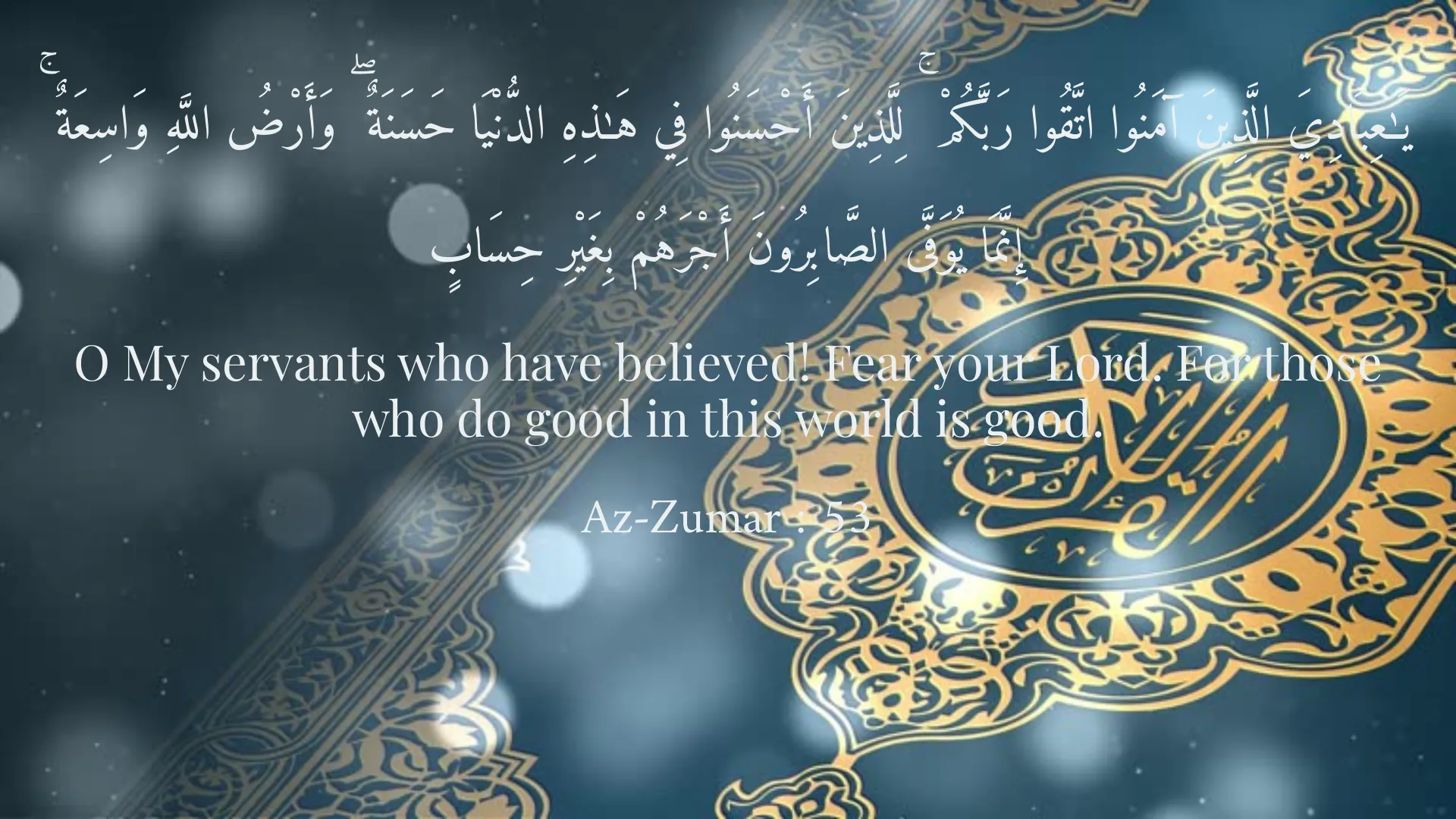
يَٰعِبَادِيَ الَّذِينَ آمَنُوا اتَّقُوا رَبَّكُمْ ۚ لِلَّذِينَ أَحْسَنُوا فِي هَٰذِهِ الدُّنْيَا حَسَنَةٌ ۖ وَأَرْضُ اللَّهِ وَاسِعَةٌ ۚ إِنَّمَا يُوَفَّى الصَّابِرُونَ أَجْرَهُمْ بِغَيْرِ حِسَابٍ
O My servants who have believed! Fear your Lord. For those who do good in this world is good.
Az-Zumar : 53
لَا يُكَلِّفُ اللَّهُ نَفْسًا إِلَّا وُسْعَهَا ۚ لَهَا مَا كَسَبَتْ وَعَلَيْهَا مَا اكْتَسَبَتْ ۗ رَبَّنَا لَا تُؤَاخِذْنَا إِن نَّسِينَا أَوْ أَخْطَأْنَا ۚ رَبَّنَا وَلَا تَحْمِلْ عَلَيْنَا إِصْرًا كَمَا حَمَلْتَهُ عَلَى الَّذِينَ مِن قَبْلِنَا ۚ رَبَّنَا وَلَا تُحَمِّلْنَا مَا لَا طَاقَةَ لَنَا بِهِ ۖ وَاعْفُ عَنَّا وَاغْفِرْ لَنَا وَارْحَمْنَا ۚ أَنتَ مَولَانَا فَانصُرْنَا عَلَى الْقَوْمِ الْكَافِرِينَ
Allah does not burden a soul beyond that it can bear. To it is what it has gained, and against it is what it has earned.
Al-Baqarah : 286
Short Story
On a warm summer day, a man named Hossein felt exhausted from life and was overwhelmed by sadness. He asked himself, "O God, do I still have the capacity for forgiveness?" In this moment, he remembered the verses of the Quran and decided to pray to Allah. With regret for his past actions and a broken heart, he stood for prayer. With each rak'ah, he felt a heavy burden lifted off his shoulders. After the prayer, a strange peace settled in his heart, and with firm belief in God's mercy, he shed tears of joy. From that day on, Hossein decided to turn to Allah every day with a broken heart and sincere prayers, knowing that Allah would always forgive him.