Quranic Answer
In the Holy Quran, Allah emphasizes wisdom and justice in all matters, asserting that nothing in life occurs without wisdom. This profound concept is woven throughout the sacred text, appearing prominently in different verses that frame the way Muslims should perceive trials, tribulations, and the overarching justice of divine decree. Understanding Allah's perspective on wisdom reveals not just the essence of life's challenges but also the purpose behind them, urging followers to cultivate patience and resilience in their spiritual journeys. One of the most significant verses that elucidate this truth is found in Surah Al-Baqarah, verse 155. Here, Allah states: "And We will surely test you with something of fear and hunger and a loss of wealth and lives and fruits, but give good tidings to the patient." This verse is a powerful reminder that trials are an inherent part of the human experience. The mention of fear, hunger, loss of wealth, and bereavement underlines the multifaceted nature of hardship. Allah is not unaware of human struggles; rather, these difficulties serve a divine purpose. The call to "give good tidings to the patient" presents patience as a virtue that is often rewarded in the face of adversity. It urges believers to reflect on their faith and conduct during tough times, positioning hardship as an opportunity for spiritual growth. These tests are seen as pivotal experiences—transformations that can redefine an individual’s relationship with faith. Rather than viewing setbacks as mere punishments or misfortunes, followers are encouraged to reinterpret their meanings as moments that fortify the spirit. Such a perspective aligns with a broader Islamic teaching where the believer learns to cultivate gratitude amidst challenges, acknowledging that these trials may contribute to one’s maturation. Moreover, the concept of patience (Sabr) is not simply about enduring hardship silently; it encompasses a proactive engagement with faith. In Surah Al-Imran, verse 186, Allah reinforces this notion saying, "Indeed, the patient will be given their reward without account." This verse highlights the significance of patience, portraying it as a conduit to divine blessings and rewards. Faithful believers who navigate their tribulations with a steadfast heart are assured that their sacrifices and endurance will bear fruit in unimaginable ways. Through these divine assurances, one can grasp the inherent wisdom in their struggles and understand that these tests are magnified pathways toward achieving a greater purpose in life. The Qur’anic indication of wisdom behind trials offers a transformative opportunity for believers; it reframes hardship from a destructive force into a benign teacher. In grappling with life’s adversities, followers are prompted to develop qualities such as empathy, compassion, and resilience. Individual hardships do not exist in isolation—they resonate within the broader tapestry of community, often highlighting collective struggles that unite rather than divide. When believers experience loss or hardship, they connect with others undergoing similar challenges, cultivating a sense of compassion and shared humanity that underscores the Qur’anic principle of societal interconnectedness. Another dimension of the Qur’anic narrative on wisdom is the embrace and acknowledgment of life's impermanence. Many believers often grapple with the natural human tendency to yearn for constant comfort and security. However, through the lens of the Quran, individuals learn that such desires often distract from the ultimate truth of existence. In Surah Al-Ankabut, verse 69, Allah articulates: "And those who strive for Us, We will surely guide them to Our ways. And indeed, Allah is with the doers of good." This verse stresses the idea that striving amidst hardship with the right intentions is integral to spiritual growth. By experiencing trials for a broader purpose, individuals find strength, wisdom, and patience, aligning themselves with Allah’s guidance. Furthermore, the acknowledgment that hardships and trials are filled with purpose allows believers to cultivate a sense of grace during difficult times. Instead of being overwhelmed by despair, individuals may turn towards faith, prayer, and community support, fostering resilience that empowers them amid adversity. The realization that every moment of distress can nurture spiritual openness motivates individuals to lean into their faith, seek knowledge, and evolve emotionally and spiritually, which is perhaps the ultimate testimony to divine wisdom. In a world that often glorifies immediate gratification, the Quran invites believers to contemplate the far-reaching implications of their trials. The promise of a reward without measure for those who exhibit patience doesn’t merely encourage passive waiting; it inspires active engagement with one's faith, community, and self. It serves as a reminder to every believer that hardship can be transformed into a stepping stone for spiritual elevation and that every moment of trial presents a new opening for grace and wisdom. In summary, the wisdom embedded in life’s hardships is a central theme of the Holy Quran, guiding individuals to perceive their trials as opportunities for growth rather than setbacks to be met with despair. The verses in Surah Al-Baqarah and Surah Al-Imran propel believers toward resilience, patience, and the pursuit of understanding. Cultivating these qualities among the trials of life reflects the true essence of faith, one that links humanity with the divine rhetoric of wisdom, patience, and purpose. In embracing these lessons, believers are led toward spiritual maturity, gaining a profound understanding of their relationship with Allah and the greater truths of existence. Thus, it is evident that every hardship is a deliberate act of divine wisdom, intended to nurture growth, unveil strength, and cement a deeper connection with faith.
Related Verses
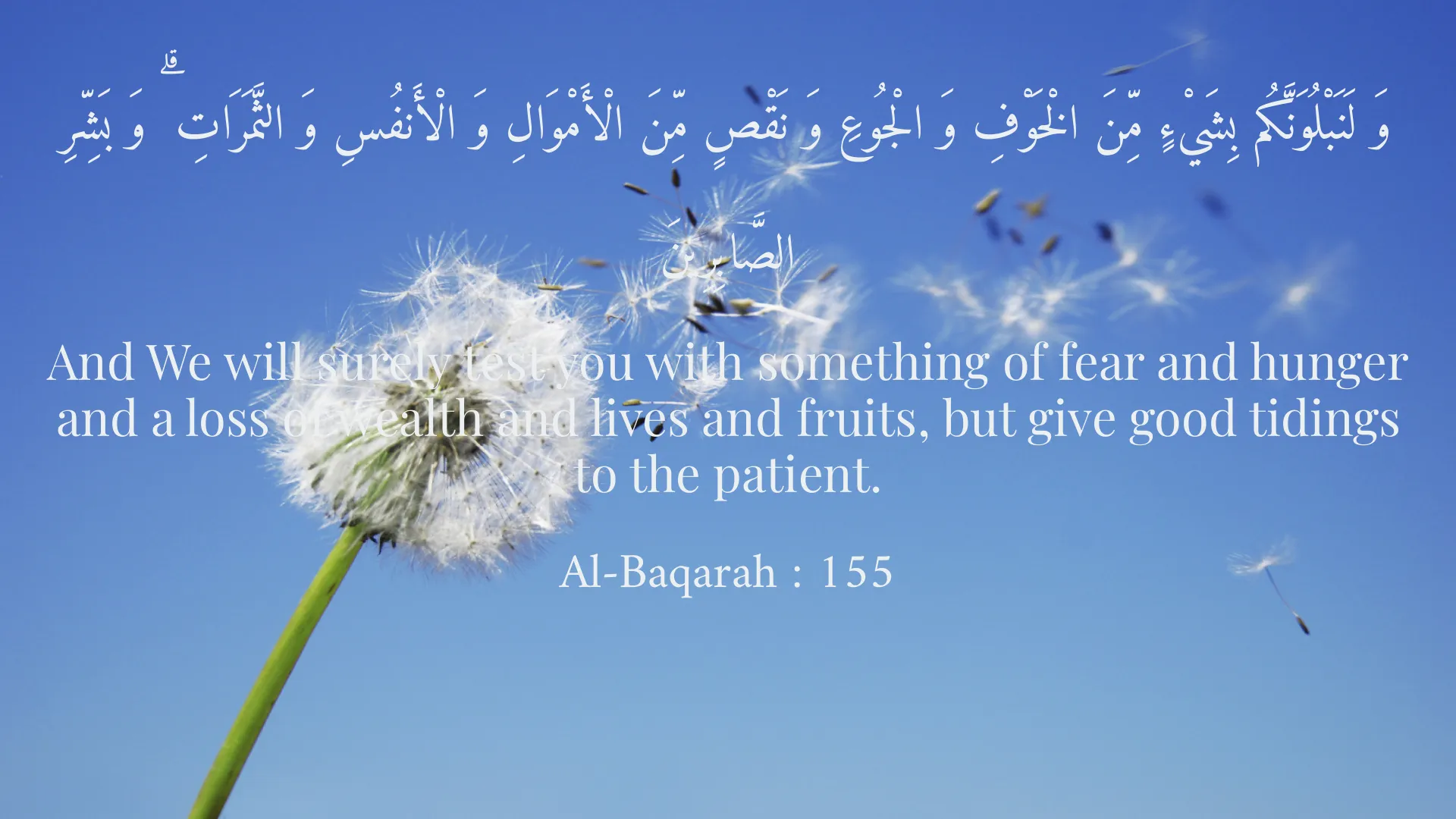
وَ لَنَبْلُوَنَّكُم بِشَيْءٍ مِّنَ الْخَوْفِ وَ الْجُوعِ وَ نَقْصٍ مِّنَ الْأَمْوَالِ وَ الْأَنفُسِ وَ الثَّمَرَاتِ ۗ وَ بَشِّرِ الصَّابِرِينَ
And We will surely test you with something of fear and hunger and a loss of wealth and lives and fruits, but give good tidings to the patient.
Al-Baqarah : 155
إِنَّمَا يُوَفَّى الصَّابِرُونَ أَجْرَهُمْ بِغَيْرِ حِسَابٍ
Indeed, the patient will be given their reward without account.
Al-Imran : 186
Short Story
Once upon a time, a family was living with great difficulties, and many in their neighborhood faced significant challenges. They were struggling to cope with their hardships. One day, a man from the community visited them and said: 'The hardships are for your enlightenment and spiritual growth.' He showed them the verses of the Quran and explained that Allah intended to test humanity in hardships to strengthen their faith. From that moment on, the family began to see their challenges as opportunities for growth.