Quranic Answer
The concept of 'fitrah', or natural disposition, is a profound theme in Islam, underscoring the inherent characteristics and inclinations embedded in human beings. The Holy Quran speaks about this fundamental aspect of human nature, particularly in Surah Ar-Rum, verse 30, where it states: 'So set your face toward the religion, inclining to truth. And adhere to the fitrah of Allah upon which He has created mankind.' This verse serves as a poignant reminder that humanity is innately programmed to gravitate towards belief in God and seek a relationship with the Creator. The term 'fitrah' translates to the natural state or innate disposition that individuals are born with. This concept suggests that every person possesses an intrinsic quality that guides them towards recognizing their Creator, even in the chaos and distractions of the world. Despite the diversities of culture, belief systems, and societal influences that may lead individuals astray or create barriers to faith, the Quran emphasizes that the acknowledgment of God is an integral part of one's being. The idea of fitrah conveys more than mere belief; it encompasses a deep-rooted need and yearning for God. The verse highlights a certain orientation when individuals set their faces toward truth, indicating a natural inclination towards integrity, honesty, and, most significantly, divine connection. It presents a compelling argument that no matter how far someone might drift from their path, deep within them lies the essence of this fundamental recognition of God. Indeed, life’s trials often trigger a return to this innate disposition. In challenging moments, people frequently find themselves reaching for help through prayer and supplication, demonstrating a subconscious acknowledgment of their need for divine support. This instinctive grasp towards God illustrates the lasting imprint of fitrah in the human psyche—a reminder that, regardless of external circumstances, the connection between human beings and the divine remains intact. Moreover, the Quran expands on this premise in Surah Al-Mu’minun, verse 13, where it references that mankind took an oath during their creation, affirming God as their sole Lord. This verse reinforces the idea that each person is endowed with a spiritual covenant that binds them to their Creator. Such an oath indicates that the acknowledgment of God is not only intrinsic to human nature but also a foundational experience that all souls encounter. It can be argued that this divine oath and the fitrah concept play a critical role in the lives of believers. While challenges, doubts, and worldly distractions may obscure this natural inclination, the latent recognition of God persists. The human soul's craving for purpose, fulfillment, and connection stands as evidence of this undeniable truth. In times of need and introspection, individuals frequently turn to prayer, meditation, or reflection, revealing the continuity of their inherent fitrah. The complexities of the modern world often present significant hurdles in the acknowledgment of God. However, Islam offers valuable insights into nurturing this divine connection. For instance, engaging in spiritual practices such as prayer, recitation of the Quran, reflection on God’s attributes, and participation in community worship are essential means through which individuals can reinforce their bond with their Creator. Moreover, scholars and theologians argue that education plays a pivotal role in nurturing this innate disposition. Teaching children about God, instilling religious values, and encouraging righteous behavior helps to reinforce their natural inclination towards faith. When individuals are educated in religious and spiritual awareness, it strengthens their fitrah and guides them back towards their Creator. Additionally, the importance of a conducive environment cannot be overstated. Surrounding oneself with like-minded individuals, engaging in dialogues about faith, and participating in communal worship can create a nurturing atmosphere that fosters spiritual growth. The Islamic community is built around collective worship and shared experiences that remind believers of their inherent disposition towards God, aiding them in overcoming life’s challenges. Nevertheless, the journey of returning to one’s fitrah is not devoid of struggles. The distractions of modern life—materialism, social media, and cultural pressures—often lead individuals to forget their innate need for divine connection. It is crucial to acknowledge these external factors and work actively to counter them, allowing for a more profound exploration and embrace of one’s fitrah. Ultimately, the inclination of humanity toward God serves as a fundamental and intrinsic reality of existence. It propels individuals to engage in a constant pursuit of truth and meaning throughout their lives. The understanding of fitrah encourages believers to delve deeper into their spiritual journey, identifying and embracing their true nature. In conclusion, the concept of fitrah in the Holy Quran illuminates a pivotal aspect of human existence—the innate recognition of God. Despite the noise and distractions of the outer world, the natural disposition remains a guiding light, urging each person to seek their Creator. By recognizing and strengthening this fitrah through spiritual practices, education, and community support, individuals can successfully navigate the complexities of life, drawing closer to the ultimate truth and purpose of their existence.
Related Verses
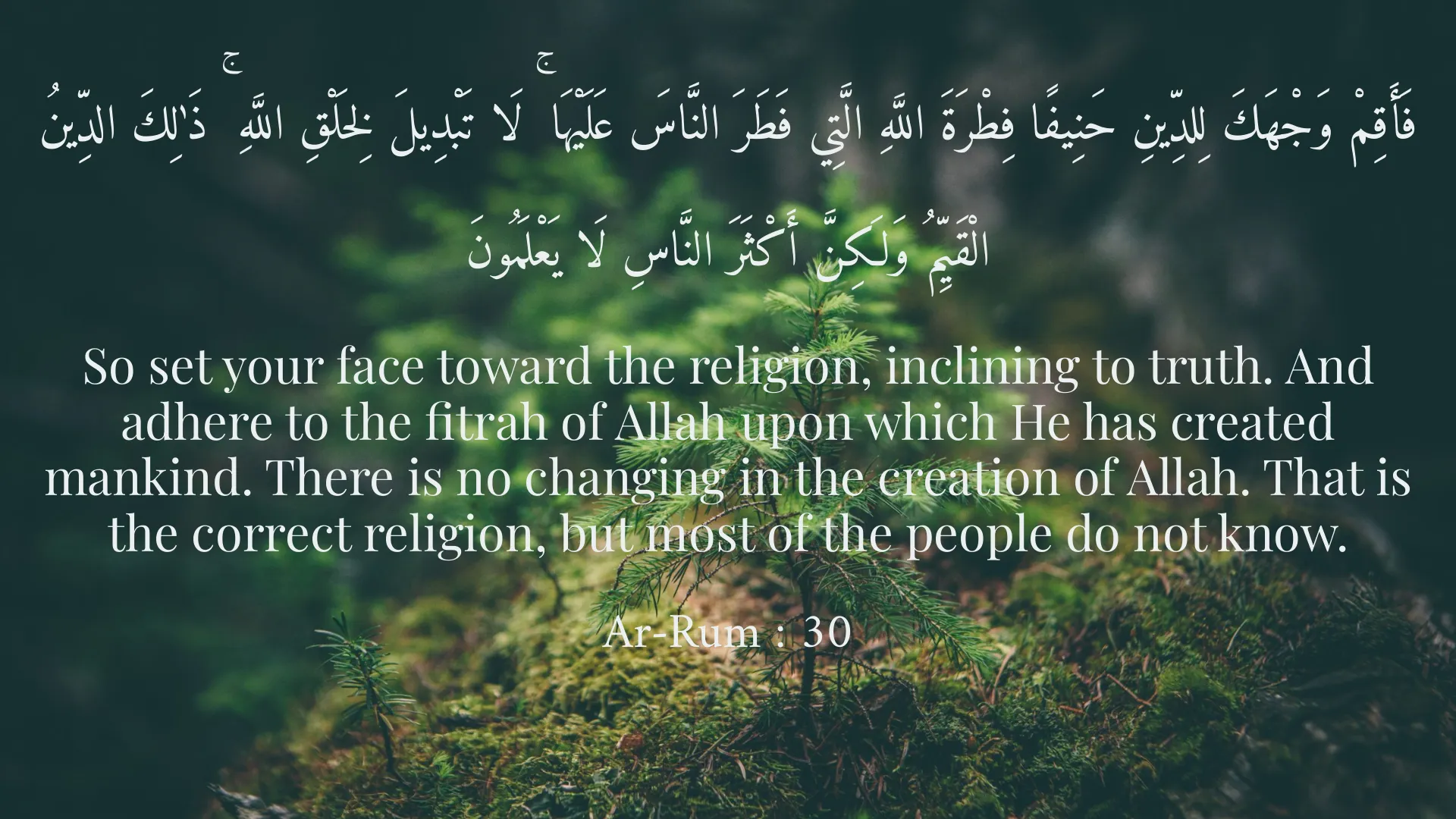
فَأَقِمْ وَجْهَكَ لِلدِّينِ حَنِيفًا فِطْرَةَ اللَّهِ الَّتِي فَطَرَ النَّاسَ عَلَيْهَا ۚ لَا تَبْدِيلَ لِخَلْقِ اللَّهِ ۚ ذَٰلِكَ الدِّينُ الْقَيِّمُ وَلَكِنَّ أَكْثَرَ النَّاسِ لَا يَعْلَمُونَ
So set your face toward the religion, inclining to truth. And adhere to the fitrah of Allah upon which He has created mankind. There is no changing in the creation of Allah. That is the correct religion, but most of the people do not know.
Ar-Rum : 30
ثُمَّ أَنْشَأْنَاهُمُ أَنْشَأً مَّزِيدًا، فَلَمَّهُم إِلَى اللَّهِ تَبَارَكَ وَتَعَالَى.
Then We produced them as a progeny, and directed them toward Allah, the Blessed and Exalted.
Al-Mu’minun : 13
Short Story
Once upon a time, there was a man who felt lonely in his daily life. He decided to go to the forest and reflect. While walking through the woods, he suddenly noticed the beautiful sky and the extraordinary nature around him. In that moment, his heart remembered his Creator, and he cried out, 'Oh God, I need You!' At that place, he felt peace and closeness to God. He realized that the inclination towards God was inherent within him, and he needed to nurture this disposition.