Quranic Answer
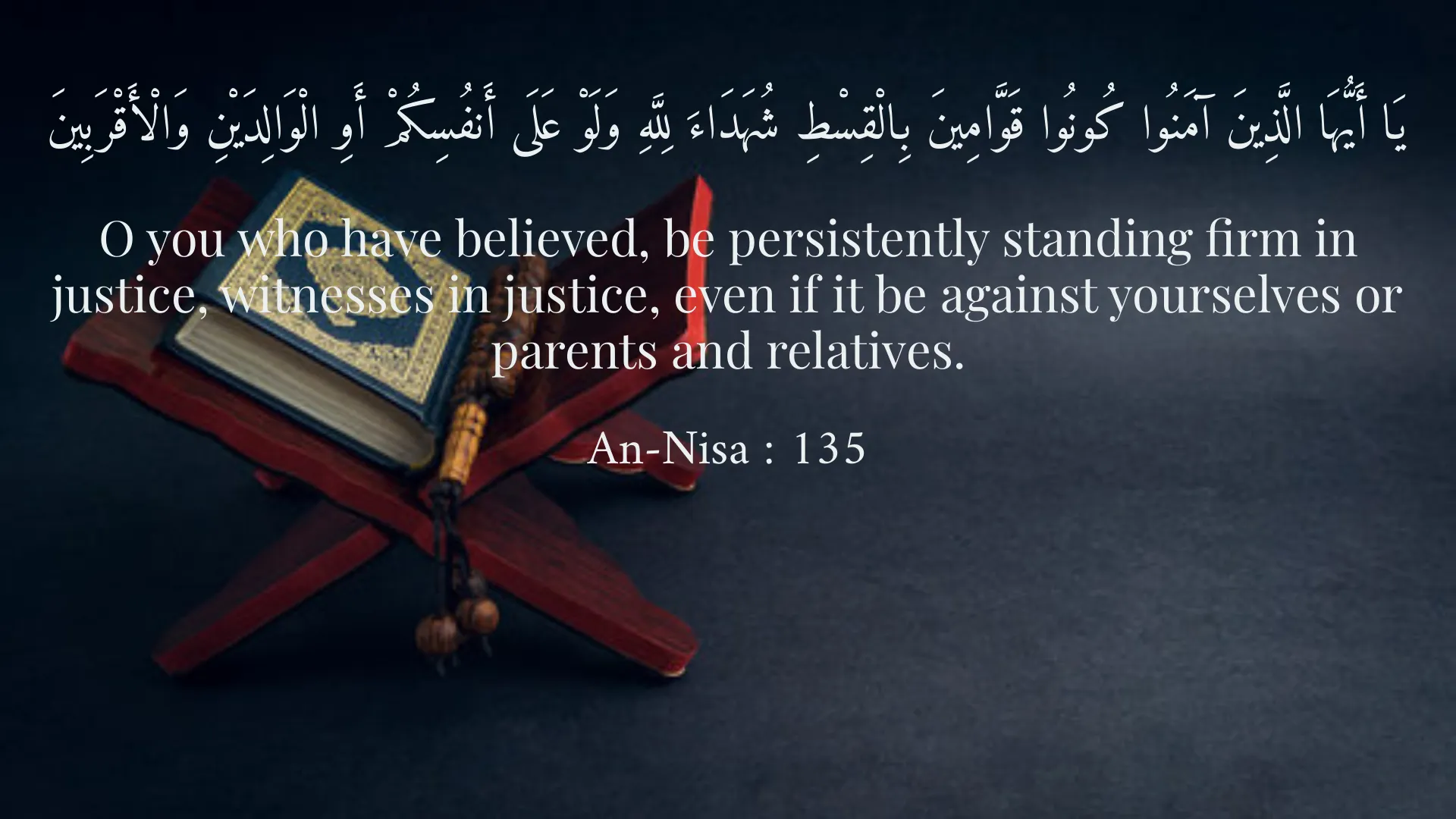
The concept of social justice is deeply rooted in the teachings of the Holy Quran, which offers comprehensive guidelines for establishing and promoting fairness in all aspects of life. One of the most significant verses that highlights this principle can be found in Surah An-Nisa, verse 135, where Allah commands believers to stand firm in justice: 'O you who have believed, be persistently standing firm in justice, witnesses in justice, even if it be against yourselves or parents and relatives.' This verse embodies the essence of justice, urging followers to uphold fairness even when it challenges personal interests or familial loyalties. In a world where biases and inequalities often skew perceptions and judgments, this divine instruction serves as a resounding call to prioritize justice above all else. Furthermore, the Quran reinforces this notion in Surah Al-Ma'idah, verse 8, stating: 'O you who have believed, be persistently standing firm in justice, witnesses to Allah, even if it be against yourselves or parents or relatives; whether one is rich or poor, Allah is more worthy of both.' Here, believers are reminded that social status, wealth, or personal grievances must not influence their commitment to justice. The inclusion of the phrase 'even if it be against yourselves' highlights the significant moral weight attached to the act of being just, indicating that one’s duty to uphold justice must prevail, regardless of personal bias or emotional attachment. Upholding social justice, therefore, emerges as a fundamental principle within Islam, interweaving itself into the fabric of the religion’s teachings, and calling for a society that is equitable and fair. This principle is not limited to interpersonal relationships but extends to broader social, economic, and political dimensions. The Quran calls upon its followers to engage in practices that foster justice, equity, and compassion in their daily lives. In Islamic theology, justice (Adl) is not merely an abstract ethical principle; it is a divine attribute. Allah's justice is emphasized throughout the Quran, and followers are encouraged to emulate this quality in their interactions with others. The teachings illustrate that achieving justice serves as a manifestation of one's faith and devotion to Allah. Consequently, Muslims are expected not only to promote justice in their dealings but also to create an environment where justice is a shared value among all members of society. Moreover, the economic dimension of social justice is also addressed in the Quran. Islam encourages economic fairness through the practice of Zakat (charity), which ensures that wealth circulates throughout the community. The essence of Zakat promotes an equitable distribution of resources, aiding in alleviating poverty and reducing economic disparities. By addressing wealth inequality, the Quran fosters a social contract that emphasizes the wealthier segments of society supporting and uplifting those in need. This economic justice serves to harmonize relationships within society, ensuring that individuals from all walks of life partake in the socio-economic fabric of their communities. In political contexts, the Quran advocates for justice in governance as well. Rulers and leaders are called to be just in their decisions and to uphold the right of the collective over individual interests. The principle of justice in political systems is vital in creating good governance, which encompasses transparency, accountability, and the prioritization of public welfare. The Quran advises leaders to act with fairness and integrity, ensuring that their decisions reflect not only their interests but also those of their constituents. In essence, the Quran promotes just leadership that champions equality and protects the rights of all. The familial dimension of social justice also holds significant importance in Islamic teachings. The Quran outlines the roles and responsibilities of individuals within the family structure, promoting mutual respect, equity, and compassion. Justice within families entails fair treatment of all members, particularly relating to issues of inheritance, marital relationships, and nurturing the rights of children. By fostering an atmosphere of equity within the family unit, the seeds of social justice can be sown, encouraging future generations to uphold these values in wider society. In civic matters, the Holy Quran emphasizes the necessity of just laws and equitable systems, urging believers to advocate for legislation that protects individual rights and promotes social cohesion. Justice extends beyond mere personal ethics; it encapsulates the belief that a society cannot function harmoniously without a robust legal system reflective of fairness and equitable treatment of all individuals, regardless of their backgrounds. In conclusion, the Holy Quran places social justice at the heart of its teachings, establishing it as a core tenet of Islam. The emphasis on upholding fairness across various dimensions—including social, economic, political, and familial spheres—illustrates the comprehensive nature of this principle. The Quran’s calls for believers to act justly, regardless of personal interests or biases, underscore the profound commitment Islam demands from its followers to create a just society. By fostering justice in every aspect of life, Muslims not only align themselves with divine guidance but also contribute to a world characterized by compassion, equity, and peace. Ultimately, the Quran envisions a society where social justice flourishes as one of the fundamental goals of Islam, guiding believers to actively engage in practices that promote fairness and uphold the dignity of all individuals.
Related Verses
يَا أَيُّهَا الَّذِينَ آمَنُوا كُونُوا قَوَّامِينَ بِالْقِسْطِ شُهَدَاءَ لِلَّهِ وَلَوْ عَلَى أَنفُسِكُمْ أَوِ الْوَالِدَيْنِ وَالْأَقْرَبِينَ
O you who have believed, be persistently standing firm in justice, witnesses in justice, even if it be against yourselves or parents and relatives.
An-Nisa : 135
يَاأَيُّهَا الَّذِينَ آمَنُوا كُونُوا قَوَّامِينَ لِلَّهِ شُهَدَاءَ بِالْقِسْطِ وَلَا يَجْرِمَنَّكُمْ شَنَآنُ قَوْمٍ أَلَّا تَعْدِلُوا
O you who have believed, be persistently standing firm in justice, witnesses to Allah, even if it be against yourselves or parents or relatives.
Al-Ma'idah : 8
Short Story
Once, there lived an old man in a village known for his justice. He would always tell his children that nothing was more important than justice. When asked how their village flourished so well, he would respond, 'If everyone acts justly, we will have a peaceful and secure society. Justice brings peace.' This story reflects the importance of justice in life, and we should always remember to act fairly.