Quranic Answer
The Holy Quran, the sacred text of Islam and a guide for millions of believers, contains profound teachings that stress the importance of collective work and collaboration within the community. The emphasis on unity among believers is not only a recurring theme throughout the Quran but also a crucial aspect of Islamic teaching that has significant implications for individual and collective success. This article aims to explore the Quranic perspective on collective work, emphasizing the verses that highlight the importance of collaboration, unity, commitment, and mutual decision-making in building a cohesive and prosperous community. One of the most powerful verses that encapsulate the essence of collective unity is found in Surah Al-Imran, verse 103. The verse states: "And hold firmly to the rope of Allah all together and do not become divided." This exhortation from Allah serves as a divine invitation to believers to unite and come together under the guidance of faith. The metaphoric 'rope of Allah' signifies the strength and support that believers can find in their shared faith and values. This verse stresses that division among communities leads to weakness and disarray, while coming together fosters strength and resilience. This call for unity is particularly relevant in today’s world, where social, cultural, and ideological divides are prevalent. The message of Surah Al-Imran resonates strongly as it emphasizes that collective effort and mutual support among believers can overcome challenges and obstacles. In a society characterized by diverse perspectives, the Quran encourages individuals to focus on common goals and work collaboratively towards achieving them, rather than allowing differences to create discord. Moreover, Surah Al-Ma'idah, verse 2 further reinforces the concept of collective responsibility. It states: "O you who have believed, fulfill [all] contracts." This verse highlights the importance of personal accountability and why fulfilling commitments is crucial for maintaining harmony and cooperation within the community. When each member of the community honors their agreements, whether they be formal contracts or social promises, it establishes a strong foundation for collaborative work. This adherence to mutual obligations not only contributes to individual integrity but also fosters trust within the community, which is essential for successful collective endeavors. In the context of communal activities, the Quran also advocates for consultation and mutual decision-making as a means to strengthen community ties and ensure collective participation. One such verse is found in Surah Ash-Shura, verse 38, where it emphasizes that believers should conduct their affairs through mutual consultation. The verse reads: "And those who have responded to [their] lord and established prayer and whose affair is [determined by] consultation among themselves." This principle of Shura, or mutual consultation, underscores the importance of inclusive decision-making in fostering a sense of belonging and shared responsibility among believers. The Quran's encouragement towards collective actions extends beyond mere unity; it delineates a clear framework for how this collaboration should be conducted. The principle of mutual consultation encourages individuals to voice their opinions, share their insights, and participate actively in discussions that affect their community. By doing so, not only are individuals empowered, but decisions are also made with a comprehensive understanding of varying perspectives, which leads to better outcomes for the community. Furthermore, the example set by the Prophet Muhammad (peace be upon him) exemplifies the principles of collective work and collaboration. The Prophet fostered a community that thrived on cooperation and mutual support. During his lifetime, he emphasized the importance of working together for the common good, encouraging his followers to assist one another in times of need. His leadership during critical moments, including battles and community-building efforts in Medina, showcased the effectiveness of collective action grounded in faith and mutual respect. The significance of collective work is not merely a theoretical concept within the Quran but is embedded in the fabric of Islamic practice. The pillars of Islam—particularly charity (Zakat) and community prayers—embody the ethos of collective responsibility. Zakat, a mandatory act of charity, reinforces the notion that believers are not solely responsible for their welfare but also for the welfare of those in their community. By contributing to the needs of others, Muslims participate in ensuring that the less fortunate are supported, fostering a sense of community and interdependence. In today’s context, the teachings of the Quran urging collective work and unity hold profound implications for contemporary society. As communities face complex challenges such as social inequality, climate change, and global pandemics, the Quranic principles of collaboration and mutual support can provide pathways towards effective solutions. Initiatives that bring people together across diverse backgrounds can benefit from the Quran’s call for synergy and community-based approaches. Encouraging dialogue, cooperation, and shared goals can ultimately lead to harmonious coexistence and mutual prosperity. In conclusion, the Holy Quran unequivocally emphasizes the importance of collective work and collaboration through its numerous verses and teachings. From the call for unity in Surah Al-Imran to the insistence on fulfilling commitments in Surah Al-Ma'idah and the practice of mutual consultation, the Quran lays a comprehensive foundation for believers to build cohesive and successful communities. The principles outlined in these teachings reveal that the essence of Islam is interconnectedness, emphasizing that only through mutual support can individuals and communities thrive. In a world that often promotes division, the Quran's message advocating for cooperation and collaboration serves as a timeless reminder of the strength that lies in unity and collective action.
Related Verses
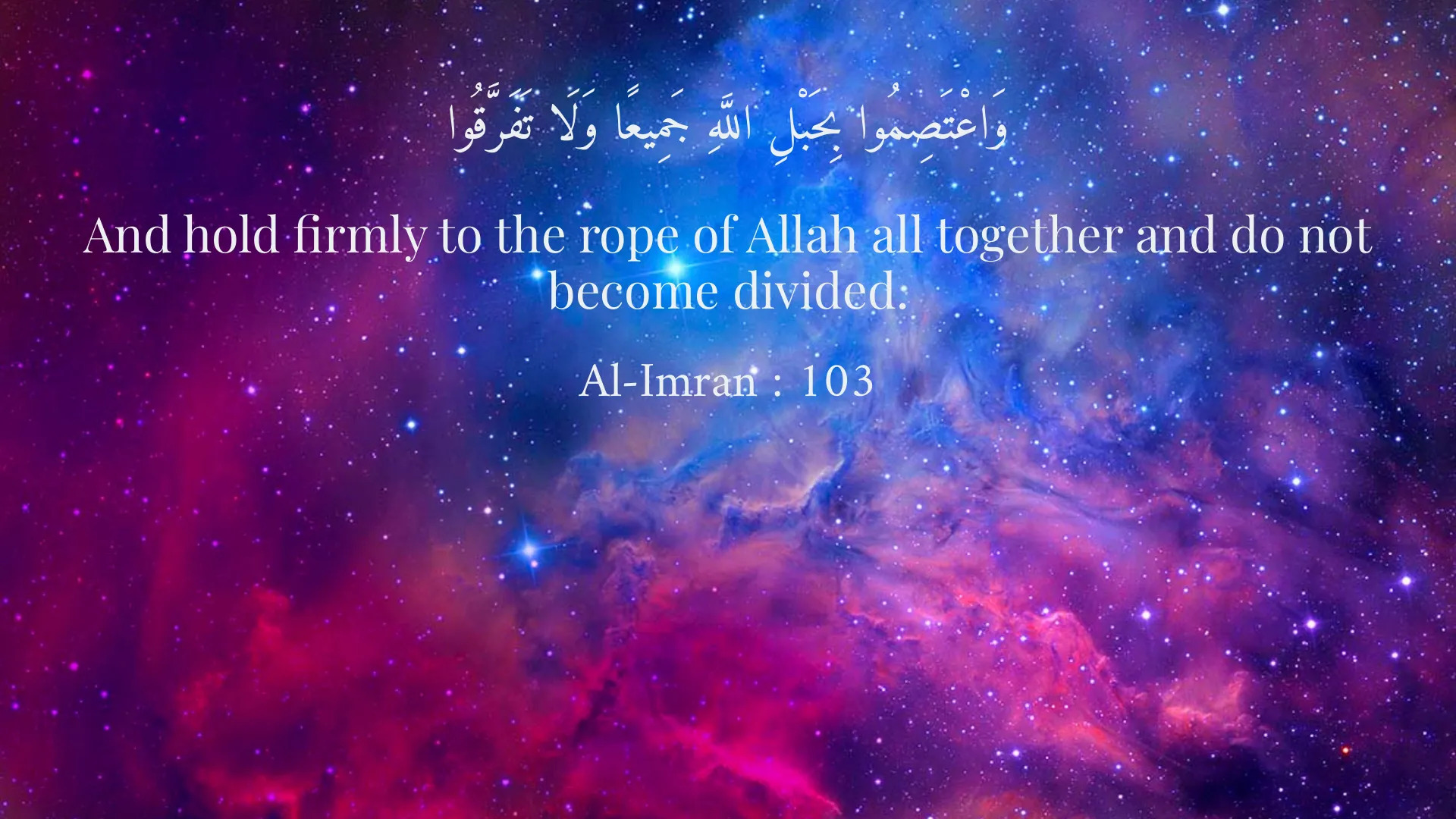
وَاعْتَصِمُوا بِحَبْلِ اللَّهِ جَمِيعًا وَلَا تَفَرَّقُوا
And hold firmly to the rope of Allah all together and do not become divided.
Al-Imran : 103
يَا أَيُّهَا الَّذِينَ آمَنُوا أَوْفُوا بِالْعُقُودِ
O you who have believed, fulfill [all] contracts.
Al-Ma'idah : 2
وَالَّذِينَ يَسْتَمِعُونَ الْقَوْلَ فَيَتَّبِعُونَ أَحْسَنَهُ
And those who listen to the speech and follow the best of it.
Ash-Shura : 38
Short Story
Once upon a time, in a village, the residents decided to build a school. At first, everyone was working independently, unaware of how impactful collective work could be. Initially, they were not achieving any results. But when they united and each person contributed according to their abilities, the school was built in no time. They realized that collective skills could accomplish tasks that individual efforts could never achieve. This story illustrates how effective cooperation and teamwork can be.