Quranic Answer
The Holy Quran, revered by millions around the world, serves as a comprehensive guide to the lives of its followers, providing both spiritual guidance and moral instruction. Among its many teachings, the Quran indirectly refers to the signs of accepted deeds performed by believers, although it does not contain specific verses that delineate these signs in a straightforward manner. Understanding these signs is crucial for Muslims seeking to ensure their struggles and efforts in this life are acknowledged and rewarded in the Hereafter. One of the prominent indicators of accepted deeds is the noticeable improvement and development in a person's demeanor, behavior, and ethics. When an individual turns toward obeying Allah and engages sincerely in righteous deeds, they often experience a profound sense of peace and satisfaction permeating various aspects of their lives. This transformation is not something that occurs overnight; it is often a gradual process that reflects a deeper spiritual awakening and commitment to following the guidance provided in the Quran. In Surah Al-Furqan (25:70), Allah provides reassurance to believers by promising that their good and righteous deeds will be acknowledged, and for them, a place in Paradise awaits. The verse highlights the certainty that the efforts invested in performing good deeds will not go unnoticed. "And those who do not invoke with Allah another deity or kill the soul which Allah has forbidden, except by right, and do not commit unlawful sexual intercourse. And whoever should do that will meet a penalty. The promise of Paradise aligns with the notion that accepted deeds bring about happiness—both in this world and in the Hereafter. This happiness is multi-faceted, often manifesting in the form of tranquility in one's heart, wisdom in social interactions, and a general sense of wellbeing that spills over into various aspects of life. When individuals engage in acts of kindness, charity, and compassion, they inevitably contribute to a more harmonious society, which in turn reflects positively on their personal lives. Moreover, Surah Al-Imran (3:185) serves as a reminder of the impermanence of life, emphasizing, "Every soul will taste death, and you will be fully compensated for your deeds on the Day of Resurrection." This verse underlines the belief that all actions will be thoughtfully evaluated on the Day of Judgment. An individual’s ultimate fate hinges not only on the actions they take but also on the intentions behind those actions. This critical reflection underscores the Islamic viewpoint that the heart and mind play an essential role in shaping one's deeds. As Muslims strive to align their lives with the teachings of Islam, signs of accepted deeds can often be inferred from personal experiences and emotions. For instance, a resurgence of motivation to engage in prayer (Salah), remembrance of Allah (Dhikr), and the pursuit of knowledge can all be indicators that one's faith and actions are being accepted. When believers feel an incline toward goodness, it's often accompanied by a growing dissatisfaction with the vices that once seemed appealing. An essential aspect of evaluating one’s deeds lies in understanding the role of sincerity (Ikhlas) in fulfilling these acts. The Quran underscores the significance of performing deeds with pure intentions as Allah is aware of what resides in one’s heart. Thus, the purity of intention not only acts as a cornerstone for accepted deeds but also as a measure of one's spiritual state. Furthermore, the sense of community and connectedness one feels following charitable deeds can serve as another marker of accepted goodness in one's actions. When individuals are drawn to help others, particularly in times of need, it reflects a heart that is deeply engaged in the teachings of the Quran and aligned with Islamic principles. This interconnectedness fosters a sense of belonging and reinforces the importance of social responsibility, reminding believers that their actions have collective implications. Spiritually inclined individuals may also notice distinct changes in their behavior and attitudes toward ethical dilemmas, often finding themselves making choices that align more closely with Islamic values over worldly temptations. This ethical transformation not only benefits the individual but resonates positively within their families and communities. As people witness these changes, it can serve as encouragement for both the individual and those around them to strive towards betterment in accordance with the Quranic principles. Moreover, the holistic approach of recognizing challenges as manifestations of Allah's mercy and wisdom can illuminate the journey of faith. The Quran teaches its followers that hardships and trials can serve as a means to draw closer to Allah and refine one's character. In this respect, the ability to find purpose in life's adversities and the resilience built through faith can be indicative of accepted deeds too. While there are various outward signs of accepted deeds, the internal signs are equally if not more significant. A heart that feels contentment and joy from worship, a soul that is steadfast in prayer, and a mind that is anchored in remembrance of Allah all indicate the acceptance of one’s efforts. These internal states manifest as calmness in the heart and strength of faith. Lastly, engaging in self-reflection and striving for continuous improvement can enable individuals to recognize shifts in their spiritual journey. Practices such as apology, seeking forgiveness, and repentance are all integral aspects that contribute to a believer’s growth. Recognizing that the path to acceptance of deeds is often laden with struggles can bring about practical changes in how one approaches their faith — developing a mindset focused on continual growth. In conclusion, while the Holy Quran may not explicitly outline signs of accepted deeds through direct verses, the essence of its teachings fosters an environment in which individuals can perceive the acceptance of their actions through shifts in personal behavior, feelings of satisfaction, and overall moral and spiritual development. Understanding these signs serves to encourage believers to adhere closer to the path laid out by Allah and fosters a transformative journey that bridges their actions and faith. As the Quran teaches, in the end, every soul will face accountability, making the pursuit of goodness a noble and worthy endeavor.
Related Verses
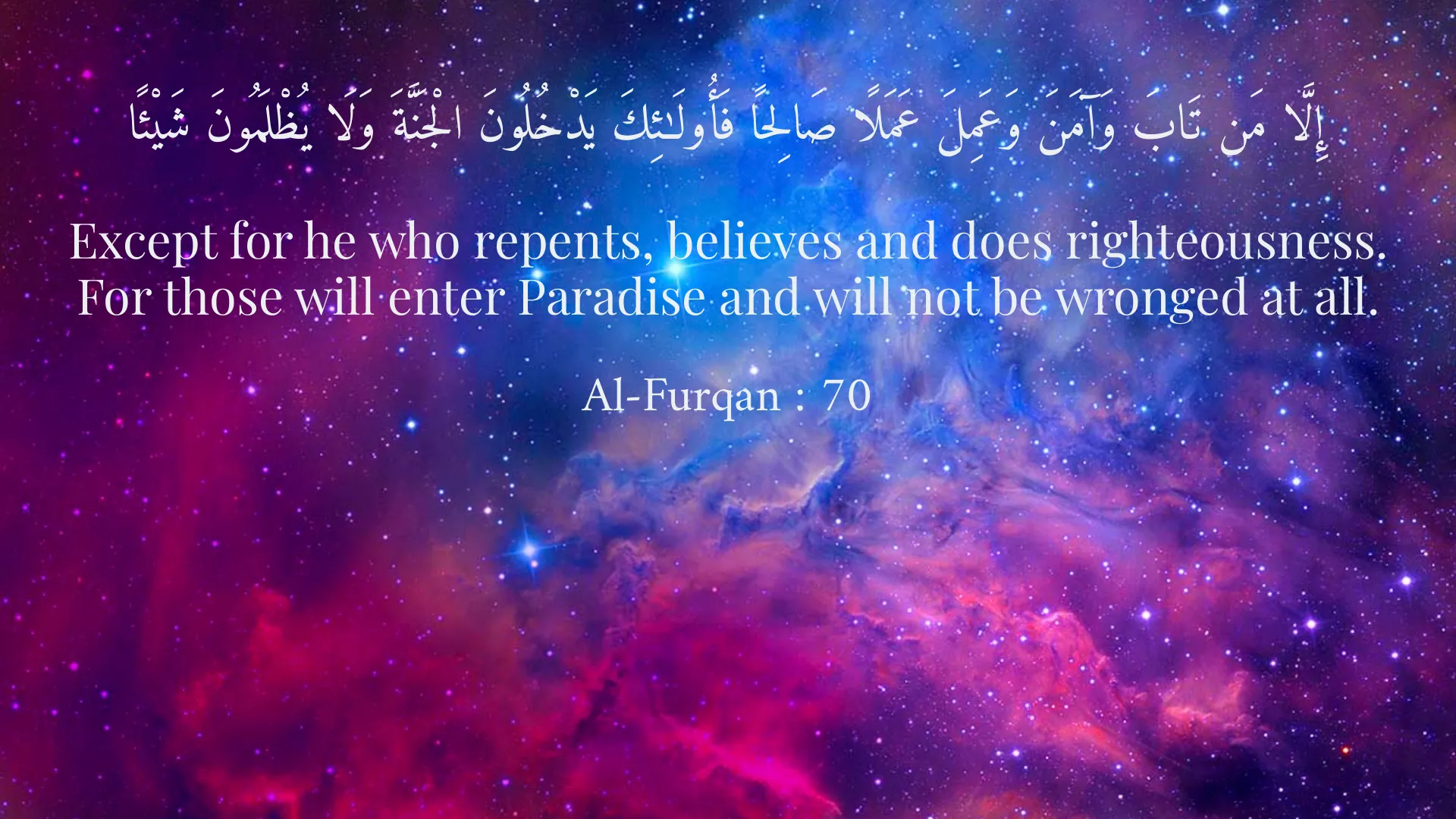
إِلَّا مَن تَابَ وَآمَنَ وَعَمِلَ عَمَلًا صَالِحًا فَأُولَـٰئِكَ يَدْخُلُونَ الْجَنَّةَ وَلَا يُظْلَمُونَ شَيْئًا
Except for he who repents, believes and does righteousness. For those will enter Paradise and will not be wronged at all.
Al-Furqan : 70
كُلُّ نَفْسٍ ذَائِقَةُ الْمَوْتِ ۖ وَإِنَّمَا تُوَفَّوْنَ أُجُورَكُمْ يَوْمَ الْقِيَامَةِ ۚ فَمَن زُحْزِحَ عَنِ النَّارِ وَأُدْخِلَ الْجَنَّةَ فَقَدْ فَازَ ۚ وَمَا الْحَيَاةُ الدُّنْيَا إِلَّا مَتَاعُ الْغُرُورِ
Every soul will taste death. And you will be compensated your full wages on the Day of Resurrection. So, whoever is removed from the fire and admitted to Paradise has certainly attained success. And what is the worldly life except the enjoyment of delusion.
Al-Imran : 185
Short Story
One day, a young man named Sina was engaged in worship and prayer. He was looking for signs of his accepted deeds and felt a bit of unhappiness in his life. After some contemplation and meditation on the Quranic verses, he concluded that the signs of accepted deeds were peace in the heart and satisfaction with his ethical behaviors. Sina decided to dedicate more time to helping others, and from that day on, he experienced greater tranquility in his life. He realized that the good and righteous acts he performed led to Allah's acceptance, and thus he developed a better sense of well-being.