Quranic Answer
Yes, the Holy Quran explicitly and in various ways refers to the limits of human reason in comprehending the essence and absolute reality of God. It presents this concept as one of the fundamental pillars of monotheistic epistemology. These references do not negate the endeavor to know God; rather, they guide humanity to attain a correct and profound understanding of the Lord with humility and within the bounds of human capacity, without falling into anthropomorphism or similitude. This topic is, in fact, an invitation to ponder God's signs and the manifestations of His power, rather than merely attempting to grasp His infinite essence. One of the most central verses addressing this issue is Surah Ash-Shura, verse 11, which states: "لَيْسَ كَمِثْلِهِ شَيْءٌ ۖ وَهُوَ السَّمِيعُ الْبَصِيرُ" (There is nothing like unto Him, and He is the Hearing, the Seeing). This foundational verse elucidates the principle of 'Tanzih' (declaring God to be far above any defect or resemblance to creation). Human reason naturally tends to compare and categorize everything it knows based on patterns and experiences derived from the material world and created beings. However, when it comes to God, the Quran clearly states that there is no basis for comparison. God is beyond any imagination, similitude, or attribute that can be ascribed to creation. This means that any image the human mind constructs of God will be limited by human experience and imperfect, thus far from His true reality. We cannot compare God to anything we see or know because He is infinite, and we are finite. This limitation for the human mind is not to restrict God, but to protect human understanding from grave errors in knowing Him. It reminds us that our cognitive faculties, designed to interact with a finite world, are insufficient to encompass the boundless nature of the Divine. Further elaborating on this point, Surah Al-An'am, verse 103, states: "لَا تُدْرِكُهُ الْأَبْصَارُ وَهُوَ يُدْرِكُ الْأَبْصَارَ ۖ وَهُوَ اللَّطِيفُ الْخَبِيرُ" (No vision can grasp Him, but He grasps all vision; and He is the Subtle, the All-Aware). Although this verse seemingly speaks about visual perception, commentators have interpreted it more broadly to include intellectual and cognitive perception. In other words, not only are physical eyes incapable of perceiving the divine essence, but human reason and thought, due to their inherent limitations, cannot fully grasp God's depth. Humans can observe the signs and manifestations of God's power, knowledge, wisdom, and mercy in creation and in their own lives, thereby inferring His existence and perfect attributes. However, His essence is beyond what can be contained within the limited capacity of the human mind. Just as a person cannot comprehend the boundless vastness of an ocean with merely a drop of water in hand, human reason cannot comprehend the totality of divine existence. This verse teaches humanity to always maintain a sense of reverence and an acknowledgment of the insignificance of their own understanding concerning God. A highly illustrative example of this limitation is found in the story of Prophet Moses (peace be upon him) and his request to behold God, as narrated in Surah Al-A'raf, verse 143. Moses asks God: "رَبِّ أَرِنِي أَنظُرْ إِلَيْكَ" (My Lord, show me [Yourself] that I may look at You). But God's response is: "قَالَ لَن تَرَانِي" (He said: You will not see Me). And then, to demonstrate the limitation of human capacity, He adds: "وَلَٰكِنِ انظُرْ إِلَى الْجَبَلِ فَإِنِ اسْتَقَرَّ مَكَانَهُ فَسَوْفَ تَرَانِي ۚ فَلَمَّا تَجَلَّىٰ رَبُّهُ لِلْجَبَلِ جَعَلَهُ دَكًّا وَخَرَّ مُوسَىٰ صَعِقًا" (But look at the mountain; if it remains in its place, then you will see Me. But when his Lord appeared to the mountain, He made it crumble to dust, and Moses fell unconscious). This event, which occurred even to a great prophet like Moses, clearly indicates that God's essence, in His infinite glory, transcends the capacity of finite beings to comprehend or bear. This story serves as a profound lesson: not only is it impossible for human eyes to see God's essence, but even His manifestation upon something as massive as a mountain caused it to disintegrate, signifying the existential and cognitive boundaries of humanity when confronting divine reality. These limitations serve as an invitation to humility before divine knowledge. The Quran repeatedly points to the finite nature of human knowledge compared to God's infinite knowledge. For example, in Surah Al-Isra, verse 85, it states: "وَمَا أُوتِيتُم مِّنَ الْعِلْمِ إِلَّا قَلِيلًا" (And you have not been given of knowledge except a little). Although this verse specifically refers to the soul, it has a general implication about the limitation of human knowledge in all domains, including the understanding of God's essence. Our understanding of the world, even of the phenomena around us, is incomplete, let alone our grasp of the ultimate truth of existence that is the Creator of everything. Therefore, the Quran teaches humanity to contemplate creation and God's signs instead of attempting to confine Him within human mental frameworks. God has introduced Himself to humanity through His 'Ayat' (signs) in the universe and in His word (the Quran). By reflecting upon these signs, humans can come to know God's perfect attributes such as knowledge, power, wisdom, justice, and mercy, thereby progressing on the path of divine knowledge and proximity. This approach deters intellectual arrogance and the attempt to comprehend what is beyond one's capacity, leading one towards devotion, submission, and humility in the face of God's infinite majesty. This demarcation for reason is not a negation of its importance, but rather an explanation of its proper place in the journey of theological epistemology; a reason that ultimately leads to faith and an acknowledgment of God's greatness and boundlessness.
Related Verses
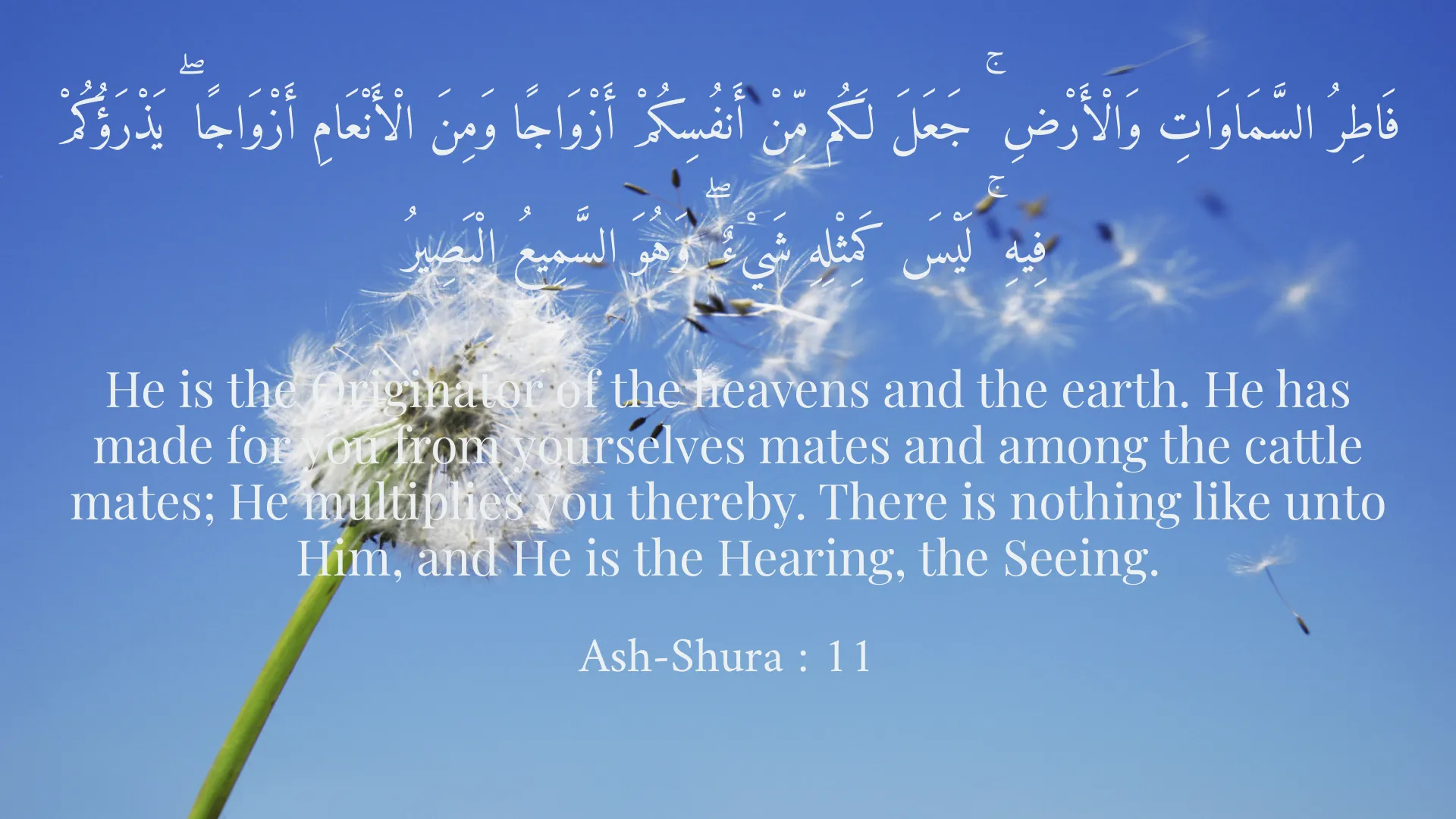
فَاطِرُ السَّمَاوَاتِ وَالْأَرْضِ ۚ جَعَلَ لَكُم مِّنْ أَنفُسِكُمْ أَزْوَاجًا وَمِنَ الْأَنْعَامِ أَزْوَاجًا ۖ يَذْرَؤُكُمْ فِيهِ ۚ لَيْسَ كَمِثْلِهِ شَيْءٌ ۖ وَهُوَ السَّمِيعُ الْبَصِيرُ
He is the Originator of the heavens and the earth. He has made for you from yourselves mates and among the cattle mates; He multiplies you thereby. There is nothing like unto Him, and He is the Hearing, the Seeing.
Ash-Shura : 11
لَّا تُدْرِكُهُ الْأَبْصَارُ وَهُوَ يُدْرِكُ الْأَبْصَارَ ۖ وَهُوَ اللَّطِيفُ الْخَبِيرُ
No vision can grasp Him, but He grasps all vision; and He is the Subtle, the All-Aware.
Al-An'am : 103
وَلَمَّا جَاءَ مُوسَىٰ لِمِيقَاتِنَا وَكَلَّمَهُ رَبُّهُ قَالَ رَبِّ أَرِنِي أَنظُرْ إِلَيْكَ ۚ قَالَ لَن تَرَانِي ۚ وَلَٰكِنِ انظُرْ إِلَى الْجَبَلِ فَإِنِ اسْتَقَرَّ مَكَانَهُ فَسَوْفَ تَرَانِي ۚ فَلَمَّا تَجَلَّىٰ رَبُّهُ لِلْجَبَلِ جَعَلَهُ دَكًّا وَخَرَّ مُوسَىٰ صَعِقًا ۚ فَلَمَّا أَفَاقَ قَالَ سُبْحَانَكَ تُبْتُ إِلَيْكَ وَأَنَا أَوَّلُ الْمُؤْمِنِينَ
And when Moses came to Our appointed time and his Lord spoke to him, he said, "My Lord, show me [Yourself] that I may look at You." [Allah] said, "You will not see Me, but look at the mountain; if it remains in its place, then you will see Me." But when his Lord appeared to the mountain, He made it crumble to dust, and Moses fell unconscious. And when he recovered, he said, "Exalted are You! I have repented to You, and I am the first of the believers."
Al-A'raf : 143
Short Story
It is narrated that in ancient times, there was a scholar who had spent his life acquiring various sciences, delving deeply into every book he could lay his hands on. The pride of knowledge had enveloped him, and he imagined that with his intellect, he could unravel any secret. One day, he pondered how he could comprehend the essence of God. As he was deep in thought, night fell, and he drifted into sleep. In his dream, he found himself on the edge of an ocean whose end was nowhere in sight, holding a small bowl in his hand. No matter how much he tried to pour the ocean's water into his bowl, it would overflow, and the ocean remained boundless. A voice spoke, saying: "O scholar, your bowl of intellect, however large it may be, how can it contain the boundless ocean of divine existence? You can drink from its water and benefit from its blessings, but you can never confine it within your bowl." The scholar awoke, tears streaming from his eyes, and with a humility he had never experienced, he understood that knowing God is not about confining Him within the mind, but about acknowledging His greatness and boundlessness, and being humble before His signs. From that day on, he not only pursued more knowledge but also devoted himself to greater humility and praise of God, and his heart was illuminated with the light of true معرفت (divine knowledge).