Quranic Answer
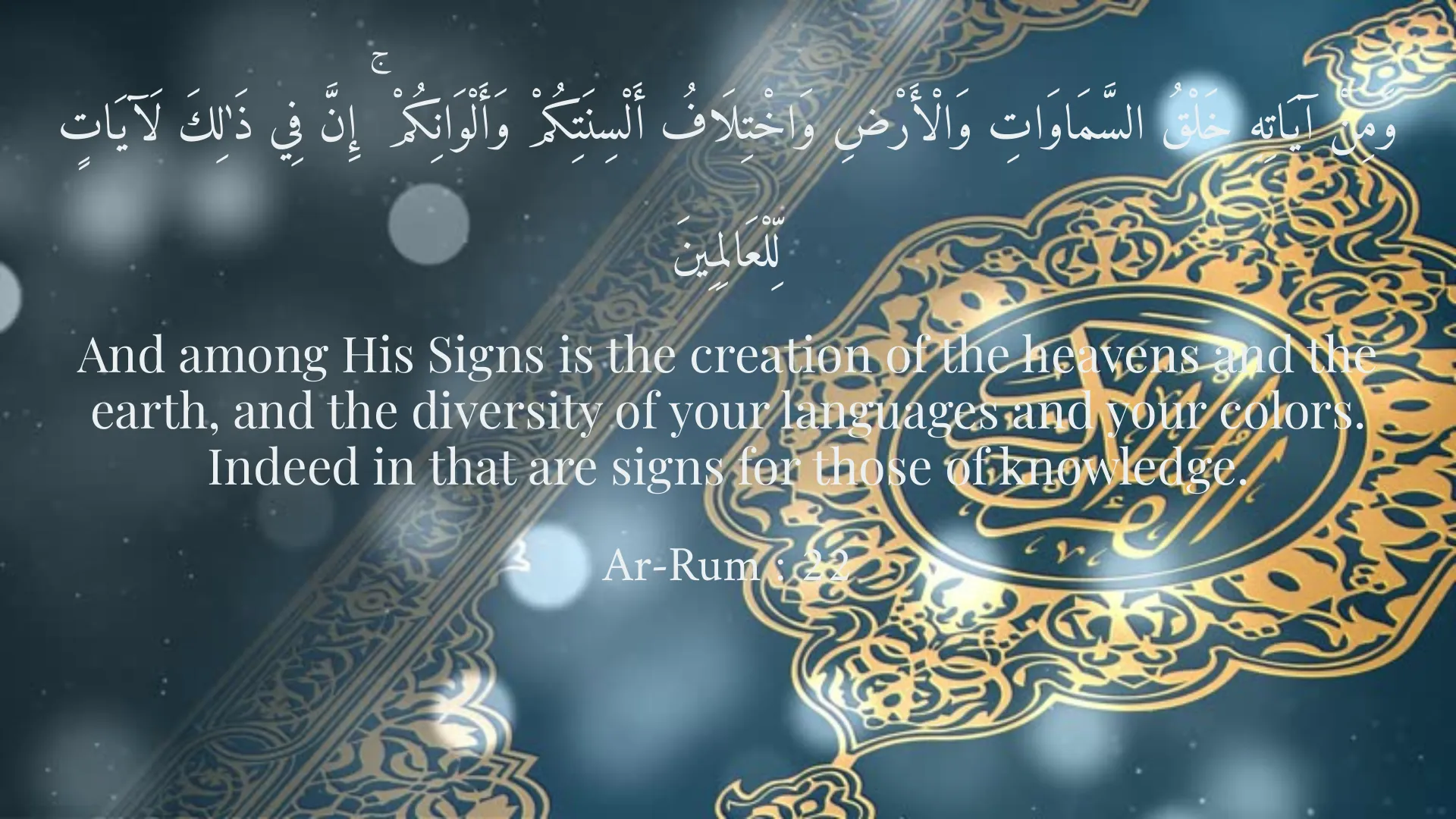
The concept of 'unity in multiplicity' is, in essence, one of the most fundamental and profound teachings that can be clearly traced throughout the Holy Quran, even if the exact philosophical term itself is not explicitly mentioned in its verses. The Quran, in various ways, elucidates how a single, absolute reality, namely Almighty God, is the source and Creator of the universe, manifesting Himself in an innumerable multiplicity of phenomena, beings, and cosmic laws. This concept is evident not only in the domain of Tawhid (Divine Oneness) and the essence of God but also in creation, human diversity, and even the unity of the community of believers. One of the primary aspects of unity in multiplicity in the Quran is the pure divine monotheism (Oneness of God) and its manifestation in creation. In the Quran, God introduces Himself as 'Ahad' and 'Wahid,' meaning the Singular and Unique Being, peerless and without partner. Nevertheless, this very One Being is the Creator of the heavens and the earth, stars, galaxies, living creatures, and all natural phenomena. The unparalleled and astonishing diversity in creation, ranging from various species of plants and animals to differences in human languages and colors, all serve as signs and indications pointing to a single, wise Creator. This multiplicity does not contradict God's Oneness; rather, it serves as a decisive proof and argument for His boundless power, wisdom, and knowledge. If there were multiple creators, each would have their own domain, leading to the disruption of the order and harmony governing the universe. The Quran, however, clearly points to a cosmic order and coherence, all originating from a single source. This harmony and complexity of the creation system are testimonies to the Oneness of its Administrator. time and again invites humans to reflect on this multiplicity of creation and to find the sign of Tawhid within it. For instance, in Surah Ar-Rum, verse 22, it states: "And among His Signs is the creation of the heavens and the earth, and the diversity of your languages and your colors. Indeed in that are signs for those of knowledge." This verse clearly indicates that the apparent and cultural differences among humans are not a cause for division but rather a sign of Divine wisdom and His creative power. All these multiplicities originate from a single source, namely God, and the purpose of this diversity is mutual recognition and attaining piety, not separation and discord. The Quran emphasizes that despite these differences, the root and origin of all humans are one, and all were created from a single soul, as stated in Surah An-Nisa, verse 1: "O mankind, fear your Lord, who created you from one soul." Furthermore, this concept is tangible in the social dimension and within the Islamic Ummah. The Quran instructs believers, despite their tribal, racial, and linguistic differences, to all be a 'single nation' (Ummah Wahidah) and to hold firmly to the rope of Allah and not be divided. Surah Al-Imran, verse 103, beautifully expresses this concept: "And hold firmly to the rope of Allah all together and do not become divided. And remember the favor of Allah upon you when you were enemies and He brought your hearts together in affection, so you became by His favor brothers." This verse demonstrates how Allah unites separated and hostile hearts with the light of faith, creating unity and brotherhood from multiplicity and discord. The goal of this unity in multiplicity is peaceful coexistence, cooperation for good, and avoidance of conflict and enmity. Moreover, in the realm of prophethood and divine messages, the Quran emphasizes the unity of the divine message. Despite the sending of multiple prophets to different nations throughout history, the core message and essence of the call have always been the same: worship of the One God and avoidance of false deities (Taghut). Surah An-Nahl, verse 36, states: "And We certainly sent into every nation a messenger, [saying], 'Worship Allah and avoid Taghut.'" This multiplicity in prophets and early laws does not contradict the unity of the message of Tawhid. All Abrahamic religions and divine prophets originate from one truth and one source, and their ultimate goal is to guide humanity towards that same One God. This shows that the truth of religion and its essence have always been one, and differences were in subsidiary matters and laws suited to specific times and places, but the main goal is unifying and singular. In conclusion, the Holy Quran fundamentally and profoundly emphasizes the concept of unity in multiplicity. This emphasis is not just a theoretical teaching but a practical guide for individual and social life. Understanding the truth that even though we appear diverse and numerous, we all return to one Creator and are ultimately heading towards a common destination, can sow the seeds of peace, understanding, empathy, and cooperation in human societies. This concept invites humanity to reflect on the divine signs in the world and within themselves, teaching them to see behind every multiplicity the hand of the power and wisdom of a single, unique Being, a Being who, with His unparalleled order and beauty, has depicted this multiplicity within a unique unity. This perspective offers a comprehensive and inclusive view of existence, where every part is a sign of the whole, and every multiplicity is a manifestation of absolute unity. This intellectual depth is the foundation of the monotheistic worldview that permeates the entire Quran.
Related Verses
وَمِنْ آيَاتِهِ خَلْقُ السَّمَاوَاتِ وَالْأَرْضِ وَاخْتِلَافُ أَلْسِنَتِكُمْ وَأَلْوَانِكُمْ ۚ إِنَّ فِي ذَٰلِكَ لَآيَاتٍ لِّلْعَالِمِينَ
And among His Signs is the creation of the heavens and the earth, and the diversity of your languages and your colors. Indeed in that are signs for those of knowledge.
Ar-Rum : 22
وَاعْتَصِمُوا بِحَبْلِ اللَّهِ جَمِيعًا وَلَا تَفَرَّقُوا ۚ وَاذْكُرُوا نِعْمَتَ اللَّهِ عَلَيْكُمْ إِذْ كُنتُمْ أَعْدَاءً فَأَلَّفَ بَيْنَ قُلُوبِكُمْ فَأَصْبَحْتُم بِنِعْمَتِهِ إِخْوَانًا وَكُنتُمْ عَلَىٰ شَفَا حُفْرَةٍ مِّنَ النَّارِ فَأَنقَذَكُم مِّنْهَا ۗ كَذَٰلِكَ يُبَيِّنُ اللَّهُ لَكُمْ آيَاتِهِ لَعَلَّكُمْ تَهْتَدُونَ
And hold firmly to the rope of Allah all together and do not become divided. And remember the favor of Allah upon you when you were enemies and He brought your hearts together in affection, so you became by His favor brothers. And you were on the edge of a pit of the Fire, and He saved you from it. Thus does Allah make clear to you His verses that you may be guided.
Al-Imran : 103
إِنَّ فِي خَلْقِ السَّمَاوَاتِ وَالْأَرْضِ وَاخْتِلَافِ اللَّيْلِ وَالنَّهَارِ وَالْفُلْكِ الَّتِي تَجْرِي فِي الْبَحْرِ بِمَا يَنفَعُ النَّاسَ وَمَا أَنزَلَ اللَّهُ مِنَ السَّمَاءِ مِن مَّاءٍ فَأَحْيَا بِهِ الْأَرْضَ بَعْدَ مَوْتِهَا وَبَثَّ فِيهَا مِن كُلِّ دَابَّةٍ وَتَصْرِيفِ الرِّيَاحِ وَالسَّحَابِ الْمُسَخَّرِ بَيْنَ السَّمَاءِ وَالْأَرْضِ لَآيَاتٍ لِّقَوْمٍ يَعْقِلُونَ
Indeed, in the creation of the heavens and the earth, and the alternation of the night and the day, and the [great] ships which sail through the sea with that which benefits humanity, and what Allah has sent down from the sky of rain and collected the earth thereby after its lifelessness and dispersed therein from every [type of] moving creature, and [in] the dispersal of winds and clouds that are subjected between the heaven and the earth are signs for a people who use reason.
Al-Baqarah : 164
Short Story
In Saadi's Gulistan, it is narrated that a just king sought a way to strengthen solidarity among his people. One day, he said to a wise sage who was contemplating in a beautiful garden, "O Sage, the people of my city are of diverse races and professions. Each is busy with their own affairs and rarely pays attention to one another. How can we create unity within this multiplicity so that all may be like members of one body?" The sage smiled and said, "O King! Look at this beautiful garden. Thousands of flowers of different colors and scents have bloomed in it; from the fiery red rose to the charming violet and the white jasmine. Each has its unique beauty, and if there were only one type of flower, there would not be such freshness and fragrance. But it is this multiplicity of flowers that has made the garden an unparalleled paradise, captivating the heart of the beholder. None is superior to another except by the sweet scent it emits or the color that pleases the eye. The unity of this garden lies in the diversity of its flowers, all drinking water from the same soil and facing the same sun. Just as Saadi said: 'Human beings are members of one body / For in creation, they are of one essence.' If the people of your city also understand that they all stem from one root and one Creator, and that every difference among them is a perfection for the whole, then they will find unity within their multiplicity and become beautiful and fragrant, like a garden full of colorful flowers." The king rejoiced at this enlightening speech and resolved to spread this wisdom among his people to build a unified and powerful city through understanding and empathy.