Quranic Answer
The Holy Quran, as the divine word of Allah, addresses various dimensions of human existence, including human emotions and concerns, in diverse ways. Fear of the future is one of the most natural and profound human anxieties, rooted in uncertainty and lack of knowledge about upcoming events. Does the Quran address this fear and offer solutions for it? The answer is a resounding yes. The Quran deals with this issue both directly and indirectly, not only condemning unfounded fears but also providing pathways to attain peace of mind and liberation from the shackles of future worries. One of the central concepts the Quran introduces to counter the fear of the future is reliance on Allah Almighty (Tawakkul). Tawakkul means complete trust and submission of affairs to a God who possesses absolute knowledge and infinite power, and who is capable of all things. When a person attains certainty that all matters are under divine management and that not a single leaf falls without His permission, a profound sense of tranquility settles upon their soul. Surah Hud, verse 122, states: "And return to your Lord and rely upon Him. Your Lord is never unaware of what you do." This verse, along with similar ones, assures humanity that Allah is constantly watchful over His servants' conditions and destines the best for them, even if the immediate outcome appears undesirable. The Quran also introduces the concept of "no fear upon them, nor shall they grieve" (لا خوف علیهم ولا هم یحزنون) for believers and those who do good deeds. This phrase is used in several places in the Quran and promises peace and assurance to those who have embraced the path of piety and faith. For instance, in Surah Yunus, verses 62-64, we read: "Unquestionably, [for] the allies of Allah there will be no fear concerning them, nor will they grieve. Those who believed and used to fear Allah (be righteous). For them are good tidings in the worldly life and in the Hereafter. No change is there in the words of Allah. That is the great success." These verses clearly indicate that fear of the future and grief over the past are products of an improper connection with Allah and weakness of faith. When a person reaches a level of certainty and knowledge where they understand that whatever comes their way is for their good and that Allah is their protector and guardian, there is no room left for fear and anxiety. In addition to Tawakkul, the Quran emphasizes the importance of patience (sabr) and prayer (salat) as two powerful tools for coping with difficulties and worries. In Surah Al-Baqarah, verse 153, it states: "O you who have believed, seek help through patience and prayer. Indeed, Allah is with the patient." Patience in the face of adversities and steadfastness in the path of truth grants a person the strength to confront future challenges. Prayer, as the pillar of religion and the believer's ascension, is a direct means of connection with the Creator, through which one can lighten the burden of their worries and experience divine tranquility. This heartfelt connection with Allah transforms the fear of the unknown into confidence in divine support. The Quran teaches us that the future is in the hands of Allah, and its knowledge rests solely with Him. In Surah Luqman, verse 34, it states: "Indeed, Allah [alone] has knowledge of the Hour and sends down the rain and knows what is in the wombs. And no soul perceives what it will earn tomorrow, and no soul perceives in what land it will die. Indeed, Allah is Knowing and Acquainted." This verse and similar ones deter humans from futile attempts to know the future and the anxieties stemming from it. Instead, it encourages them to focus on the present and fulfill their religious and moral duties, with the certainty that Allah will ordain the best for them. Ultimately, the Holy Quran reminds us that worldly life is transient and fleeting, and the main goal is to attain eternal peace in the Hereafter. Focusing on this noble objective makes worldly worries and the fear of their future seem insignificant compared to the grandeur of the Hereafter. A person who believes in the Hereafter and strives for it is less likely to fall into the trap of fearing worldly losses. The real fear for them is losing Allah's satisfaction and failing in the trials of this world. Therefore, the Quran not only addresses the fear of the future but also provides a comprehensive and complete solution for liberation from this fear and attainment of lasting peace by presenting concepts such as Tawakkul, patience, prayer, faith in the unseen, and emphasizing otherworldly rewards. These teachings instruct us to step towards the future with a tranquil heart and a calm soul, knowing that a merciful and all-knowing Lord is in charge of our affairs.
Related Verses
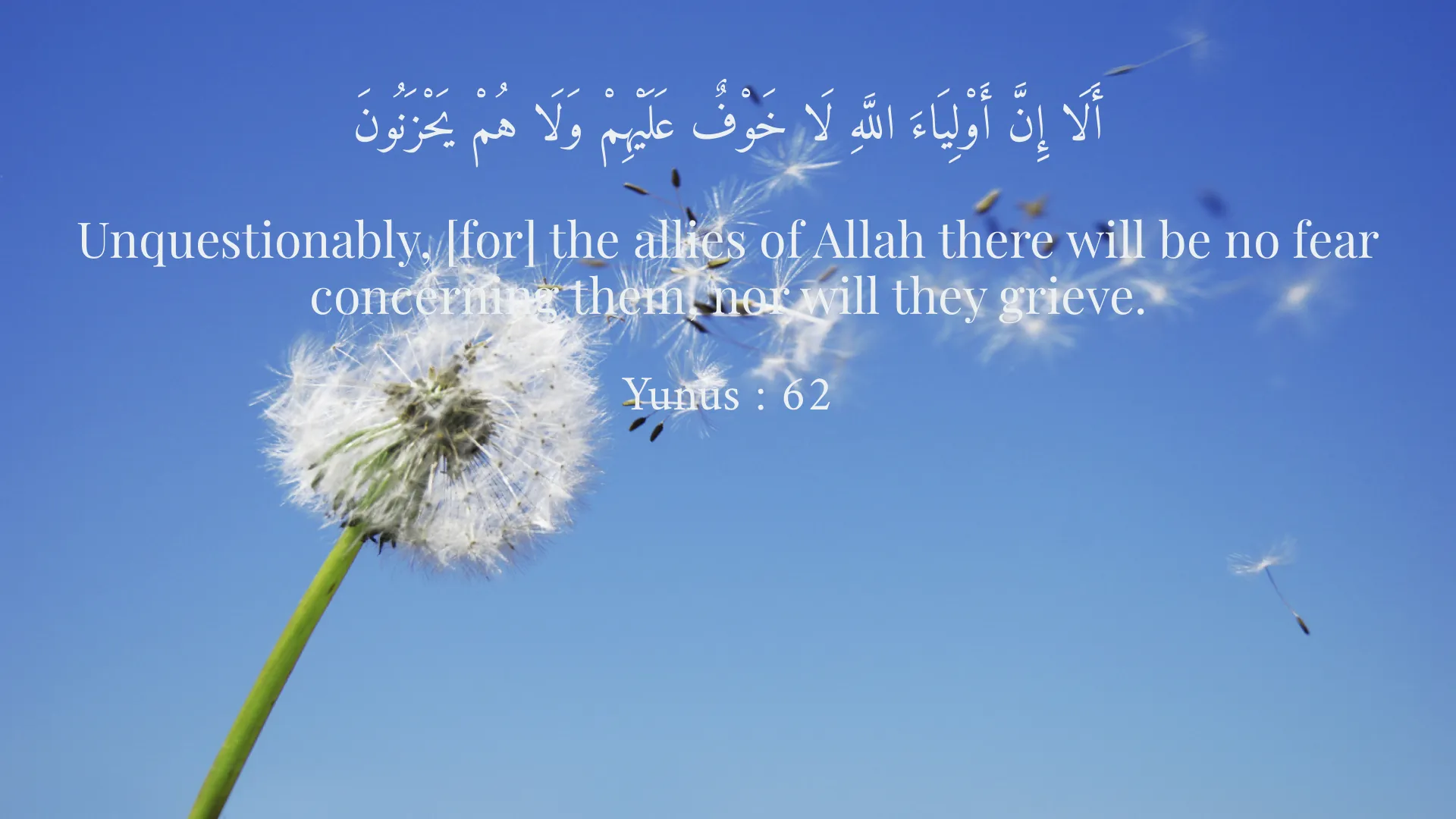
أَلَا إِنَّ أَوْلِيَاءَ اللَّهِ لَا خَوْفٌ عَلَيْهِمْ وَلَا هُمْ يَحْزَنُونَ
Unquestionably, [for] the allies of Allah there will be no fear concerning them, nor will they grieve.
Yunus : 62
فَبِمَا رَحْمَةٍ مِّنَ اللَّهِ لِنتَ لَهُمْ ۖ وَلَوْ كُنتَ فَظًّا غَلِيظَ الْقَلْبِ لَانفَضُّوا مِنْ حَوْلِكَ ۖ فَاعْفُ عَنْهُمْ وَاسْتَغْفِرْ لَهُمْ وَشَاوِرْهُمْ فِي الْأَمْرِ ۖ فَإِذَا عَزَمْتَ فَتَوَكَّلْ عَلَى اللَّهِ ۚ إِنَّ اللَّهَ يُحِبُّ الْمُتَوَكِّلِينَ
So by mercy from Allah, [O Muhammad], you were lenient with them. And if you had been rude [in speech] and harsh in heart, they would have disbanded from about you. So pardon them and ask forgiveness for them and consult them in the matter. And when you have decided, then rely upon Allah. Indeed, Allah loves those who rely [upon Him].
Al-Imran : 159
إِنَّ اللَّهَ عِندَهُ عِلْمُ السَّاعَةِ وَيُنَزِّلُ الْغَيْثَ وَيَعْلَمُ مَا فِي الْأَرْحَامِ ۖ وَمَا تَدْرِي نَفْسٌ مَّاذَا تَكْسِبُ غَدًا ۖ وَمَا تَدْرِي نَفْسٌ بِأَيِّ أَرْضٍ تَمُوتُ ۚ إِنَّ اللَّهَ عَلِيمٌ خَبِيرٌ
Indeed, Allah [alone] has knowledge of the Hour and sends down the rain and knows what is in the wombs. And no soul perceives what it will earn tomorrow, and no soul perceives in what land it will die. Indeed, Allah is Knowing and Acquainted.
Luqman : 34
Short Story
It is narrated that in ancient times, there lived a king who was constantly worried about the future and the preservation of his realm and wealth. At night, sleep would elude his eyes due to the fear of enemies and the decline of his kingdom. One day, from his palace balcony, he saw a dervish sitting under the shade of a tree, clad in torn clothes, with a serene heart, singing a melodious tune. The king was astonished by his composure and summoned him. He asked, "O dervish, how do you live so peacefully and fearlessly amidst such poverty and destitution, while I, with all this grandeur and glory, have not a moment of calm?" The dervish smiled and said, "O King, I have entrusted my heart to the Creator, knowing that He is the Sustainer and the Disposer of my affairs. Fear of the future takes root when one sees oneself alone and forgets that a compassionate Lord always watches over him. I am grateful for today and am not worried about the tomorrow that has not yet arrived, for I know that whatever is decreed is good." The king was moved by the dervish's words and understood that true peace lies not in wealth and power, but in reliance on God and contentment with His decree. From that day forward, the king also strived to look towards the future with a more assured heart and to cast away unnecessary anxieties.