Quranic Answer
The Holy Quran, regarded as the final revelation from God to mankind, is replete with themes of mercy, compassion, and the boundless grace of the Almighty. The concept of God's infinite mercy is not just a thematic undercurrent but rather a pillar of faith that cultivates hope and motivates actions among believers. Through numerous verses, the Quran emphasizes that God's mercy is immense and encapsulates all aspects of human life. This article delves into the nature of divine mercy as portrayed in the Quran, encouraging believers to foster a sincere relationship with their Creator through good deeds and repentance. The Quran makes several explicit mentions of God's infinite mercy, showcasing its importance in the lives of the faithful. One prominent verse is found in Surah Az-Zumar, verse 53, where Allah commands, "Say, O My servants who have believed, fear your Lord. For those who do good in this world is good, and the earth of Allah is spacious. Indeed, the patient will be given their reward without account." This exhortation highlights the significance of faith and good deeds as prerequisites to receiving God's mercy. It further emphasizes that the rewards for patience and righteousness will be abundant and beyond measure, providing not just external motivation but also internal reassurance for believers. Ultimately, this verse serves as a reminder that God's mercy is accessible to all who strive to do good, regardless of the challenges they face in life. Moreover, this verse reassures individuals of God’s mercy, which encourages believers to maintain hope and strive for positive transformations in their lives. The connection between faith and actions becomes evident as the Quran encourages individuals to recognize their potential for goodness and act accordingly. This can be seen as an invitation from Allah to not only expect mercy but to actively pursue it through righteous deeds and the practice of patience. In another significant verse, Surah Al-Mu'minun, verse 29 states, "And We made a barrier around them," which elucidates the notion that Allah's mercy envelops and safeguards the believers. This protective barrier becomes a manifestation of God's love and attention toward those who uphold their faith, further reinforcing the feeling of security in divine guidance. By creating an environment of protection, Allah assures believers that they are not alone in their struggles; rather, they are surrounded by divine mercy that encourages resilience and fortitude. The implications of this protective mercy cannot be underestimated. The notion that believers are encircled by the loving grace of Allah encourages unity and strength amongst the faithful. Knowing that one is under the protection of God's mercy creates a supportive community where individuals feel empowered to share their experiences with others and uplift those who may be faltering in their faith. This faith-based approach to community building fosters collaboration, enhancing the spiritual fabric of society. Surah Al-Baqarah, verse 186 further encapsulates this theme of mercy as it states: "And tell them, even if your sins reach the heavens, if you turn to Allah, He will forgive you." This poignant verse illustrates the readiness of God to forgive those who sincerely seek repentance, with an openness that defies human understanding. The verse highlights that no sin is too great to seek forgiveness and that God's mercy transcends the boundaries of human error. This presents a powerful approach to the concept of sin, encouraging believers to shed feelings of despair and guilt and instead embrace hope in the possibility of redemption. The Quran strongly emphasizes that God's mercy is infinite and available to anyone who repents, creating an inclusive path for all individuals. It invites humanity to transcend their shortcomings and imperfections and partake in the divine embrace of mercy through sincere repentance and the intention to rectify past misdeeds. Herein lies the beauty of God's mercy: it actively seeks the return of His servants, engendering a sense of belonging and acceptance within the divine compassion. Furthermore, it is crucial to understand that divine mercy does not exist in isolation. The Quran continuously emphasizes that access to God's mercy is linked to the performance of good deeds and the avoidance of sinful behavior. Mercy in this context is not an arbitrary reward but rather a manifestation of being in alignment with divine guidance and moral integrity. This reinforces the call for personal accountability and the necessity of personal development in the journey toward receiving God's grace. Moreover, the Quran highlights the characteristics of those who embody divine mercy within themselves. Believers are encouraged to reflect on their actions and emulate divine compassion by extending mercy to others. This interrelationship between God's mercy and human behavior fosters a cycle of compassion that promotes harmony and understanding in communities. By acting mercifully, believers not only embody their faith but also inspire others to engage in acts of kindness and goodwill. In conclusion, the Quran serves as a beacon of hope, constantly reminding believers of God's infinite mercy and boundless generosity. Verses like those in Surah Az-Zumar, Surah Al-Mu'minun, and Surah Al-Baqarah elucidate the vast and encompassing nature of divine compassion, reinforcing the divine promise that seeks to forgive and protect. These teachings serve as a catalyst for encouraging faith, patience, and personal growth while inviting believers to advance towards a deeper relationship with their Creator through good deeds and sincere repentance. Ultimately, the concept of God's mercy in the Quran not only seeks to uplift the spirits of individuals but also aims to create a compassionate society that echoes the divine qualities of love, forgiveness, and mercy.
Related Verses
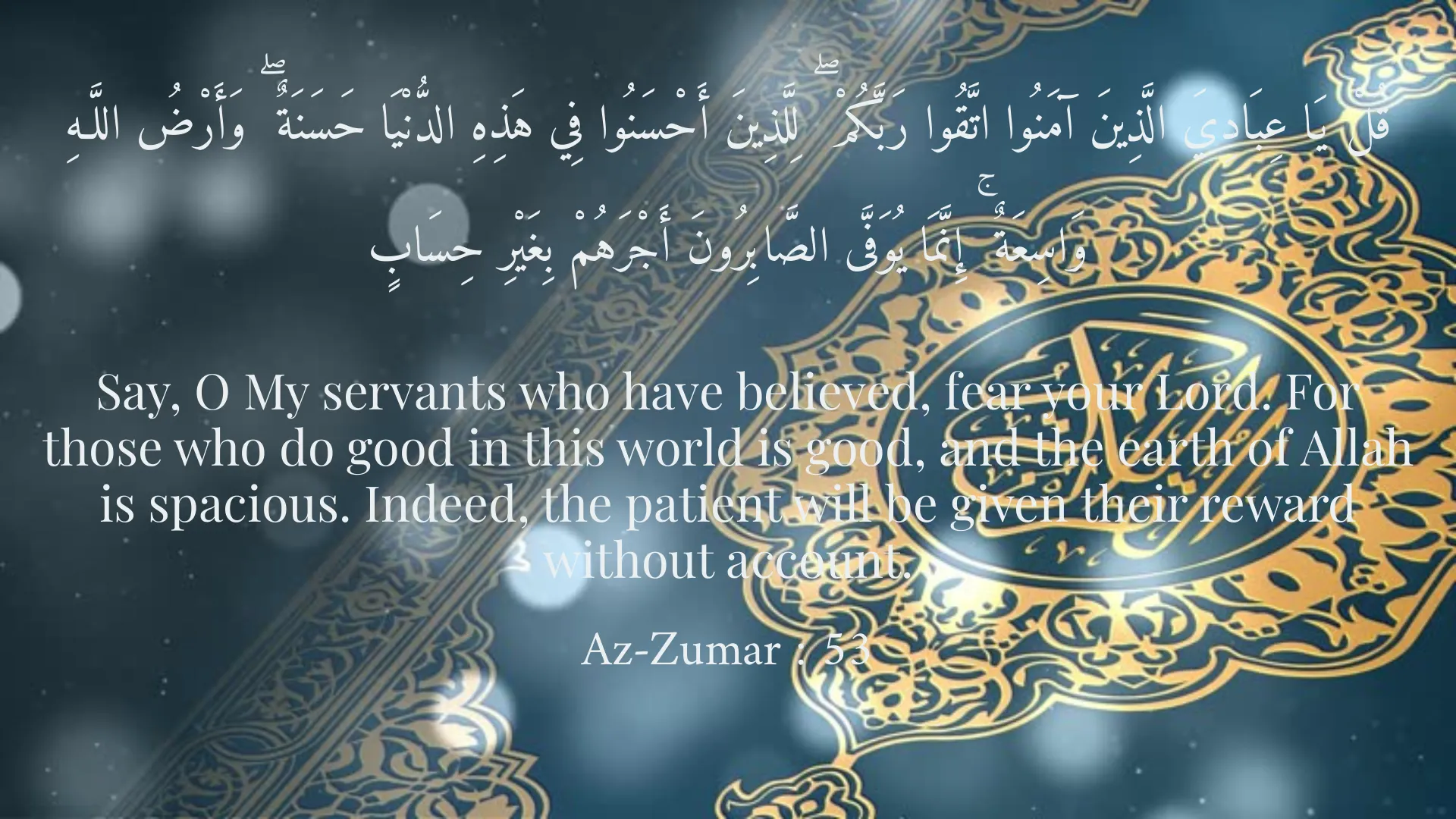
قُلْ يَا عِبَادِيَ الَّذِينَ آمَنُوا اتَّقُوا رَبَّكُمْ ۖ لِلَّذِينَ أَحْسَنُوا فِي هَذِهِ الدُّنْيَا حَسَنَةٌ ۖ وَأَرْضُ اللَّـهِ وَاسِعَةٌ ۚ إِنَّمَا يُوَفَّى الصَّابِرُونَ أَجْرَهُمْ بِغَيْرِ حِسَابٍ
Say, O My servants who have believed, fear your Lord. For those who do good in this world is good, and the earth of Allah is spacious. Indeed, the patient will be given their reward without account.
Az-Zumar : 53
وَجَعَلْنَا مِن حَوْلِهِمْ حِصْنًا
And We made a barrier around them.
Al-Mu'minun : 29
وَقُلْ لَهُمْ إِنْ بَلَغَتْ ذُنُوبُكُمْ السَّمَاءَ، فَإِنِ الْتَجَأْتُمْ إِلَى اللَّـهِ سَيَغْفِرُ لَكُمْ
And tell them, even if your sins reach the heavens, if you turn to Allah, He will forgive you.
Al-Baqarah : 186
Short Story
One day in a garden, there was a man named Hasan who was seeking peace. He reflected on God's mercy and decided to focus on doing good to others. He helped those around him and acted with kindness. Over time, Hasan felt that his life was filled with blessings and tranquility. He realized that God's mercy was always close to him; he just needed to remain hopeful and strive.