Quranic Answer
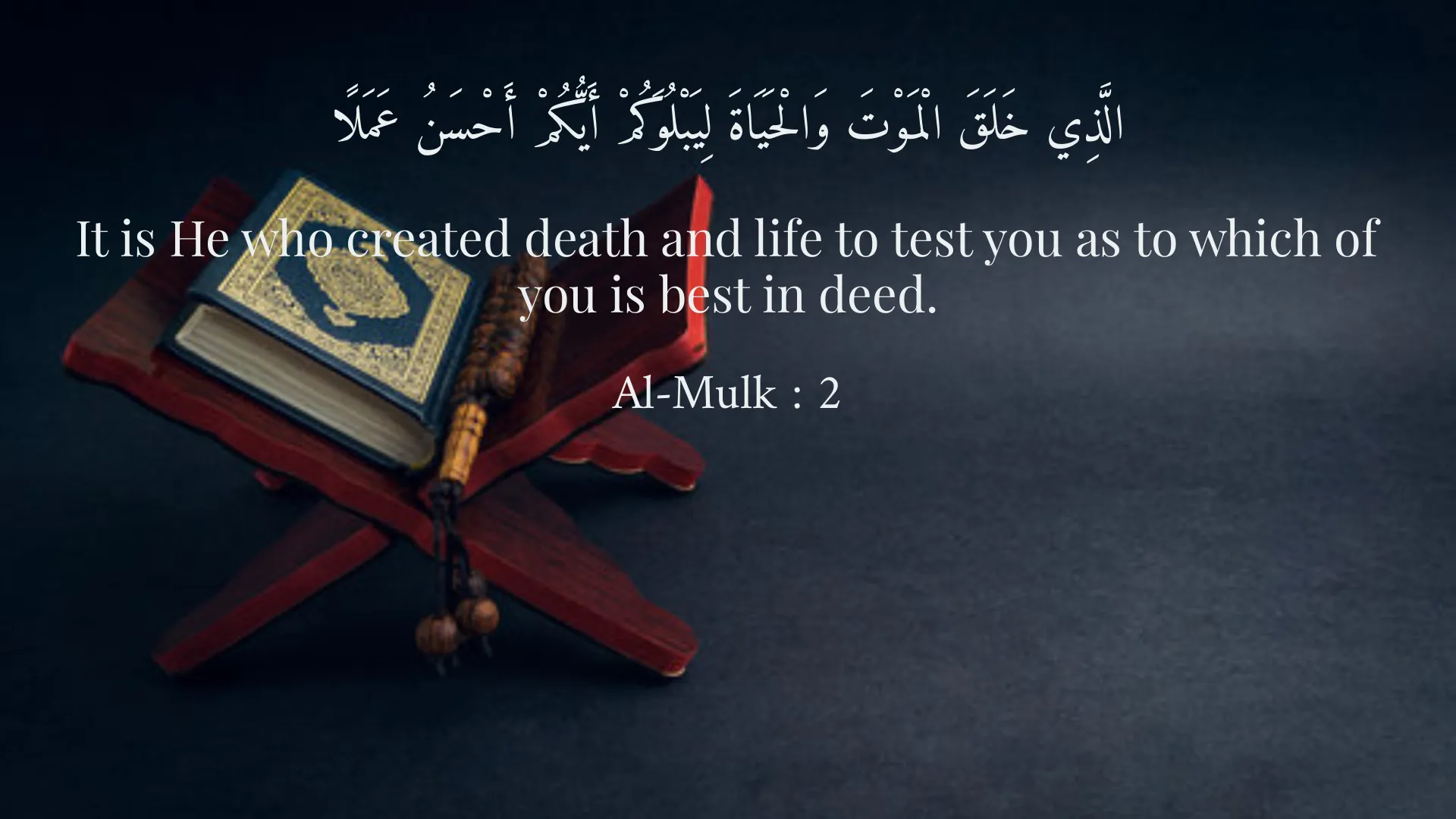
The concept of life as a test is central to Islamic belief, as emphasized in the Holy Quran. This notion serves to frame our understanding of existence and the purpose of our efforts during our earthly lifetime. Surah Al-Mulk, verse 2 states, "It is He who created death and life to test you as to which of you is best in deed." This verse is a poignant reminder that our time in this world is not incidental; it is a critical period of evaluation and growth. Each moment presents an opportunity for us to engage in actions that define our character and commitment to righteousness. Understanding life as a test frames our actions and intentions in a new light. Every interaction we have, every decision we make, and every choice we confront serves as an opportunity to demonstrate our values and to live in accordance with Allah's guidance. In this context, earthly life is imbued with meaning and purpose; it becomes not just a collection of moments, but a journey within which we strive to showcase our best selves. The Holy Quran also makes it abundantly clear that these efforts are neither futile nor redundant. The life we experience on earth is akin to sowing seeds for the hereafter. Every good deed, every act of charity, and every instance of kindness we extend to others contributes to a harvest that we will one day reap. This agricultural metaphor is particularly powerful, as it reminds us that our efforts require patience and nurturing. Just as seeds do not immediately yield fruit, our deeds may sometimes appear to be small or insignificant, but they build towards something greater when viewed from the perspective of eternity. Moreover, the Quran addresses the balance we must strike when engaging with the worldly pleasures afforded to us. In Surah Al-A'raf, verse 31, Allah advises, "Eat and drink, but do not waste." Here, the emphasis is placed on moderation and intentionality. Life's blessings are gifts entrusted to us, and how we utilize them speaks volumes about our character. Enjoying the pleasures of life—food, social interactions, and experiences—does not contradict the notion of seeking goodness; instead, these enjoyments can serve as vehicles for our spiritual growth when approached with the right mindset. Nonetheless, it is critical to remember that worldly pleasures should not dominate our pursuits. The Quran makes it clear that while we can partake in life's offerings, we should not lose sight of the greater reality—that this world is a temporal abode leading to the eternal hereafter. This perspective encourages us to prioritize actions that enhance our connection with Allah, aiming for a life characterized by sincerity, humility, and a commitment to serve others. In essence, the idea of life as a test should inspire us to lead lives of purpose. Our efforts must resonate with the principles of benevolence and compassion, ensuring that we are not only striving for personal success but also uplifting and supporting those around us. Living this way cultivates a sense of community and reinforces the idea that our earthly existence is intertwined with the lives of others. To understand the intrinsic value of our worldly existence, we must foster a mindset that emphasizes growth and self-improvement. Whether through acts of kindness, charitable endeavors, or simply lending a listening ear, we can find profound significance in the roles we play in each other's lives. This interconnectedness enriches our experiences and reminds us that every act of goodness, no matter how small, contributes to a legacy that outlives our physical presence. Furthermore, the belief that our actions are continuously evaluated encourages us to reflect on our choices and their implications. Are we prioritizing self-interest over the needs of our community? Are our decisions enriching our spiritual journey or pulling us away from it? Such self-inquiry is vital, as it aligns us with the understanding that our ultimate success is measured not merely by material attainment but by our commitment to virtue and the impacts we have on the lives of others. As we navigate the complexities of life, let us strive to understand that our time on this earth is a time for testing, learning, and growing. Each challenge we face can be seen as an opportunity for improvement, nudging us closer to our purpose. Embracing this perspective invites us to engage earnestly with our surroundings, fostering a sense of gratitude for both the challenges and the blessings in our lives. It's a conscious choice to view our existence as an opportunity for growth, both for ourselves and for those we encounter. In conclusion, life, as elucidated in the Holy Quran, is fundamentally a test, a chance for us to engage in deeds that will ultimately define our existence beyond this world. By recognizing the potential for our efforts to yield both personal and communal benefits, we instill in ourselves a deeper appreciation for our earthly journey. With every day that passes, let us remember to act with intention, striving towards goodness and servitude, aligning our efforts with the eternal perspectives laid out in the Quran. Only then can we uncover the true value of our life and actions, leading to a fulfilled, purposeful existence that echoes beyond the confines of this world.
Related Verses
الَّذِي خَلَقَ الْمَوْتَ وَالْحَيَاةَ لِيَبْلُوَكُمْ أَيُّكُمْ أَحْسَنُ عَمَلًا
It is He who created death and life to test you as to which of you is best in deed.
Al-Mulk : 2
كُلُوا وَاشْرَبُوا وَلَا تسْرِفُوا إِنَّهُ لَا يُحِبُّ الْمُسْرِفِينَ
Eat and drink, but do not waste. Indeed, He does not like the wasteful.
Al-A'raf : 31
Short Story
One day, Adel visited a garden and enjoyed its beauty and freshness. He decided to spend more time in this garden, nurturing it with effort and hard work to grow fresh flowers. After a few months, he faced vibrant and colorful fruits that were the result of his endeavors. This experience taught him that effort and striving in the world always yield results, making the world valuable through our hard work.