Quranic Answer
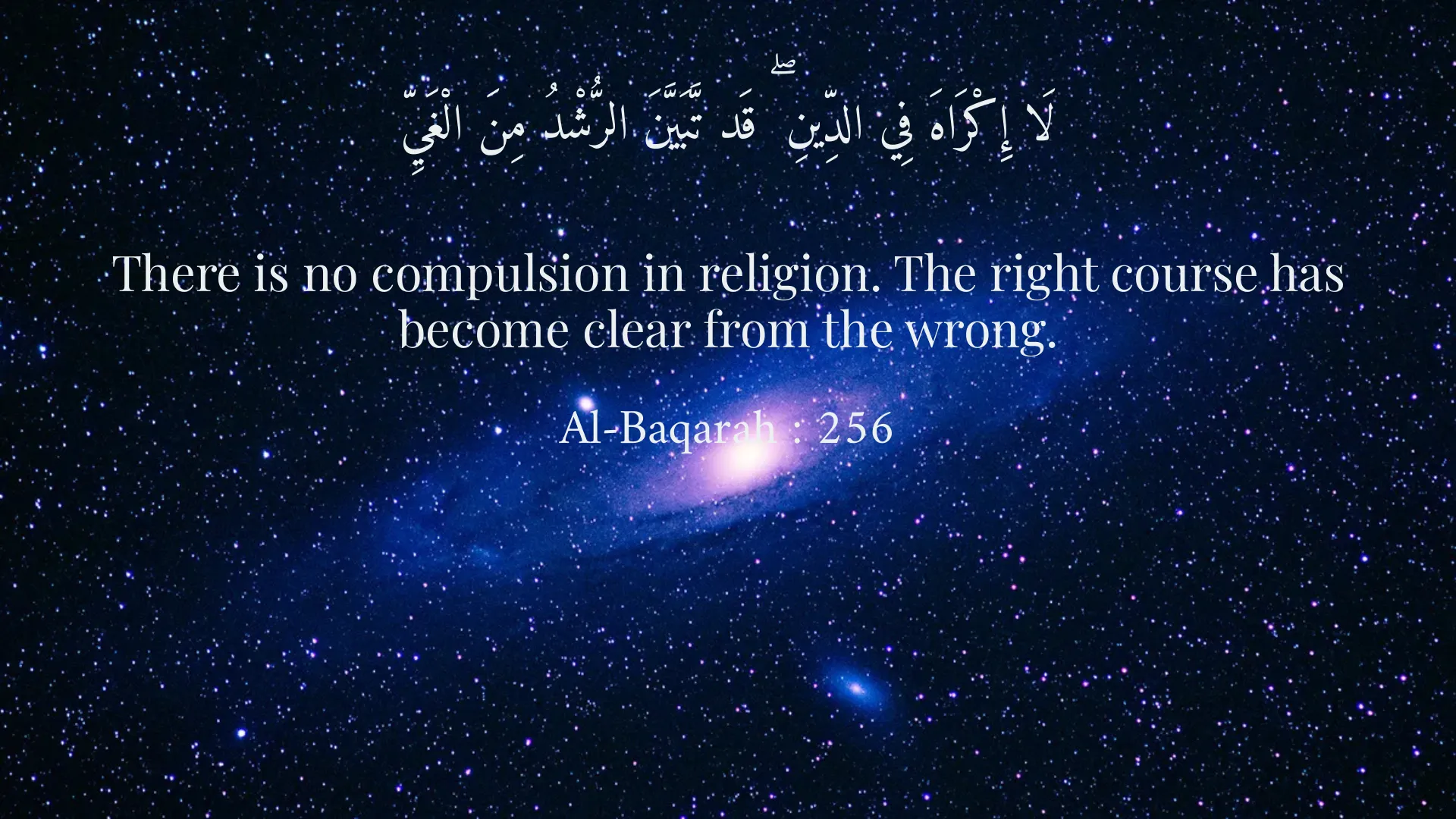
The Holy Quran, which is the central religious text of Islam, provides profound insights into the concept of human freedom. Throughout its verses, the Quran addresses the principles of choice, faith, and the moral framework within which this freedom should operate. One of the most pivotal verses concerning human freedom is found in Surah Al-Baqarah, verse 256, where Allah states, 'There is no compulsion in religion.' This verse highlights a fundamental principle of Islamic belief: that individuals are endowed with the freedom to choose their beliefs without any coercion or force from external sources. This idea is not merely a theological assertion but a recognition of human dignity and the importance of personal agency. The essence of this verse teaches us that belief, as a deeply personal and spiritual pursuit, should be a product of an individual's understanding and reasoning. It signals to followers that faith is not merely a matter of tradition or cultural imposition, but rather a conscious decision that should come from one’s own introspection and comprehension of truth. In this light, the Quran advocates for a form of freedom that respects individual thought processes and the diversity of belief systems among humanity. Moreover, the notion of freedom in the Quran continues to be elucidated in Surah Al-Insan, verse 3, which narrates God’s guidance provided to humans. It states, 'Indeed, We have guided him to the way, be he grateful or be he ungrateful.' This verse underscores the idea that while Allah has laid down a path for humanity, it remains up to individuals to follow it or to diverge from it. This divine guidance is not a means of enslavement but serves to empower humans to make choices about their moral and ethical conduct. Herein lies another critical aspect of freedom: the responsibility that accompanies it. While individuals are offered the opportunity to choose their paths, they must do so with awareness of the consequences. The Quran encourages believers to engage with their freedom thoughtfully and responsibly. It implies that freedom of choice is a privilege, which if misused, can lead to negative outcomes not just for the individual but for society as a whole. However, it is vital to emphasize that freedom, as described in the Quran, does not imply an absolute lack of restraint. In fact, the Quran articulates a nuanced understanding of freedom that is tempered by moral imperatives and divine guidelines. This is particularly evident in Surah Al-Maidah, verse 32, which states, 'Because of that, We decreed upon the Children of Israel that whoever kills a soul unless for a soul or for corruption [done] in the land - it is as if he had slain mankind entirely. And whoever saves one - it is as if he had saved mankind entirely.' This verse encapsulates the idea that protecting human life and dignity is central to human freedom. The complexity of freedom, therefore, is that it comes with ethical obligations to others. Thus, the Quran posits that genuine freedom is not simply anarchic liberty but rather comes from the adherence to a loftier code of conduct that elevates one's soul and the community around them. True freedom exists within the parameters of ethical and divine principles, demanding that while one may choose freely, those choices must bolster justice, compassion, and respect toward others. Moreover, this concept of freedom is not confined to the individual level; it extends into social realms as well. In Islamic teachings, the liberation of the spirit and intellect must translate into a form of social justice that allows individuals to thrive and live harmoniously within their communities. The Quran encourages the establishment of systems that foster equity, promote welfare, and uphold the rights of every individual. The intertwining of personal liberty with social responsibility is a core tenet of Islamic philosophy and is essential for the promotion of a peaceful, prosperous society. In conclusion, the Quran profoundly addresses the issue of human freedom through its directives and ethical guidelines. It affirms that individuals possess the autonomy to choose their beliefs and paths, yet it simultaneously enjoins them to exercise this freedom responsibly within a framework of moral and divine laws. By fostering a society in which freedom is balanced by ethical considerations, the Quran lays the groundwork for a harmonious coexistence among individuals, promoting peace, justice, and mutual respect. Therefore, true freedom, as envisioned in Islamic teachings, is a holistic concept, encompassing personal liberties while insisting on a commitment to the welfare of the community and adherence to divine teachings.
Related Verses
لَا إِكْرَاهَ فِي الدِّينِ ۖ قَد تَّبَيَّنَ الرُّشْدُ مِنَ الْغَيِّ
There is no compulsion in religion. The right course has become clear from the wrong.
Al-Baqarah : 256
إِنَّا هَدَيْنَاهُ السَّبِيلَ إِمَّا شَاکِرًۭا وَإِمَّا كَفُورًۭا
Indeed, We have guided him to the way, be he grateful or ungrateful.
Al-Insan : 3
مِنْ أَجْلِ ذَٰلِكَ كَتَبْنَا عَلَى بَنِي إِسْرَائِيلَ أَنَّهُ مَن قَتَلَ نَفْسًۭا بِغَيْرِ نَفْسٍۢ أَوْ فَسَادٍۢ فِي الْأَرْضِ فَكَأَنَّمَا قَتَلَ النَّاسَ جَمِيعًۭا
Because of that, We decreed upon the Children of Israel that whoever kills a soul unless for a soul or for corruption [done] in the land - it is as if he had slain mankind entirely.
Al-Maidah : 32
Short Story
One day, a man lived in a land where he had a great passion for studying the Quran. He was in search of a deeper understanding of life and freedom. One day, while studying, he came across a verse that inspired him. Initially, he was amazed at how much freedom God had given to humans, but then he realized that this freedom must come with responsibility. After that, he decided that in the society in which he lived, he would not only pursue his own rights to freedom but also pay attention to the rights of others. From that day onward, not only did he advocate for his own freedom, but he also worked to promote ethics and respect for the rights of others.