Quranic Answer
When confronting the profound question of whether humanity was created for suffering, the Holy Quran offers a clear, comprehensive, and ultimately hopeful answer that transcends the mere concept of suffering. While it is true that worldly life is intertwined with challenges, hardships, and trials that may appear painful, these are not the ultimate purpose of human creation. Rather, they serve as means and stages for achieving higher objectives. The Quran explicitly states that the primary purpose of human creation is the worship and servitude of God. In Surah Adh-Dhariyat, verse 56, Allah declares: “And I did not create the jinn and mankind except to worship Me.” This worship is not merely about performing rituals; it encompasses knowing God, obeying His commands and prohibitions, and living according to divine values. This path of servitude is itself the path to true perfection and happiness, where hardships play a constructive role rather than being an end in themselves. From a Quranic perspective, worldly life is a field of trial and tribulation (ibtila’). In Surah Al-Mulk, verse 2, Allah states: “He who created death and life to test you [as to] which of you is best in deed - and He is the Exalted in Might, the Forgiving.” This verse clearly indicates that the purpose of creation is a test. These tests, whether in the form of difficulties and afflictions (suffering) or blessings and prosperity (ease), are all designed to gauge the faith, patience, gratitude, and actions of human beings in their servitude to God. Suffering, in this journey, serves as a tool for growth, self-purification, and distinguishing the righteous from the wrongdoers. They invite humanity to reflect, repent, and return to God. Indeed, often, hardships reveal truths and uncover hidden human capacities that might never have been discovered in times of ease. The Quran emphasizes that God does not burden any soul beyond its capacity. In Surah Al-Baqarah, verse 286, it is stated: “Allah does not charge a soul except [with that within] its capacity.” This verse demonstrates divine mercy and justice. The sufferings experienced by humans are never beyond their ability to endure and overcome. This assurance brings peace of mind, knowing that every problem that arises is within one's capacity to confront and learn from. Furthermore, the Quran promises that with every hardship, there is ease. In Surah Al-Inshirah, verses 5 and 6, Allah says: “For indeed, with hardship [will be] ease. Indeed, with hardship [will be] ease.” These verses convey a message of hope and comfort, reminding humanity that difficulties are temporary and will be followed by relief and ease. This repetition emphasizes the certainty of God's promise regarding ease after hardship. This ease can manifest in this world or in the Hereafter, or both. Sometimes, hardships and sufferings are considered expiation for sins, leading to the purification and elevation of the soul. Just as fire separates gold from impurities, so too do hardships cleanse the human spirit from spiritual defilements. On the other hand, patience and perseverance in the face of suffering bring immense rewards. The Quran repeatedly mentions the reward of the patient, promising that God will reward them without measure. This perspective gives meaning and purpose to suffering, transforming it from a merely negative experience into an opportunity to earn divine recompense. Moreover, God created humanity in the “best of stature” (ahsani taqwim), as we read in Surah At-Tin, verse 4: “We have certainly created man in the best of stature.” This indicates the high dignity and honor of humanity in God's sight. The creation of humans with such perfection is inconsistent with the idea that they were merely created to suffer. Rather, humans were created with unparalleled talents and capacities to choose the path of happiness through their free will and choice, and to draw closer to God. Worldly sufferings in this path are merely obstacles to test human will and faith, not the entire purpose of their creation. Ultimately, it must be said that worldly life is a temporary passage, and the eternal abode is the Hereafter. The sufferings of this world are insignificant and fleeting compared to the eternal bliss of Paradise. The ultimate goal is to attain divine pleasure and a good life in the Hereafter, which is achieved through patience and gratitude in the face of both hardships and ease. Therefore, the Quran never states that humans were created for suffering; instead, it presents suffering as an integral part of the divine test and a path for growth, purification, and the attainment of true perfection and happiness. This perspective is not only hopeful but also gives meaning and purpose to human existence, enabling individuals to confront life's challenges with insight and patience, knowing that after every hardship, there will be relief, and a great reward awaits the patient. This outlook encourages humans not to fear suffering but to view it as an opportunity for drawing closer to God and refining the soul. Life is a gift from the Lord, and every moment can be a place for acquiring knowledge and attaining divine proximity, and sufferings are also a part of this fruitful and spiritual journey. In other words, sufferings are a crucible that transforms humans into tempered steel, preparing them for greater, eternal goals. The ultimate aim is to achieve divine tranquility and contentment, where no suffering exists. Humanity was created to attain divine knowledge and, by its own choice, to choose the path of guidance, and this path is sometimes accompanied by difficulties that are necessary for perfection.
Related Verses
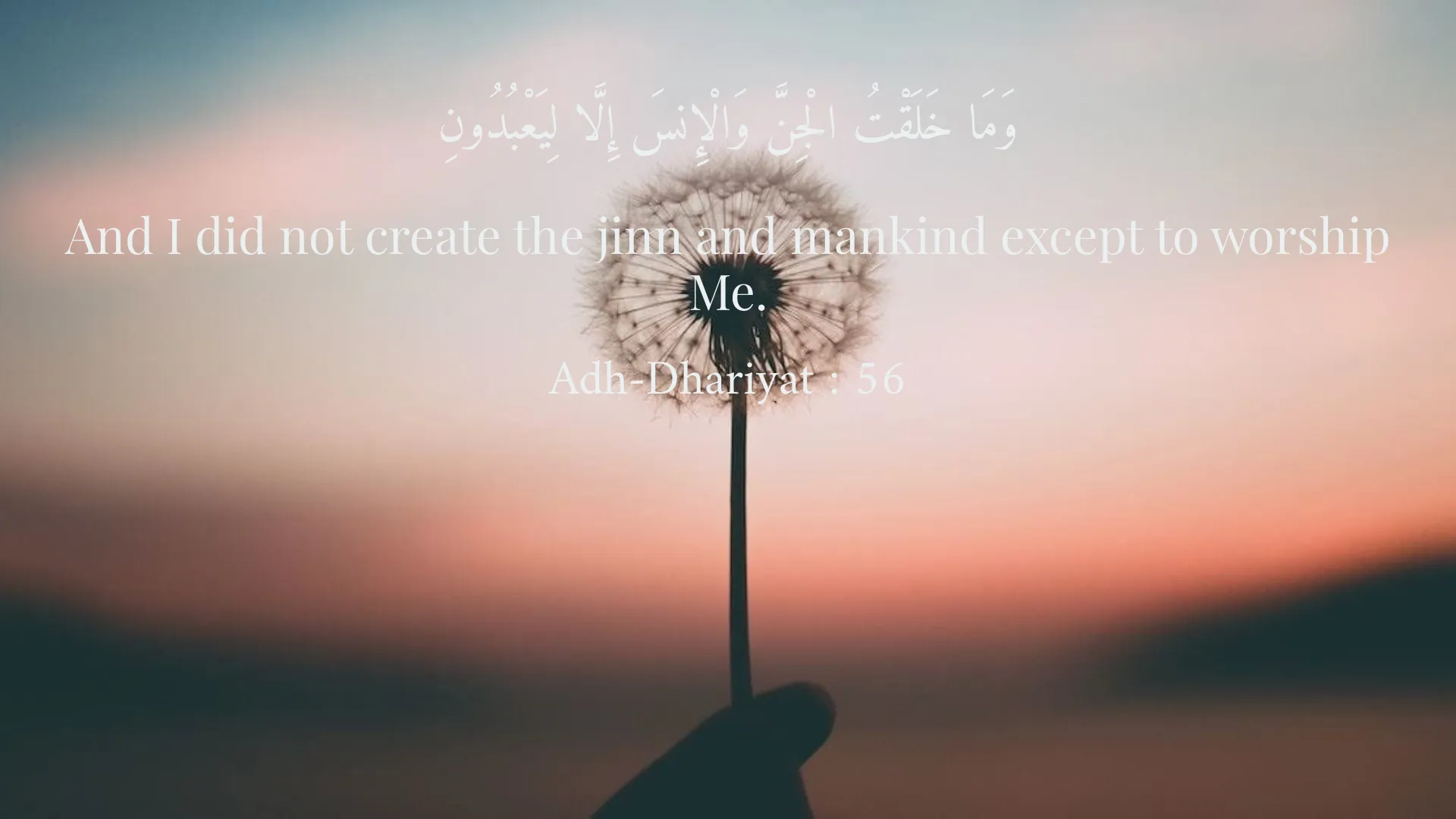
وَمَا خَلَقْتُ الْجِنَّ وَالْإِنسَ إِلَّا لِيَعْبُدُونِ
And I did not create the jinn and mankind except to worship Me.
Adh-Dhariyat : 56
الَّذِي خَلَقَ الْمَوْتَ وَالْحَيَاةَ لِيَبْلُوَكُمْ أَيُّكُمْ أَحْسَنُ عَمَلًا ۚ وَهُوَ الْعَزِيزُ الْغَفُورُ
He who created death and life to test you [as to] which of you is best in deed - and He is the Exalted in Might, the Forgiving.
Al-Mulk : 2
فَإِنَّ مَعَ الْعُسْرِ يُسْرًا
For indeed, with hardship [will be] ease.
Al-Inshirah : 5
إِنَّ مَعَ الْعُسْرِ يُسْرًا
Indeed, with hardship [will be] ease.
Al-Inshirah : 6
لَا يُكَلِّفُ اللَّهُ نَفْسًا إِلَّا وُسْعَهَا
Allah does not charge a soul except [with that within] its capacity.
Al-Baqarah : 286
Short Story
In Saadi's "Gulistan," it is narrated that one of his friends recounted: "I never complained about my circumstances nor twisted my skirt in frustration, except one day when my feet were bare, and I had no shoes, and I entered the mosque of Kufa." The man was heartbroken and sorrowful. But as soon as his eyes fell upon a corner of the mosque, "I saw a man who had no feet." It was at that moment that the man came to his senses and said: "Thanks be to God that I have feet, even if they are bare." This short but meaningful story from Saadi reminds us that life's sufferings and shortcomings are sometimes merely our perception of them. When we look at the problems of others, we realize the hidden blessings we possess in our own lives. The purpose of our creation is not merely to suffer, but to see and understand blessings and to overcome challenges with patience and gratitude, so that we may attain true knowledge and tranquility, just like that man who ultimately found peace of heart.