Quranic Answer
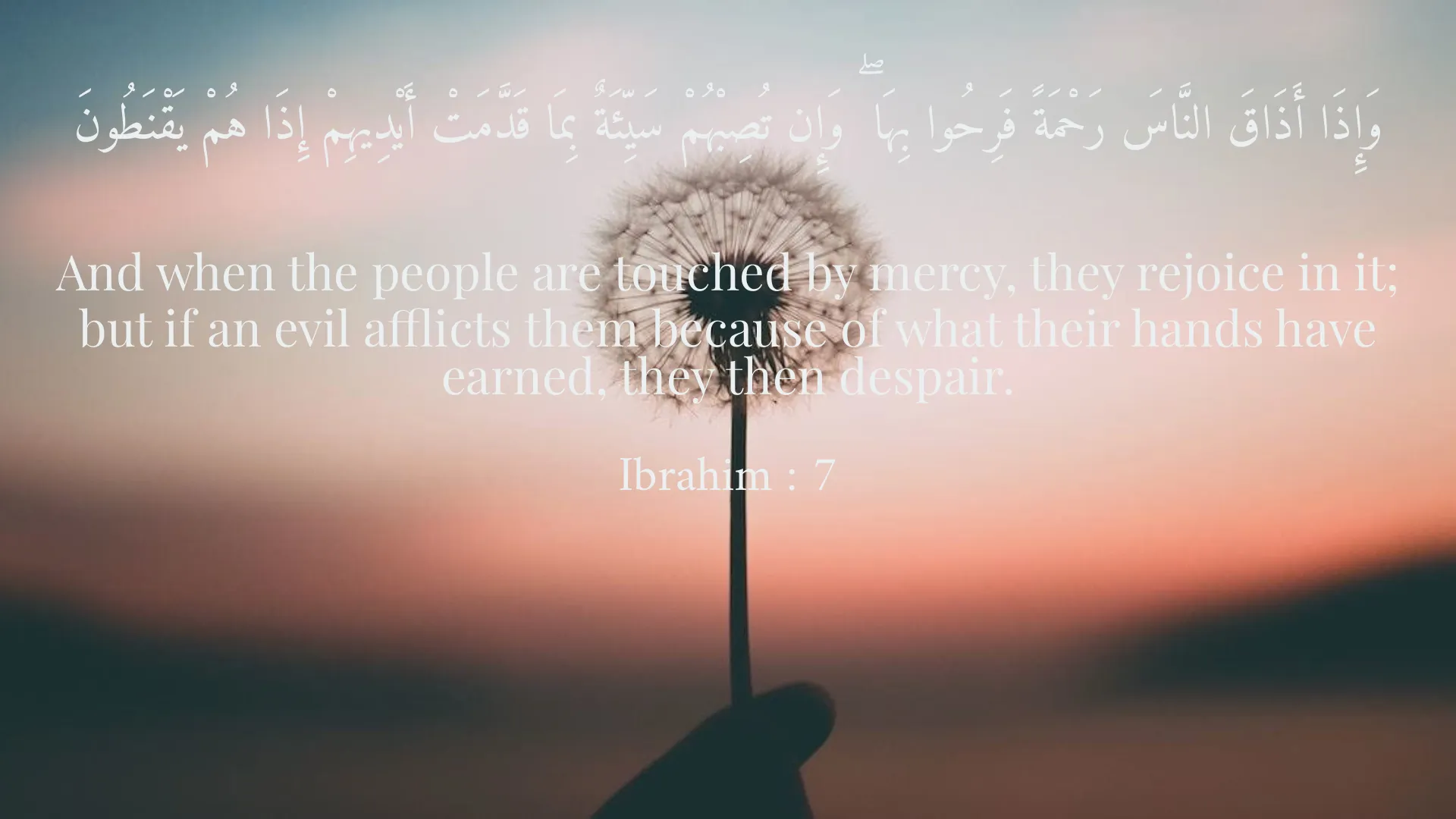
The concept of gratitude, especially in times of hardship and trials, holds a significant place in Islamic teachings. The Holy Quran addresses this topic comprehensively, reminding believers of the importance of maintaining a spirit of thankfulness even amidst challenges. This article delves into the profound insights provided by the Quran on gratitude and the way it interplays with the experiences of hardship, ultimately encouraging a mindset of resilience and hope. In Surah Ibrahim, verse 7, Allah states: 'And when the people are touched by mercy, they rejoice in it; but if an evil afflicts them because of what their hands have earned, they then despair.' This verse serves as a poignant reminder of the human tendency to express gratitude when blessed, yet fall into despair when faced with adversity. Such a reaction is understandable, as joyous experiences can uplift the spirit, while hardships might cloud our judgement and skew our perception of reality. However, Islam encourages a balanced approach to both joy and despair. The term 'mercy' in this verse signifies more than just earthly delights; it embodies the manifold blessings of Allah that encompass health, family, provision, and even the simple joys of life. On the contrary, the 'evil' that befalls an individual reminds us of the consequences of our actions, suggesting that hardships serve a purpose as a part of God's greater plan. Thus, rather than succumbing to despair, we are encouraged to reflect upon our actions and seek forgiveness, understanding that every challenge has a lesson embedded within it. Recognizing that hardships are often a result of our own deeds can, paradoxically, aid in the acceptance of our fate, prompting us to turn back to Allah with gratitude for the moments of ease we have previously enjoyed. It becomes crucial to realize that even in difficulties, Allah remains with us, providing wisdom and strength to navigate through the storms of life. Surah Al-Baqarah, verse 286 reinforces this notion: 'Allah does not burden a soul beyond that it can bear.' This comforting verse instills hope, indicating that every trial faced is tailored to an individual's capacity. It suggests that challenges are not random; rather, they are opportunities for spiritual development, fortifying our resilience and patience. In moments of distress, recalling this verse can shift one's focus from despair to gratitude. The realization that Allah has designed our challenges with compassion can be empowering. Instead of complaining about our plight, we have the chance to learn significant lessons through perseverance. Gratitude, then, becomes a conscious choice to recognize Allah's wisdom, patience, and the growth we can achieve through adversity. Furthermore, the importance of gratitude during tough times can be explored through another verse, Surah Al-Imran, verse 139: 'And do not weaken and do not grieve, and you will be uppermost if you are believers.' This speaks volumes about the strength of faith and the rewards that await sincere believers who practice patience and gratitude. It challenges us to view our troubles in light of our beliefs, encouraging not a defeatist attitude but a call to strengthen our faith amid adversity. Believing that we can emerge triumphant through trials not only uplifts our spirit but also fosters a sense of community as we share common struggles. It can serve as a motivator to extend compassion to others facing hardship, demonstrating that gratitude can also manifest through generosity and support. Practicing gratitude during challenging times may take intentional effort. It can be beneficial to keep a journal, noting down the blessings that remain present, even in trying times. Acknowledging small victories, moments of joy, and the mere fact that we are still breathing and capable of change helps cultivate an attitude of thankfulness. This practice is a form of remembrance, bringing to mind the innumerable blessings that exist within our lives, counteracting the negative narratives that often arise during difficult experiences. Moreover, gratitude is reinforced through acts of worship and remembrance of Allah. Engaging in prayer, dhikr (remembrance of Allah), and reading the Quran invites peace into our hearts, grounding us during turbulent times. These practices facilitate a reconnection with our purpose, allowing us to transcend our current circumstances and recognize their fleeting nature. The relationship between gratitude and hardship is intertwined within the teachings of Islam. Instead of perceiving challenges as mere burdens, believers are urged to adopt a perspective of thankfulness, acknowledging the lessons learned and the strength gained. As we navigate through life’s various seasons, embracing gratitude, especially during hardships, becomes a practice that leads to enlightenment and growth. In conclusion, the Holy Quran emphasizes gratitude as a critical aspect of a believer's life, particularly during times of difficulty. The teachings are clear: hardships provide us with the opportunity to cultivate patience, deepen our faith, and evolve spiritually. As we navigate the ups and downs of life, let us remember to hold on to gratitude, leveraging it as a source of strength, resilience, and ultimately, connection to our Creator.
Related Verses
وَإِذَا أَذَاقَ النَّاسَ رَحْمَةً فَرِحُوا بِهَا ۖ وَإِن تُصِبْهُمْ سَيِّئَةٌ بِمَا قَدَّمَتْ أَيْدِيهِمْ إِذَا هُمْ يَقْنَطُونَ
And when the people are touched by mercy, they rejoice in it; but if an evil afflicts them because of what their hands have earned, they then despair.
Ibrahim : 7
لَا يُكَلِّفُ اللَّهُ نَفْسًا إِلَّا وُسْعَهَا...
Allah does not burden a soul beyond that it can bear...
Al-Baqarah : 286
وَلَا تَهِنُوا وَلَا تَحْزَنُوا وَأَنتُمُ الْأَعْلَوْنَ إِن كُنتُم مُّؤْمِنِينَ
And do not weaken and do not grieve, and you will be uppermost if you are believers.
Al-Imran : 139
Short Story
One day, a friend of mine found himself amidst financial troubles and hardships. He recalled the verses of the Quran and decided to express gratitude and thank Allah for all the blessings he had. Every day, he reminded himself that despite the difficulties, his life was filled with Allah's grace, and this gratitude brought him renewed energy and hope to keep going.