Quranic Answer
In the Quran, the concept of forgiveness is a profound aspect of the relationship between Allah and His servants. It delves deep into the human experience, underscoring themes of mercy, repentance, and the transformative power of turning back to the Creator. This article seeks to elaborate on the signs and meanings of Allah's forgiveness as outlined in the Quran, particularly focusing on feelings of peace, sincere repentance, and righteous deeds. One of the primary signs of forgiveness emphasized in Islamic teachings is the feeling of peace and assurance that a believer experiences in their heart after engaging in sincere repentance. This state of tranquility often follows a heartfelt acknowledgment of one’s misdeeds and a genuine desire to return to Allah. In this context, repentance (Tawbah) is not merely an act of reciting words, but rather a profound, inward transformation accompanied by the resolve to change one’s actions. Surah Al-Furqan, verse 70, highlights this principle explicitly: 'Except for those who repent, believe and do righteous work.' This verse succinctly encapsulates the prerequisites for Allah's forgiveness. It establishes that sincere repentance is intertwined with belief and the performance of righteous deeds, forming a triad that leads one back into the fold of divine mercy. The Quran illustrates that forgiving oneself and receiving Allah’s forgiveness is a process that requires active participation — a conscious effort to turn away from wrongdoing and embrace righteousness. Moreover, the emotional landscape of forgiveness in Islam is painted with the hues of divine love and mercy. When an individual returns to Allah with a pure heart and genuine intent, they often find themselves enveloped in a sense of Allah’s love. This feeling is not simply an abstract notion but a palpable experience wherein the repentant believer senses a closeness to their Creator. This transformation is evident in their daily lives; they might find encouragement in their faith, discover new strengths, or even feel a newfound commitment to serving others as an expression of gratitude for the mercy they have received. The Quran is replete with verses that emphasize Allah’s boundless mercy. In Surah Az-Zumar, verse 53, Allah reassures His servants with the words: 'O My servants who have believed, never lose hope in the mercy of Allah! Indeed, Allah forgives all sins.' This verse serves as a powerful reminder that despite human shortcomings and sinful deeds, there is always hope for redemption. It reiterates the all-encompassing nature of Allah’s mercy and underscores that no sin is so great as to sever the connection between a believer and their Lord. The message is clear: Allah’s forgiveness is available to all who turn towards Him with sincerity. This divine assurance often rekindles a sense of purpose and faith among believers, encouraging them to foster an ongoing relationship with Allah, marked by trust and love. When individuals recognize that their wrongdoings have been accepted with forgiveness, it cultivates a profound sense of relief and spiritual peace. This realization is transformative, as it allows believers to move forward with their lives unburdened by guilt and filled with renewed hope. Additionally, the journey of repentance and forgiveness is inherently personal. Each individual’s path may differ, reflecting their circumstances, struggles, and understandings of faith. What remains constant is the universal opportunity for forgiveness that Allah extends to His servants, urging them to take the first step towards Him. This journey often involves self-reflection, humility, and an honest assessment of one’s actions and intentions. Through this lens, forgiveness becomes a reciprocal process — not only does Allah forgive, but the act of seeking forgiveness also cultivates traits of empathy and compassion in the believer. Moreover, the transformative nature of divine forgiveness can serve as a catalyst for positive change, not only within oneself but also within one’s community. When individuals experience the love and mercy of Allah, they are more likely to exhibit these qualities towards others. In essence, the cycle of repentance, forgiveness, and righteous actions leads to a broader societal impact, fostering an environment of support and understanding among individuals. Hence, the signs of Allah’s forgiveness are not limited to personal feelings but extend to communal harmony as well. In conclusion, the Quran provides profound insights into the nature of Allah’s forgiveness. The signs of this divine mercy manifest through sincere repentance, righteous actions, and the resultant tranquility of the heart. By emphasizing the importance of turning back to Allah with humility and the acknowledgment of one’s faults, it illustrates the profound connection that exists between human beings and their Creator. The teachings of the Quran instill hope and assurance in believers, encouraging them to seek forgiveness without fear, reminding them of the boundless love and mercy that Allah offers. Therefore, recognizing divine forgiveness is a multifaceted journey that invites believers to engage deeply with their faith, aspire towards grace, and partake in the continuous link of compassion and mercy in their lives.
Related Verses
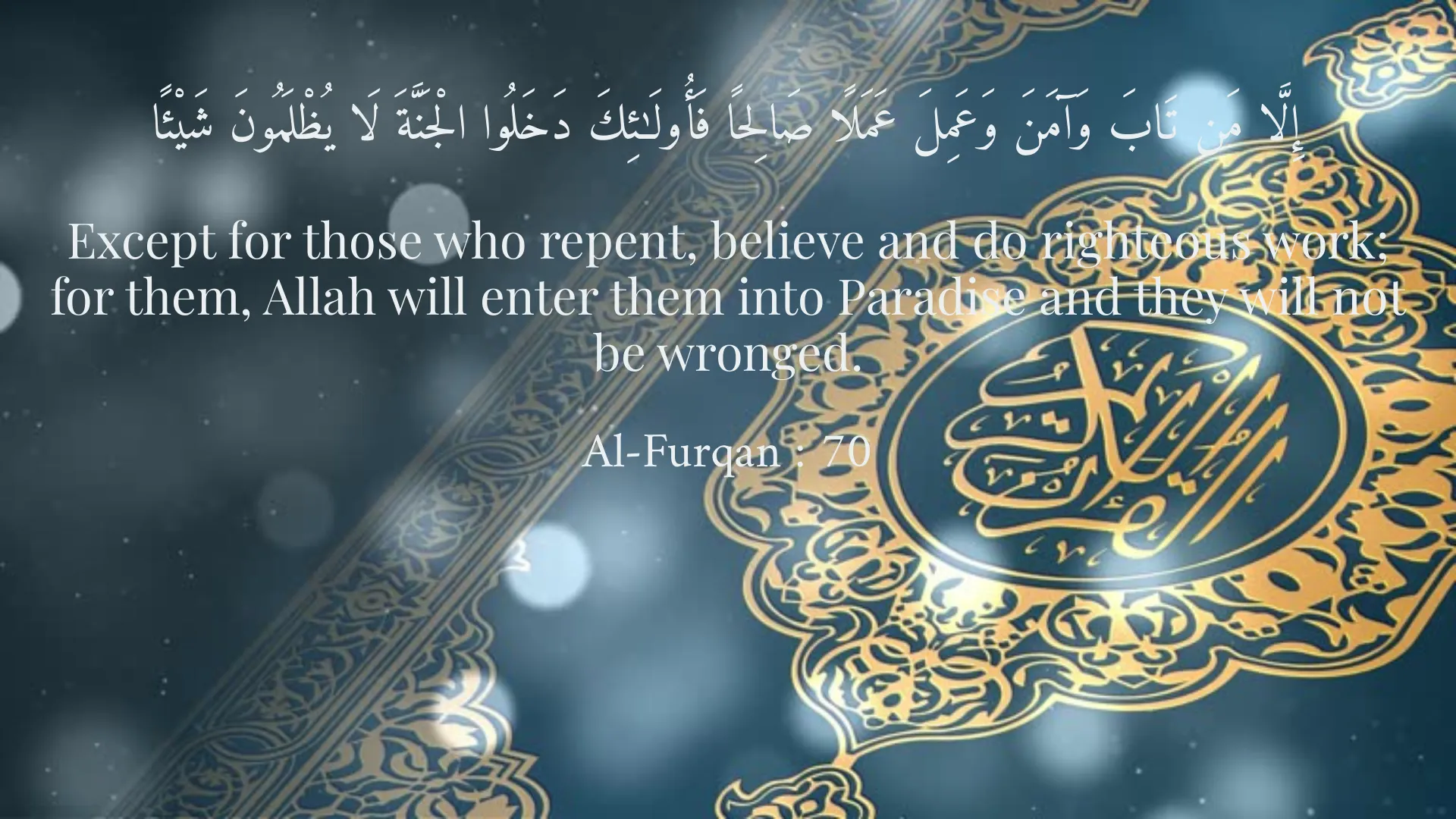
إِلَّا مَن تَابَ وَآمَنَ وَعَمِلَ عَمَلًا صَالِحًا فَأُولَـٰئِكَ دَخَلُوا الْجَنَّةَ لَا يُظْلَمُونَ شَيْئًا
Except for those who repent, believe and do righteous work; for them, Allah will enter them into Paradise and they will not be wronged.
Al-Furqan : 70
قُلْ يَاعِبَادِيَ الَّذِينَ آمَنُوا اتَّقُوا رَبَّكُمْ لِلَّذِينَ أَحْسَنُوا فِي هَذِهِ الدُّنْيَا حَسَنَةٌ ۖ وَأَرْضُ اللَّهِ وَاسِعَةٌ ۖ إِنَّمَا يُوَفَّى الصَّابِرُونَ أَجْرَهُمْ بِغَيْرِ حِسَابٍ
Say, 'O My servants who have believed, never lose hope in the mercy of Allah. Indeed, Allah forgives all sins.'
Az-Zumar : 53
Short Story
One day, Adel went to the seaside, gazing at the soothing waves. He pondered whether God had forgiven him or not. Meanwhile, a scholar sat beside him and said, 'Whenever you repent and turn back to God, He forgives you.' Adel was uplifted by these words and decided to return to Allah with a pure heart.