Quranic Answer
Preparing for the Hereafter is one of the most fundamental and pivotal responsibilities of every Muslim. In today's fast-paced world, where distractions abound and the focus often shifts towards material possessions and transient pleasures, it becomes exceedingly vital for individuals to navigate their lives with an awareness of the life beyond this one. This awareness not only shapes our actions but also molds our character, ensuring we remain on the righteous path as prescribed in the Holy Quran. The significance of preparing for the Hereafter is emphasized in various verses of the Holy Quran, guiding Muslims on a path of righteousness, integrity, and contemplation of their ultimate purpose. One of the most poignant verses regarding the certainty of death and the accountability that follows can be found in Surah Al-Imran, verse 185, where Allah states: "Every soul will taste death, and indeed, on the Day of Resurrection, your recompense will be fully compensated." This profound statement encapsulates the essence of mortality and the inevitable reality that every human being will face their end. It serves as a reminder that life is temporary and encourages believers to reflect on their actions and decisions while alive. In acknowledging that every soul must face death, individuals are called to live purposefully and responsibly, not just in a singular pursuit of worldly desires but with a keen awareness of their eventual return to their Creator. One of the primary avenues to prepare for the Hereafter is through the engagement in good deeds and acts of worship. The Quran continuously encourages the faithful to seek goodness in their lives, perform charitable acts, and contribute positively to society. In Surah Al-Baqarah, verse 261, Allah illustrates the profound impact good deeds can have, stating: "The example of those who spend their wealth in the way of Allah is like a seed of grain that sprouts seven ears; in every ear, there are a hundred grains. And Allah multiplies His reward for whom He wills. And Allah is All-Encompassing and Knowing." This vivid analogy not only elucidates the remarkable multiplication of rewards for charitable acts but also signifies the significance of altruism in the life of a believer. Charitable actions and a selfless disposition are integral to one's spiritual journey. When Muslims invest their resources—be it time, energy, or finances—in the service of others and in pursuit of Allah's pleasure, they set in motion a cycle of positivity that can yield overwhelming rewards in the Hereafter. Such endeavors strengthen the community, create bonds of trust and love, and ultimately create an environment conducive to spiritual growth and development. Moreover, it instills a sense of accountability and responsibility in individuals, pushing them to remain steadfast in their faith and committed to acts of service. Equally important in the journey of preparing for the Hereafter is the establishment of a robust connection with Allah through prayer and supplication. Engaging in regular prayer is not merely a ritual but a powerful act of devotion that deepens one's relationship with the Divine. In Surah Al-Mu'minun, verses 1 to 11, Allah describes the attributes of true believers, highlighting their humility in prayer and their avoidance of vain or unnecessary speech. These verses encapsulate the essence of a sincere Islamic lifestyle, showcasing how devotion and humility can lead to a favorably appointed status in the Hereafter. In essence, reinforcing one's faith through consistent prayer is pivotal in fortifying the spirit against life's challenges and adversities. Prayer connects the individual to Allah, serving as both a sanctuary of solace and a reminder of the greater spiritual objectives in life. The discipline involved in performing the five daily prayers fosters a sense of gratitude and recognition of Allah’s boundless mercy and wisdom. Each prayer allows believers to take a moment out of their day to reflect on their actions, seek guidance, and ultimately prepare themselves for the trials they may face in the Hereafter. Furthermore, Muslims are urged to engage in righteous deeds, which encompass a range of actions that promote goodness and deter wrongdoing. Acts of kindness, honesty, and justice are but a few examples of how one can embody the principles of Islam in daily life. Engaging in such deeds not only enhances one’s own spiritual state but also serves as an inspiration to those around them. As believers immerse themselves in actions that align with Islamic values, they radiate positivity and instill hope, creating ripples of goodness that can affect entire communities. The concept of accountability and preparation for the Hereafter is not confined to individual actions alone. It extends into social consciousness as Muslims are called to uphold justice, promote equality, and advocate for the marginalized. Islam’s emphasis on collective responsibility serves as a reminder that each person, regardless of their status, has a role to play in ensuring society adheres to the tenets of morality and ethics. In conclusion, preparing for the Hereafter is an all-encompassing endeavour that involves reflection, action, and devotion. As highlighted in the Holy Quran, the path to salvation necessitates engaging in good deeds, cultivating a close relationship with Allah through prayer, and embodying the principles of mercy and justice in every facet of one's life. By abiding by these tenets, Muslims can ensure they are not only prepared for the Hereafter but also contribute positively to the world around them, fostering a sense of community and shared responsibility. Ultimately, such a life—marked by intention, sincerity, and faith—will illuminate the path towards eternal success and divine mercy, allowing believers to face the Hereafter with confidence and peace.
Related Verses
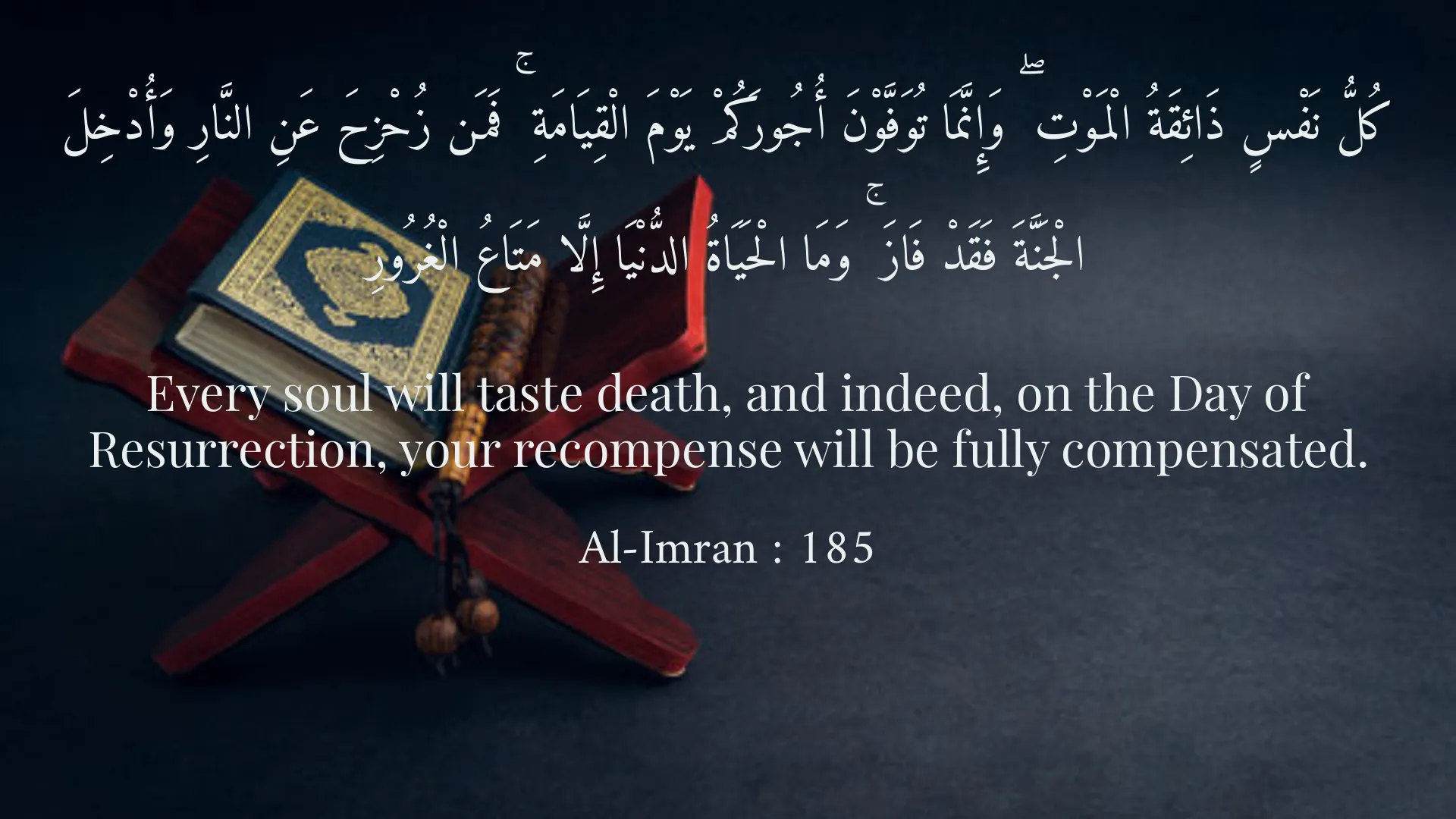
كُلُّ نَفْسٍ ذَائِقَةُ الْمَوْتِ ۖ وَإِنَّمَا تُوَفَّوْنَ أُجُورَكُمْ يَوْمَ الْقِيَامَةِ ۚ فَمَن زُحْزِحَ عَنِ النَّارِ وَأُدْخِلَ الْجَنَّةَ فَقَدْ فَازَ ۚ وَمَا الْحَيَاةُ الدُّنْيَا إِلَّا مَتَاعُ الْغُرُورِ
Every soul will taste death, and indeed, on the Day of Resurrection, your recompense will be fully compensated.
Al-Imran : 185
مَثَلُ الَّذِينَ يُنفِقُونَ أَمْوَالَهُمْ فِي سَبِيلِ اللَّهِ كَمَثَلِ حَبَّةٍ أَنبَتَتْ سَبْعَ سُنبُلَاتٍ فِي كُلِّ سُنبُلَةٍ مِّئَةُ حَبَّةٍ ۗ وَاللَّهُ يُضَاعِفُ لِمَن يَشَاءُ ۗ وَاللَّهُ واسِعٌ عَلِيمٌ
The example of those who spend their wealth in the way of Allah is like a seed of grain that sprouts seven ears; in every ear, there are a hundred grains. And Allah multiplies His reward for whom He wills.
Al-Baqarah : 261
قَدْ أَفْلَحَ الْمُؤْمِنُونَ * الَّذِينَ هُمْ فِي صَلَاتِهِمْ خَاشِعُونَ * وَالَّذِينَ هُمْ عَنِ اللَّغْوِ مُعْرِضُونَ * وَالَّذِينَ هُمْ لِلزَّكَاةِ فَاعِلُونَ * وَالَّذِينَ هُمْ لِفُرُوجِهِمْ حَافِظُونَ * إِلَّا عَلَى أَزْوَاجِهِمْ أَوْ مَا مَلَكَتْ أَيْمَانُهُمْ فَإِنَّهُمْ غَيْرُ مَلُومِينَ * فَمَنِ ابْتَغَى وَرَاءَ ذَٰلِكَ فَأُو۟لَـٰئِكَ هُمُ الْعَادُونَ * وَالَّذِينَ هُمْ بِأَمَانَاتِهِمْ وَعَهْدِهِمْ رَاعُونَ * وَالَّذِينَ هُمْ بِشَهَادَاتِهِمْ قَائِمُونَ * وَالَّذِينَ هُمْ عَلَى صَلَاتِهِمْ يُحَافِظُونَ * أُو۟لَـٰئِكَ هُمُ الْوَارِثُونَ * الَّذِينَ يَرِثُونَ الْفِرْدَوْسَ هُمْ فِيهَا خَالِدُونَ
Certainly will the believers be successful: They who are during their prayer humbly submissive and they who turn away from ill speech and they who are observant of zakah and they who guard their private parts except from their wives or those their right hands possess, for indeed, they are not to be blamed; but whoever seeks beyond that, then those are the transgressors; and they who are to their trusts and their covenant due at least, and they who stand firm in their testimonies; and they who are consistently [maintaining] their prayer. It is they who will inherit the Paradise; they who will abide therein eternally.
Al-Mu'minun : 1-11
Short Story
One day, a man named Ali was walking in the market and contemplating death and the Hereafter. He felt the need to pay more attention to his deeds and fill his life with good deeds and worship. Ali decided to be kind to everyone he met and to please God by giving charity to those in need. These small decisions added a special tenderness to his life and brought him closer to God every day.