Quranic Answer
Faith in God and His words in the Quran are introduced as one of the fundamental principles of a Muslim's life. However, this faith must be practiced in daily life. It is not sufficient to merely utter the words of belief; true faith is a commitment that seeks expression through actions and behaviors. The Quran serves as a guiding document for Muslims around the world, highlighting the intricacies of faith and its manifestation in our day-to-day activities. This article will delve into the teachings of Allah as presented in the Quran regarding faith, its implications, and the significance of righteous actions in illustrating one's belief. One of the key scriptures that emphasize the relationship between faith and righteous actions is Surah Al-Baqarah, verse 177. Herein, Allah teaches us that faith cannot be limited to simply asserting, 'we believe.' It is a call to action; it demands that believers live their faith in tangible ways. Allah specifies a range of elements that a believer must hold in faith, including belief in God, the Day of Judgment, angels, the scriptures, and the prophets. However, this faith must not remain a mere theoretical concept—it must be demonstrated through good works. This means that a believer should actively seek God's help in their daily life, strive to do good, extend charity to those in need, and support others in various capacities. When we analyze the approach taken in Surah Al-Baqarah, verse 177, it becomes clear that the essence of true belief is not merely confined within the walls of an individual’s heart or mind; it flows outwards into actions that reflect this faith. Acts of kindness and generosity are essential cornerstones of a Muslim's character, and they play a pivotal role in fulfilling one’s religious obligations. Charity, or 'Zakat,' is not just a recommended practice; it is an obligatory form of worship in Islam. The act of giving is intrinsically tied to faith, and it embodies a profound recognition of the responsibilities one carries towards others in society. Therefore, when Muslims engage in acts of charity, they are reaffirming their belief in the divine principles and values dictated by the Quran. Moreover, in Surah Al-Mu’minun, verses 1 to 9, the true characteristics of believers are elaborated upon by Allah. The Quran states, 'The believers are those who are humble in their prayers.' Humility is a critical attribute that signifies an understanding of one’s position before God. It reflects an inner devotion that transcends outward appearances, emphasizing the importance of maintaining sincerity in one's acts of worship and interaction with others. A believer’s connection with God must be accentuated by a demeanor of humbleness and tranquility, especially during prayer—a core component of Islamic faith. This highlights the need for faith to manifest not only in one's actions but also in one's attitudes and approaches to life. In addition to humility, the broader context of community service and mutual support is underscored throughout the Quran. Believers are called to engage actively in helping each other, fostering a sense of unity and solidarity. The Quran continually reiterates that faith must show itself in the context of love and compassion for one another. Islam teaches that the strength of a community is reliant upon the faith and good deeds of its individuals. Hence, righteous actions are not merely optional; they are a key indicator of one’s faith and commitment to the teachings of Allah. An important aspect of practicing faith is the notion of repentance. Surah Ta-ha, verse 82 acknowledges this crucial element, stating, 'And whoever repents and believes and does righteousness, perhaps he will be among the successful.' This insight into repentance emphasizes that believers will inevitably falter; however, the ability to repent and recalibrate one’s actions toward righteousness is vital for growth and spiritual development. It illustrates that faith is not a static state but a dynamic process that necessitates continual self-assessment, improvement, and a sincere desire to follow divine guidance. Furthermore, the concept of faith in Islam is intertwined with the idea of accountability. The Day of Judgment, a fundamental belief in Islam, serves as powerful motivation for believers to act righteously and ethically throughout their lives. Knowing that every action will be weighed grants believers a sense of responsibility not only to themselves but also to the wider community and humanity. Thus, each individual is prompted to engage in good deeds, uplifting those around them, which reflects their commitment to their faith and belief system. In conclusion, faith in God, as understood through the Quran, is not a passive entity; it requires diligent practice and active engagement in righteous actions, honesty, and charity. As highlighted throughout various verses, belief must resonate in the hearts of Muslims, echoing through their actions, interactions, and commitments to service. The Quran’s teachings deliver an essential reminder that faith must be reflected outwardly through tangible acts of goodness. By embracing these principles, believers can cultivate a rich and meaningful relationship with their faith, underpinning their entire lives with the values espoused by Allah in His timeless message. It is through this integration of faith and action that Muslims can aspire to fulfill their role as conscientious believers and responsible members of society.
Related Verses
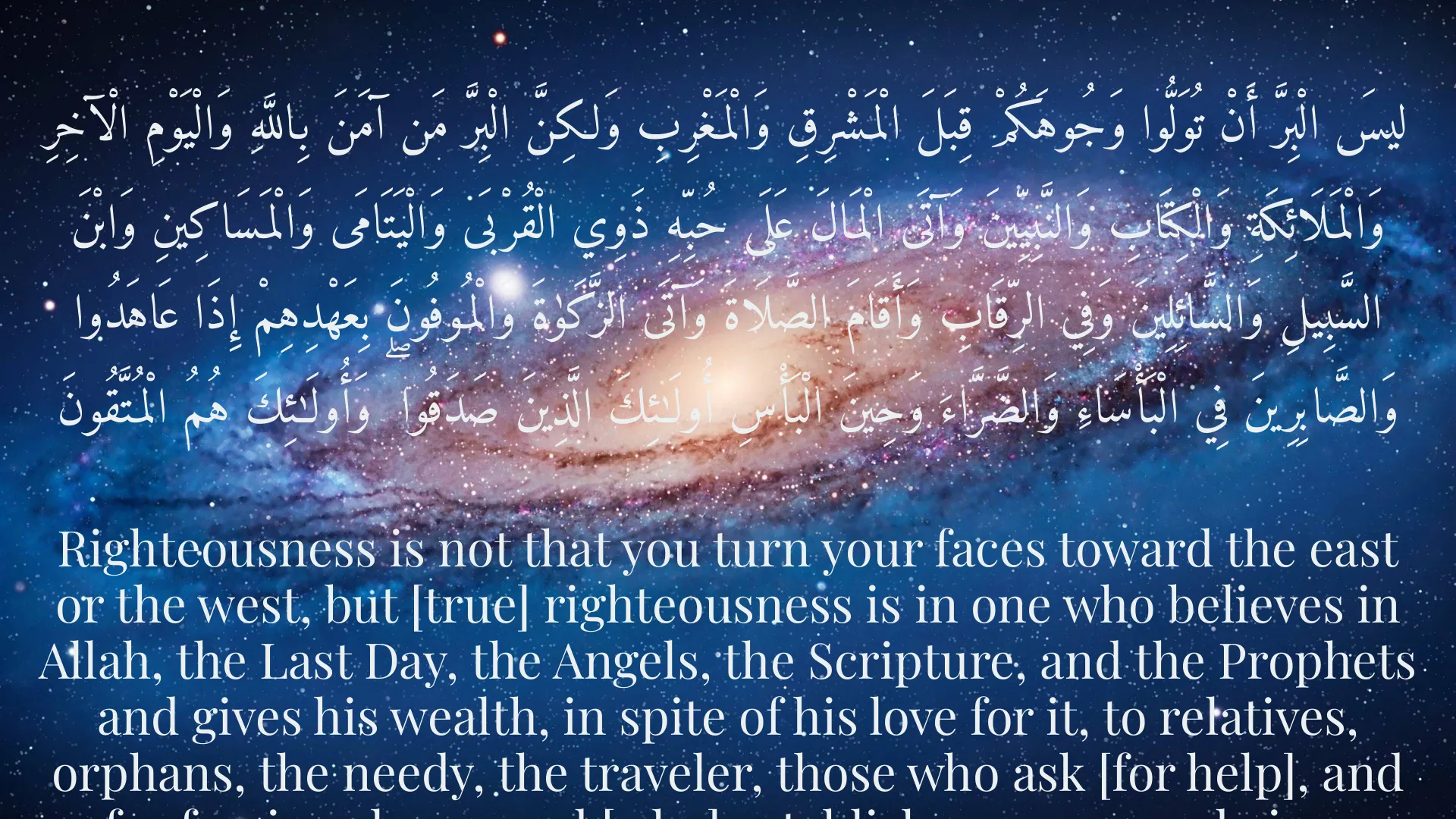
ليسَ الْبِرَّ أَنْ تُوَلُّوا وَجُوهَكُمْ قِبَلَ الْمَشْرِقِ وَالْمَغْرِبِ وَلكِنَّ الْبِرَّ مَن آمَنَ بِاللَّهِ وَالْيَوْمِ الْآخِرِ وَالْمَلَائِكَةِ وَالْكِتَابِ وَالنَّبِيِّينَ وَآتَى الْمَالَ عَلَى حُبِّهِ ذَوِي الْقُرْبَى وَالْيَتَامَى وَالْمَسَاكِينِ وَابْنَ السَّبِيلِ وَالسَّائِلِينَ وَفِي الرِّقَابِ وَأَقَامَ الصَّلَاةَ وَآتَى الزَّكَوٰةَ وَالْمُوفُونَ بِعَهْدِهِمْ إِذَا عَاهَدُوا وَالصَّابِرِينَ فِي الْبَأْسَاءِ وَالضَّرَّاءَ وَحِينَ الْبَأْسِ أُولَـٰئِكَ الَّذِينَ صَدَقُوا ۖ وَأُولَـٰئِكَ هُمُ الْمُتَّقُونَ
Righteousness is not that you turn your faces toward the east or the west, but [true] righteousness is in one who believes in Allah, the Last Day, the Angels, the Scripture, and the Prophets and gives his wealth, in spite of his love for it, to relatives, orphans, the needy, the traveler, those who ask [for help], and for freeing slaves; and [who] establishes prayer and gives zakah; [those who] fulfill their promise when they promise; and [those who] are patient in poverty and hardship and during battle. Those are the ones who have been true, and it is those who are the righteous.
Al-Baqarah : 177
قَدْ أَفْلَحَ الْمُؤْمِنُونَ
Certainly will the believers have succeeded.
Al-Mu’minun : 1
وَأَنَا غَفَّارٌ لِّمَنْ تَابَ وَآمَنَ وَعَمِلَ صَالِحًا ثُمَّ اهتَدَى
And I am the Forgiving for whoever repents and believes and does righteousness, and then continues in guidance.
Ta-Ha : 82
Short Story
On a beautiful day, Mahmoud decided to fill his life with faith. He referred to the Quran and studied the verses related to good deeds. After reading the verses, he thought about how he could practically implement them in his life. Mahmoud began helping his neighbors and being kind to orphans. He found the courage to take the lead in charitable deeds, which transformed his life remarkably. This resolve brought him inner peace and made him feel that he was truly fulfilling his duties.