Quranic Answer
In the Holy Quran, the significance of good deeds and the accumulation of these deeds for the Hereafter is a central theme that permeates various chapters and verses. The overarching message is that righteousness not only positively impacts the individual but also the greater society at large. The Quran serves as a guide, illustrating how believers can invest in their spiritual wealth through actions that are pleasing to Allah, ultimately leading to eternal rewards. One of the most noteworthy references to the importance of good deeds can be found in Surah Al-Imran, verse 133. In this verse, Allah urges believers to hasten toward forgiveness and highlights a magnificent promise: 'And hasten to forgiveness from your Lord and a Paradise as vast as the heavens and earth, prepared for the righteous.' This verse encapsulates the essence of good deeds; it indicates that engaging in righteous actions pleases Allah and secures a place for individuals in the eternal abode of Paradise. The analogy of Paradise as vast as the heavens and the earth serves not only as a metaphor for the bountiful rewards awaiting the righteous but also as a reminder of the transient nature of worldly possessions. Our focus should not solely be on accumulating material wealth but on enriching our souls through obedience to Allah and service to humanity. In Surah Az-Zumar, verse 10, another compelling exhortation is presented: 'Say, O My servants who have believed, fear your Lord. For those who do good in this world is good, and the earth of Allah is spacious…' This verse expands on the premise that good deeds are inherently beneficial, affirming that the act of doing good will yield goodness in return. The juxtaposition of fear and goodness in this verse serves as a vital reminder of the delicate balance that believers must maintain. Fear of Allah should drive believers to perform good deeds, not out of mere obligation, but as a genuine expression of their faith and love for their Creator. Furthermore, the phrase 'the earth of Allah is spacious' suggests that opportunities for performing good deeds are abundant and accessible to everyone, irrespective of their circumstances or limitations. The Quran provides a plethora of examples of actions that contribute to the accumulation of good deeds. Regular mosque attendance is one such act where believers gather for prayers, build community, and engage in collective worship—a unique avenue for enhancing spirituality and fostering a sense of belonging. Assisting the needy, whether through charity or volunteer work, is another crucial aspect of Islamic teachings. The Prophet Muhammad (peace be upon him) emphasized the importance of aiding those less fortunate, reminding us that acts of kindness and generosity resonate deeply with Allah. Charitable actions, such as providing for the orphans, feeding the hungry, or contributing to educational initiatives, contribute significantly to a believer's portfolio of good deeds. Additionally, the act of praying for others—interceding on behalf of family, friends, and even strangers—further solidifies a person’s good standing in Allah’s eyes. In a world often overshadowed by self-interest, the genuine concern for the well-being of others is a trait that is highly praised in the Quran. It reinforces the interconnectedness of humanity and exemplifies the essence of community spirit, which is cornerstone of Islamic moral teachings. It is paramount to note that in all these actions, the intention behind them holds great weight. In Islam, the intention (niyyah) plays a crucial role in confirming the worthiness of our actions. Simply performing good deeds without a sincere intention to please Allah can diminish their merit. Therefore, it is imperative for believers to keep their intentions pure and focused on seeking Allah’s pleasure before embarking on any charitable act or righteous obligation. Sincerity also enhances the quality of one’s deeds, making them more preferable and meaningful in the sight of Allah. Moreover, the Quranic emphasis on preserving good deeds extends beyond mere performance; it encompasses a holistic approach to living a righteous life. Believers are called to engage in regular recitation of the Quran, fulfilling their religious obligations—like prayers and fasting—and consistently praying for others as part of their daily life. These practices serve as layers of spiritual nourishment that reinforce one’s commitment to righteousness and intimately connect the believer with their Lord. Additionally, the Quran reminds us that everything we do—good or bad—will be manifested on the Day of Judgment when each individual will be held accountable for their actions. This assertion can be found in numerous verses across the Quran, urging believers to reflect on their deeds and to strive for righteousness with sincerity. In conclusion, the Quran articulates the undeniable significance of good deeds and the necessity of storing them for the Hereafter. By engaging in righteous actions—whether through community service, attending mosque, or fulfilling prayers—believers not only secure a better standing in the sight of Allah but also contribute to the overall wellbeing of society. The teachings of the Quran encourage individuals to foster a mindset focused on compassion, altruism, and integrity, all while being mindful of their intentions and the ultimate reckoning that awaits every soul. As such, the focus should remain steadfast on emphasizing good deeds and establishing a firm connection between one’s actions and their faith. Collectively, these acts build a reservoir of blessings that will undoubtedly yield dividends in the Hereafter, highlighting the infinite wisdom contained within the Noble Quran.
Related Verses
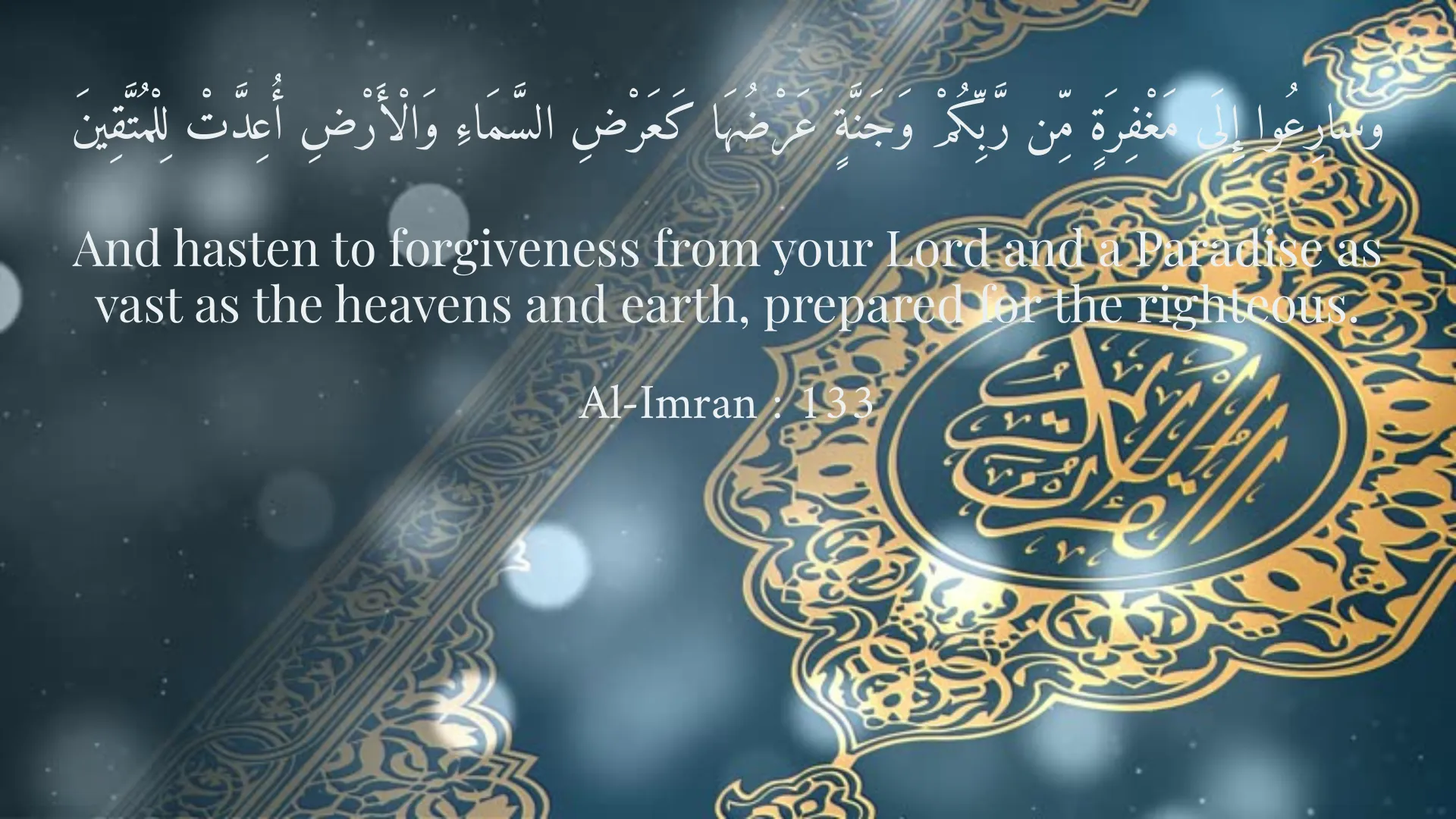
وَسَارِعُوا إِلَى مَغْفِرَةٍ مِّن رَّبِّكُمْ وَجَنَّةٍ عَرْضُهَا كَعَرْضِ السَّمَاءِ وَالْأَرْضِ أُعِدَّتْ لِلْمُتَّقِينَ
And hasten to forgiveness from your Lord and a Paradise as vast as the heavens and earth, prepared for the righteous.
Al-Imran : 133
قُلْ يَاعِبَادِيَ الَّذِينَ آمَنُوا اتَّقُوا رَبَّكُمْ ۖ لِلَّذِينَ أَحْسَنُوا فِي هَذِهِ الدُّنْيَا حَسَنَةٌ ۖ وَأَرْضُ اللَّهِ وَاسِعَةٌ ۖ إِنَّمَا يُوَفَّى الصَّابِرُونَ أَجْرَهُمْ بِغَيْرِ حِسَابٍ
Say, 'O My servants who have believed, fear your Lord. For those who do good in this world is good, and the earth of Allah is spacious...'
Az-Zumar : 10
Short Story
One day, a man named Ahmad was walking in the market and reflecting on his good deeds. He decided to store his deeds for the Hereafter by performing good actions with a sincere intention. Ahmad regularly helped his friend and participated in charitable work. For instance, whenever he heard someone was in need, he would immediately take action. Time passed, and when he learned of a friend's well-being, Ahmad joyfully remembered these small acts and felt that his good deeds always had an impact on his life.