Quranic Answer
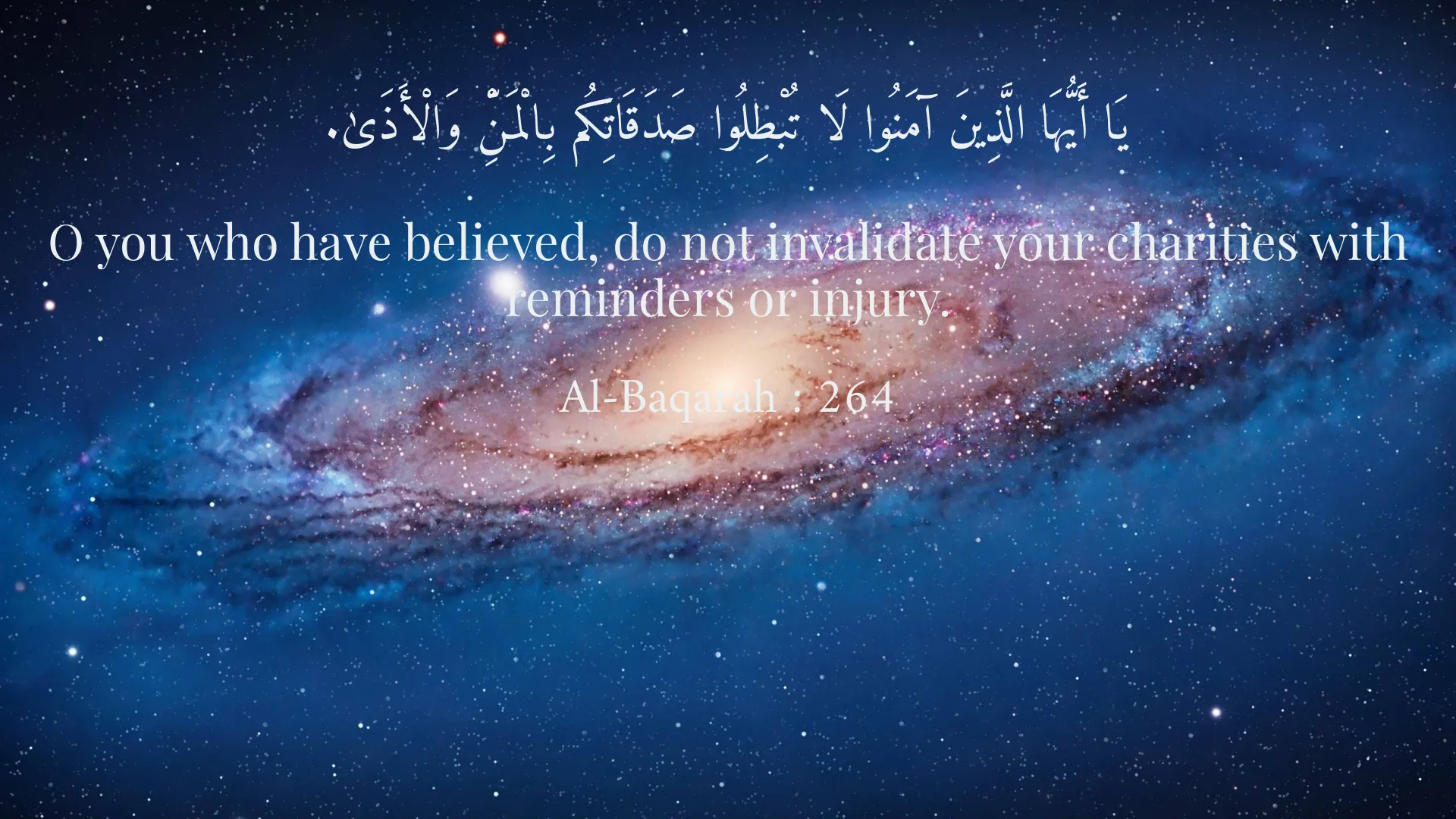
Title: The Essence of True Intention in Islamic Charity: A Spiritual Journey Introduction In Islamic teachings, the profound distinction between sincere intention and hypocrisy serves as a cornerstone for understanding the value of our actions. The Holy Quran, regarded as the supreme guidance for Muslims, clearly elucidates this concept. This article examines the Quranic verses that highlight the significance of maintaining pure intentions in charitable acts and how they shape our spirituality and relationship with Allah. Specifically, the discussion sheds light on Surah Al-Baqarah, verse 264, and Surah Al-Mu’minun, verse 60, to draw out lessons that resonate with contemporary believers. True Intention in Charity The importance of pure intention while performing charitable deeds cannot be overstated. The Quranic verse from Surah Al-Baqarah, 264 states: 'O you who have believed, do not invalidate your charities with reminders or injury.' This verse serves as a reminder that gestures of charity should be rooted in sincerity and should not be tarnished by feelings of pride or by harming the dignity of those who receive help. To upheld genuine charity, one must reflect on the intention behind it. Often, people engage in acts of kindness seeking recognition, admiration, or status among their peers. This pursuit can inadvertently transform a noble act into a superficial one, lacking divine merit. The true goal of charity, as taught by Islam, is to seek Allah’s pleasure. When believers conduct charitable acts, they should cultivate a mindset that their rewards transcend this life, echoing into the Hereafter. The Quran further emphasizes the inner workings of intention in charity, presenting a valuable guide for understanding both the psychological and spiritual dimensions of giving. The challenge lies in navigating the fine line between altruism and the ego—an endeavor that requires self-awareness and introspection. Fear and Accountability in Good Deeds An essential characteristic of sincere intention is being acutely aware of one’s actions and the implications they carry. Surah Al-Mu’minun, verse 60 underscores this sentiment: 'And those who give what they give while their hearts are fearful because they will be returned to their Lord.' This verse encapsulates a profound teaching of Islam that should resonate with believers in their daily lives. The fear mentioned in this context is not rooted in despair; rather, it embodies a deep sense of accountability towards Allah. When performing charitable acts, the faithful are encouraged to maintain an awareness that their deeds will ultimately be weighed before Allah in the Hereafter. This awareness instills a sense of humility and responsibility, steering believers away from the pitfalls of vanity and self-promotion. Ultimately, genuine intentions foster an environment of self-reflection and accountability, urging believers to scrutinize their motives. By realizing that Allah alone knows their thoughts and intents, individuals can liberate themselves from the chains of public perception and pursue a path guided by spiritual sincerity. This passage calls for Muslims to dedicate their acts purely for the pleasure of Allah, without pretense. The Psychological Impact of Intention The spiritual ramifications of maintaining true intentions in charitable acts extend to our psychological wellbeing. The process of giving sincerely enhances a person’s emotional and mental health, fostering contentment, peace, and self-fulfillment. When individuals offer their assistance from a place of humility, recognizing that Allah is the ultimate recipient of their charity, it brings forth a sense of inner peace that accompanies acts of altruism. Conversely, when charity is performed for the sake of display or recognition, individuals may eventually find themselves burdened with anxiety, insecurity, and discontent. Such abnormalities can arise because of the conflicting motives behind their actions—driven by the external validation they seek, rather than resting in the comfort of Allah’s approval. Therefore, the intention behind our actions plays a pivotal role in shaping our mental and emotional health, guiding us towards a more spiritually aligned existence. Reflecting on Our Inner State An essential practice that emerges from the teachings in the Quran is the call to reflection and introspection. Amidst the hustle and bustle of life, believers are encouraged to pause and evaluate their behaviors, especially regarding charitable acts. If one finds that their altruistic gestures are motivated by ego or the desire for affirmation, it is time to reassess one's intentions. This deep journey inward not only leads to authentic self-discovery but ultimately leads to spiritual growth. In contemporary society, where the lines between genuine charity and performative activism can often blur, it becomes imperative to rekindle the understanding of true intention. The principles in the Quran remind believers to engage in acts of kindness with a focus on spiritual, rather than social capital. They encourage a return to the essence of charity as a means to foster community, uplift the lowly, and express selflessness—all grounded in sincere desire to please Allah. Conclusion In summary, the Holy Quran articulates a powerful message regarding the importance of true intentions behind charitable acts. Through the lessons embedded in Surah Al-Baqarah, verse 264, and Surah Al-Mu’minun, verse 60, believers are urged to maintain a commitment to self-reflection and ensure that their good deeds are carried out solely for the pleasure of Allah. The path of charity, when aligned with sincerity, brings forth not just spiritual rewards but also emotional and psychological resilience. As Muslims navigate the complexities of life, drawing upon these timeless teachings may illuminate their journey, fostering authenticity and divine connection in every act of kindness they partake in. Thus, true intention, imperatively coupled with humility and fear of Allah, stands as the cornerstone of a fruitful relationship with both Allah and the community.
Related Verses
يَا أَيُّهَا الَّذِينَ آمَنُوا لَا تُبْطِلُوا صَدَقَاتِكُم بِالْمَنِّْ وَالْأَذَىٰ.
O you who have believed, do not invalidate your charities with reminders or injury.
Al-Baqarah : 264
وَالَّذِينَ يُؤْتُونَ مَا أَتَوَا وَقُلُوبُهُمْ وَجِلَةٌ أَنَّهُمْ إِلَى رَبِّهِمْ رَاجِعُونَ.
And those who give what they give while their hearts are fearful because they will be returned to their Lord.
Al-Mu’minun : 60
Short Story
Once upon a time, there was a man named Hosam who wanted to get closer to Allah. Every time he gave charity, he worried that his intention might not be pure. Hosam decided that in the coming days, he would give charity only for the sake of Allah. After a while, he realized he no longer felt fear or anxiety about his intention, and he felt a greater sense of peace in his life.