Quranic Answer
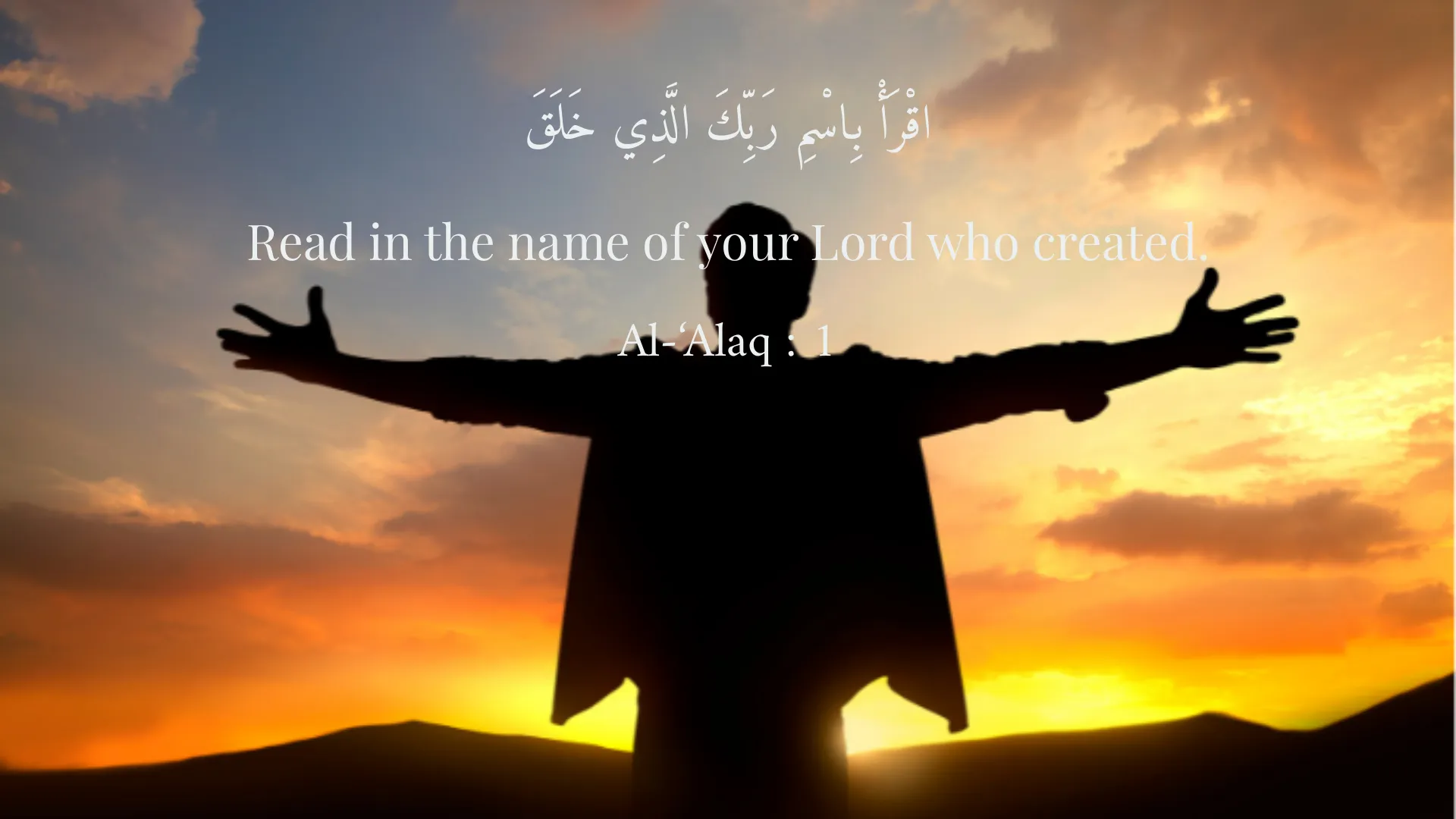
Faith and knowledge are two fundamental pillars that form the bedrock of Islamic teachings, intricately intertwined yet distinct in their purposes and implications for the believer's life. In Islam, faith, or 'Iman', is the conviction in the unseen, the beliefs in the Oneness of God, the Prophets, the Scriptures, the Angels, and the Day of Judgment. Knowledge, or 'Ilm', on the other hand, encompasses all forms of understanding that enhance an individual’s awareness of both the divine and the worldly. The remarkable synergy between these two pillars emphasizes that they should progress together, mutually informing and enriching one another, fostering spiritual growth and moral integrity within the fluid dynamics of human experience. The Holy Quran, revered as the ultimate source of guidance for Muslims, places immense importance on the pursuit of knowledge. This is evident in numerous verses that encourage mankind not only to seek knowledge but also to ponder and reflect on the universe that God has created. Surah Al-‘Alaq, verse 1, begins with a divine command, 'Read in the name of your Lord who created.' The essence of this verse highlights that the quest for knowledge is not merely an intellectual endeavor; it is a sacred act that initiates a journey toward discovering divine truths and fulfilling God’s will. Reading, an active engagement with knowledge, is framed as a first step in the spiritual path—signifying that acquiring knowledge is a means to draw closer to God and fulfill one's purpose in life. Moreover, the Quran consistently makes a distinction between those who possess knowledge and those who do not. In Surah Az-Zumar, verse 9, it states: 'Are those who know equal to those who do not know? Only those of understanding will remember.' This profound rhetorical question serves to elevate the status of knowledge within the Muslim community, imparting the understanding that knowledge is not just a privilege but a noble virtue that brings honor to its possessor. The implication here is that learning is not simply for individual benefit but for the good of society as a whole. Empowering individuals with knowledge transforms them into responsible members of the community who can contribute positively to broader human endeavors. The life of Prophet Muhammad (peace be upon him) serves as a timeless exemplar of the intrinsic relationship between faith and knowledge. He was a proponent of learning, and placed great emphasis on education and teaching. His famous saying, 'Seeking knowledge is an obligation upon every Muslim,' underscores the importance of education in Islam. The Prophet’s life exemplified the idea that gaining knowledge is vital to understand and embody the principles of faith. He encouraged his companions and followers to ask questions, seek answers, and never cease to learn. This ensures that the Muslim community evolves intellectually, spiritually, and morally, consistently bringing faith to the forefront of everyday life. Additionally, Islamic history is rich with figures who have significantly contributed to various fields of knowledge while being profound believers. Scholars like Ibn Sina (Avicenna) in medicine, Al-Khwarizmi in mathematics and astronomy, and Al-Ghazali in philosophy show how faith and knowledge can lead to monumental advancements in human understanding. These intellectuals, operating at the intersection of religion and scholarly inquiry, maintained their faith while pushing the boundaries of knowledge—thereby illuminating the path for generations of Muslims who came after them. Knowledge in Islam acts as a guiding light, enabling believers to validate both religious doctrines and scientific truths. By embracing knowledge, Muslims can deepen their understanding of faith, allowing them to engage with both their spirituality and their lived experiences in a coherent manner. Religious precepts become illuminated through knowledge, providing a deeper insight into the nature of God, the purpose of creation, and the guidelines for righteous living. Thus, knowledge enriches faith and reinforces the believer's connection with God. Furthermore, the acquisition of knowledge creates a nurturing environment of unity and camaraderie within the Muslim community. When individuals come together with a shared pursuit of learning, they foster dialogue, mutual respect, and understanding. This creates a strong communal bond as faithful individuals work collaboratively for knowledge that serves to uplift and build their society. The resulting unity from shared knowledge helps mitigate conflicts and fosters a spirit of cooperation. It allows believers to build bridges across differences, validating each other’s experiences and opening channels for deeper empathy. When faith is rooted in knowledge, believers become ambassadors of peace, advocating for harmony and understanding both within their communities and with those outside of them. In contrast, a lack of knowledge can lead to superstition, division, and misunderstanding, fueling discord that can tear communities apart. Thus, it is crucial for the practitioners of Islam to engage continuously in the pursuit of knowledge, remaining vigilant against ignorance that threatens to obscure the essence of their beliefs. Education fosters critical thinking, enabling Muslims to engage with both contemporary challenges and age-old questions with insight, wisdom, and clarity. In summary, faith and knowledge are essential components of Islamic life that should progress in tandem. The teachings of the Holy Quran compellingly advocate for the pursuit of knowledge, indicating its integral role in affirming and enriching faith. From the examples set by the Prophet Muhammad to the various historical scholars, we see a tradition that reinforces the values of learning and knowledge as means to deepen faith, foster community, and combat ignorance. As such, the quest for knowledge is not only an intellectual endeavor but a spiritual obligation that cultivates a more harmonious society, one that mirrors the core principles of Islam—peace, understanding, and mutual respect. By fostering a culture that cherishes both faith and knowledge, the Muslim community can navigate the complexities of modern life with confidence, compassion, and clarity.
Related Verses
اقْرَأْ بِاسْمِ رَبِّكَ الَّذِي خَلَقَ
Read in the name of your Lord who created.
Al-‘Alaq : 1
أَمَّنْ هُوَ قَائِمٌ عَلَى كُلِّ نَفْسٍ مِّمَّا كَسَبَتْ
Is someone who stands over every soul for what it has earned.
Az-Zumar : 9
Short Story
Once upon a time, a young scholar named Hussein was in search of truth. Amid books and religious texts, he realized the connection between faith and knowledge. Hussein discovered that knowledge brought him closer to understanding God, so he decided to delve deeper into both science and religion. As he intensified his study of both, his life became full of meaning and light. He shared this connection with others and promoted it widely.