Quranic Answer
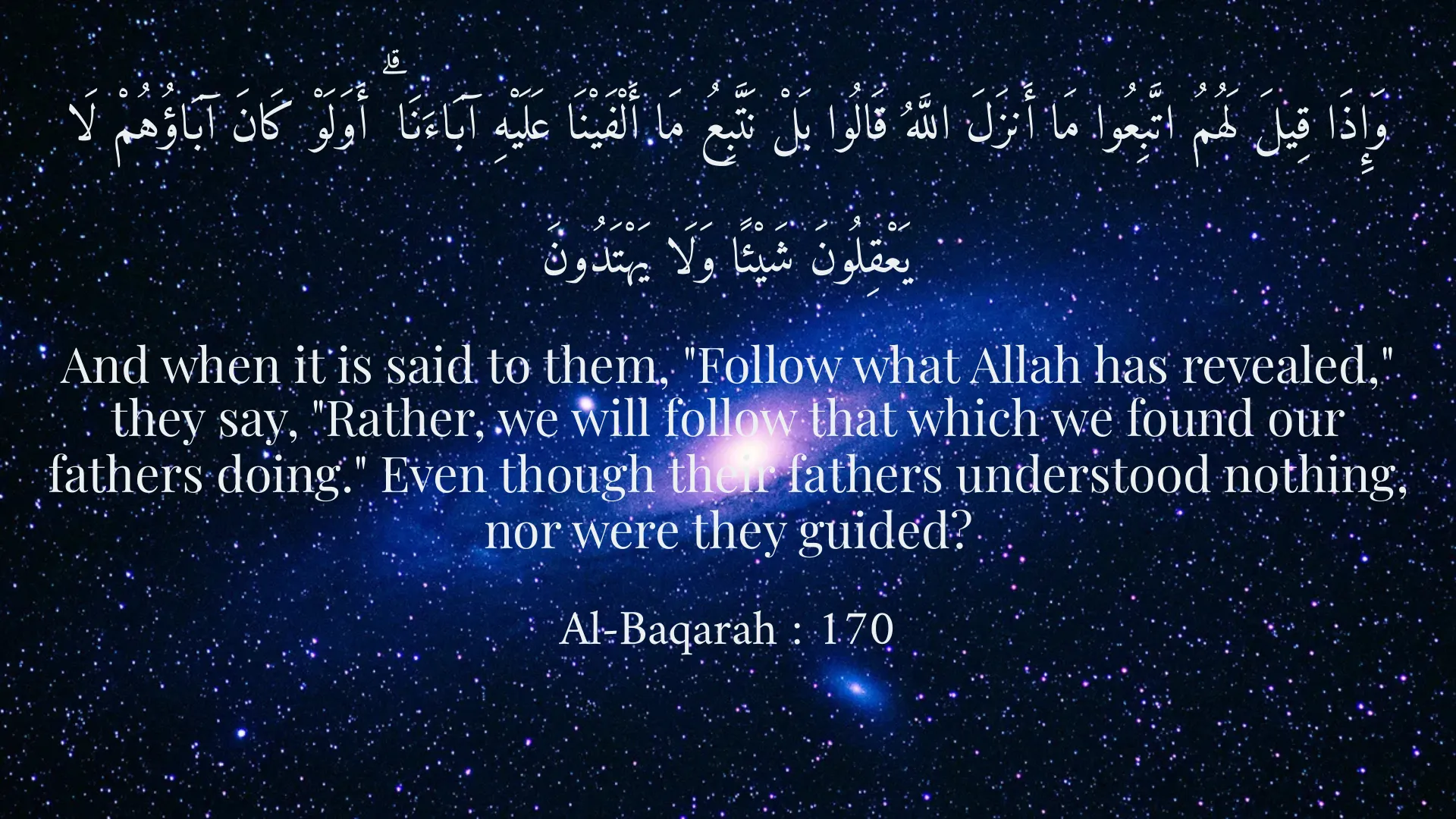
The Holy Quran, the divine book of guidance, regards faith (Iman) as far more than a fleeting emotion or a blind imitation of others' beliefs. Instead, it defines faith as a profound conviction, an affirmation of the heart, an intellectual understanding, and a voluntary action that stems from human nature and contemplation of divine signs. Faith, from the Quranic perspective, is an active and dynamic process that necessitates deep thought, intellect, reflection, and insight, and it is entirely incompatible with superficiality or uncritical adherence. This comprehensive view elevates faith to the level of an existential truth that profoundly influences all aspects of an individual's personal and social life. Firstly, the Quran strongly opposes blind imitation (taqleed). In numerous verses, those who choose a path without thought or proof, merely out of adherence to their ancestors or leaders, are sternly rebuked. This form of imitation hinders the awakening of intellect and critical thinking, ultimately preventing individuals from reaching the truth. For instance, when divine prophets invited people to monotheism, many responded, "We found our fathers upon this religion" (as in Surah Al-Baqarah, verse 170). The Quran deems this type of argument insufficient and, in fact, indicative of ignorance and delusion. True faith must be built upon evidence and rational arguments, not merely following the majority or traditions lacking intellectual basis. Secondly, the Quran considers faith to be beyond a mere feeling or momentary passion. While emotions can be a catalyst for embarking on the journey of faith, they are insufficient on their own to sustain and deepen it. Quranic faith requires 'Yaqeen' (certainty). Yaqeen is a state of knowledge devoid of any doubt. This certainty is achieved through contemplation of the 'ayat al-afaqiyyah' (signs of God in the universe) and 'ayat al-anfusiyyah' (signs of God within oneself). The Quran consistently invites humanity to observe and reflect deeply on the creation of the heavens and the earth, the alternation of night and day, the movement of stars, life and death, and the astonishing order of nature. This invitation to ponder and reflect is essentially a path to deeper knowledge and certainty. Those who disregard these signs are, in the Quran's view, those who have hearts but do not understand, eyes but do not see, and ears but do not hear (Surah Al-A'raf, verse 179). Through this process, true faith transforms into an inner reality that remains unshaken by changing circumstances or the passage of time. Thirdly, faith in the Quran is consistently coupled with 'Amal Salih' (righteous deeds). This is a fundamental principle: faith without righteous deeds is incomplete and even meaningless. The Quran reiterates hundreds of times the phrase "Alladheena amanu wa 'amilus-salihat" (those who believed and did righteous deeds). This inseparable link indicates that faith is not merely a verbal claim or a heartfelt state; it must manifest in an individual's behavior, ethics, social interactions, and all aspects of life. Righteous deeds are the natural outcome of true faith, and in turn, they strengthen and solidify faith. A person who believes in God and the Day of Judgment cannot engage in injustice or corruption or be indifferent to the needy, knowing that their actions will be accounted for, and any good they do will be rewarded. This practical dimension transforms faith from a purely mental experience into a tangible and impactful reality. Fourthly, the Quran emphasizes the importance of 'Aql' (intellect) and 'Fikr' (thought) in the formation and deepening of faith. Repeatedly in the Quran, terms like 'ta'qilun' (you reason), 'tatafakkarun' (you reflect), 'tatadabbarun' (you ponder deeply), and 'ulu al-albab' (people of understanding/intellect) are used. The Quran calls upon people to use their intellect to comprehend divine signs and the truths of existence. Quranic faith is a faith of contemplation, not a faith of mere imitation or emotion. This rationality does not negate intuition or inspiration but means that the foundation of faith must be built on solid intellectual and cognitive bases to withstand doubts and challenges. Rational faith is one that an individual has accepted with insight and free will, not merely inherited from their environment or family. In conclusion, the Quran portrays faith as a conscious submission and a free choice that stems from knowledge, certainty, and responsibility. This dynamic faith propels an individual towards perfection, justice, benevolence, and piety, and it strengthens them against life's challenges. The faith that the Quran speaks of is one that calls humanity to reflection, self-improvement, and righteous action, serving as a guide in all moments of life, rather than being an emotion that flares up momentarily and then subsides, or an imitation born of ignorance and lack of insight. This faith is the path to salvation and success in this world and the hereafter.
Related Verses
وَإِذَا قِيلَ لَهُمُ اتَّبِعُوا مَا أَنزَلَ اللَّهُ قَالُوا بَلْ نَتَّبِعُ مَا أَلْفَيْنَا عَلَيْهِ آبَاءَنَا ۗ أَوَلَوْ كَانَ آبَاؤُهُمْ لَا يَعْقِلُونَ شَيْئًا وَلَا يَهْتَدُونَ
And when it is said to them, "Follow what Allah has revealed," they say, "Rather, we will follow that which we found our fathers doing." Even though their fathers understood nothing, nor were they guided?
Al-Baqarah : 170
وَلَقَدْ ذَرَأْنَا لِجَهَنَّمَ كَثِيرًا مِّنَ الْجِنِّ وَالْإِنسِ ۖ لَهُمْ قُلُوبٌ لَّا يَفْقَهُونَ بِهَا وَلَهُمْ أَعْيُنٌ لَّا يُبْصِرُونَ بِهَا وَلَهُمْ آذَانٌ لَّا يَسْمَعُونَ بِهَا ۚ أُولَٰئِكَ كَالْأَنْعَامِ بَلْ هُمْ أَضَلُّ ۚ أُولَٰئِكَ هُمُ الْغَافِلُونَ
And We have certainly created for Hell many of the jinn and mankind. They have hearts with which they do not understand, and they have eyes with which they do not see, and they have ears with which they do not hear. Those are like livestock; rather, they are more astray. It is they who are the heedless.
Al-A'raf : 179
إِنَّ فِي خَلْقِ السَّمَاوَاتِ وَالْأَرْضِ وَاخْتِلَافِ اللَّيْلِ وَالنَّهَارِ لَآيَاتٍ لِّأُولِي الْأَلْبَابِ
Indeed, in the creation of the heavens and the earth and the alternation of the night and the day are signs for those of understanding.
Aal-Imran : 190
Short Story
It is narrated that in ancient times, in a town steeped in customs and traditions, there lived a young man named 'Aarif. From childhood, Aarif accepted everything the elders of the town said without question. One day, his wise teacher, Hakeem, pulled him aside and asked: "Aarif, if you were given a treasure inherited from your forefathers, and you did not know whether it was genuine or a mere imitation, would you spend it without any deliberation?" Aarif replied, "Never! I would first verify its authenticity, and if certainty was achieved, then I would benefit from it." Hakeem smiled and said: "Then why do you act in your faith and beliefs, like a counterfeit coin, without thought or contemplation? True faith is a treasure that you must seek with your intellect and heart, not out of habit or imitation. The signs of God in every particle of the world are evident, like the marks of authenticity on a coin. Discern them with the eyes of reason and the ears of the heart!" From that day on, Aarif, instead of imitating, began to reflect and inquire, and he found a faith that neither swayed with emotional waves nor trembled with the winds of imitation.