Quranic Answer
In the luminous teachings of the Holy Quran, the relationship between fear (khawf and khashyah) and love (hubb and mawaddah) for God is not contradictory but rather complementary, serving as two wings for humanity's flight towards divine perfection and felicity. These two sentiments are the fundamental pillars of servitude and a profound connection with the Creator, and the Quran addresses their importance and balance with specific delicacy. Fear of God in the Quran does not signify baseless terror or dread, but rather awe, reverence, piety, and a deep sense of responsibility before His infinite grandeur and power. This fear, which stems from knowledge and understanding of God and an awareness of humanity's role as His servants, leads the believer to abstain from rebellion and disobedience, constantly monitoring their actions and intentions. Khashyah (awe-inspired fear) of God directs individuals towards Taqwa (piety); that is, safeguarding oneself from sins and impurities, and adhering to divine limits. This fear, far from inhibiting freedom and growth, provides a framework for individuals to navigate life's true path and avoid pitfalls of deviation. For instance, numerous verses emphasize the importance of Taqwa, which is the practical manifestation of this fear or awe of God. This reverence compels one to avoid what provokes divine wrath and to embrace what leads to His pleasure. This type of fear is an internal deterrent that restrains an individual from wrongful deeds and guides them towards purity and honesty. It acts like a brake in a vehicle, essential for controlling and steering humanity on the winding roads of life. On the other hand, love for God represents the pinnacle of perfection and the ultimate aspiration of every faithful servant. This love is rooted in the knowledge of God's beautiful attributes (Sifat-e Jamaliyyah); such as His mercy, forgiveness, provision, benevolence, boundless kindness, and infinite goodness. When a person contemplates God's countless blessings, from their own creation and the universe to His ceaseless guidance and favors, their heart overflows with love and gratitude. This love propels individuals towards obedience, proximity, and self-sacrifice in the way of God. Love for God is the primary motivator for performing good deeds, worshipping with enthusiasm, and serving humanity. The believer stands in prayer, fasts, gives charity, and strives in God's path out of love, not merely out of compulsion or fear. The Holy Quran explicitly states that believers are those who possess "ashaddu hubban lillah" (the strongest love for Allah). The intensity of this love signifies the depth of their connection and attachment to their Creator. This love imbues individuals with peace, hope, and vitality, strengthening them in the face of life's hardships and challenges. One who loves God constantly seeks His pleasure, and this desire encourages them to perform the best actions and avoid all that is displeasing. Divine love liberates the human heart from worldly attachments and guides it towards higher values. It is the core motivation and driving force for progress on the path of perfection. The relationship between fear and love is a reciprocal and balanced one. Fear without love can lead to despair and hopelessness; a servant might feel that no matter how hard they try, they cannot gain God's pleasure or escape His punishment. Such fear can lead to isolation or abandonment of religious duties. Conversely, love without fear can result in a form of arrogance, recklessness, or false security; a servant might assume that because God is Merciful and Compassionate, He will forgive every sin, and there is no need to adhere to His commands. Such love can lead to moral laxity and heedlessness. The Holy Quran, by balancing these two sentiments, points to the path of moderation. A true believer is both apprehensive of God's majesty and hopeful of His boundless mercy. Both apprehension and hope arise from a correct understanding of the Lord. Fear restrains individuals from transgressing divine limits, while love guides them towards goodness and perfection. Together, these two create a spiritual and practical balance in humans, resulting in sincere and committed servitude. For instance, in numerous verses, God mentions both punishment and forgiveness, both wrath and mercy. This dual reminder is to establish precisely this balance. A believer should neither fear so much as to despair nor hope so much in mercy as to become negligent. This balance manifests itself in the daily life of a believer. In their acts of worship, they hasten to the presence of the Beloved out of heartfelt love and yearning, while also striving to perform the best deeds out of reverence and fear of shortcomings in their duties. When faced with sins, the fear of their spiritual and worldly consequences restrains them, but the love for God and hope in His forgiveness invites them to repentance and return after committing a transgression. These two sentiments prevent individuals from extremism and negligence, steadfastly guiding them on the straight path (Sirat al-Mustaqim). The relationship between fear and love for God ultimately leads to the perfection of a servant's faith and piety. A human being who hastens to their Lord with a heart full of love, and at the same time, out of awe and reverence for His station, avoids any disobedience, reaches the status of "Ibad-ur-Rahman" (the servants of the Most Gracious), who are described with specific characteristics in the Quran. This balance grants individuals peace, tranquility, and inner satisfaction, for they know that they have strived to earn divine pleasure and have also been mindful of His retribution. This dynamic and complementary relationship is influential not only at the individual level but also within society. A community whose members fly with these two wings will be more just, compassionate, and virtuous, for they will avoid oppression out of fear of divine retribution and adhere to moral values out of love for God. These two forces, namely fear and hope, love and awe, guide the believer on the path to worldly and otherworldly felicity and lead them towards divine proximity. Therefore, it can be concluded that the Holy Quran presents fear and love not as two opposing poles, but as two sides of a single coin – true servitude – each playing a vital role in the spiritual upbringing and development of humankind.
Related Verses
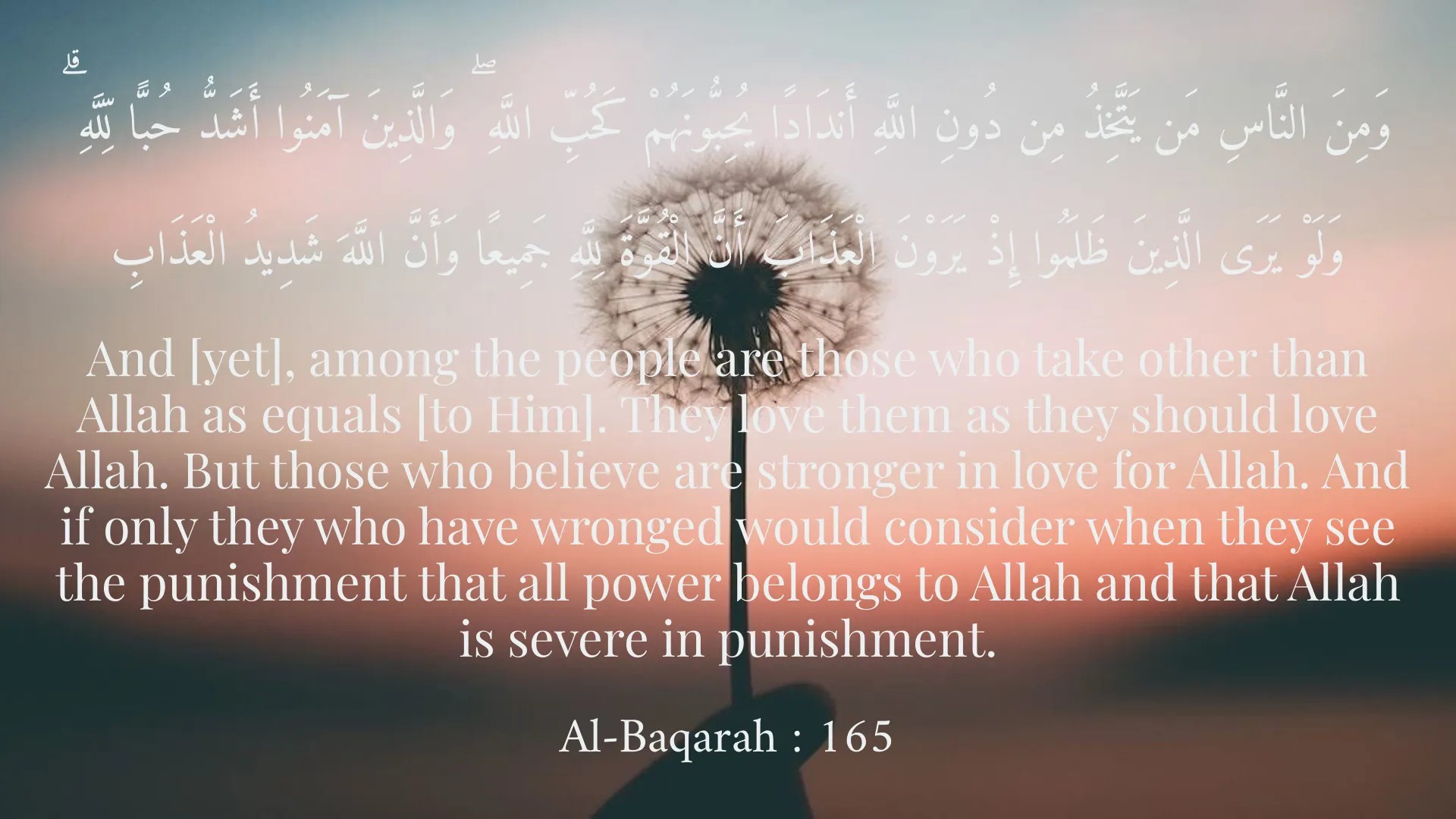
وَمِنَ النَّاسِ مَن يَتَّخِذُ مِن دُونِ اللَّهِ أَندَادًا يُحِبُّونَهُمْ كَحُبِّ اللَّهِ ۖ وَالَّذِينَ آمَنُوا أَشَدُّ حُبًّا لِّلَّهِ ۗ وَلَوْ يَرَى الَّذِينَ ظَلَمُوا إِذْ يَرَوْنَ الْعَذَابَ أَنَّ الْقُوَّةَ لِلَّهِ جَمِيعًا وَأَنَّ اللَّهَ شَدِيدُ الْعَذَابِ
And [yet], among the people are those who take other than Allah as equals [to Him]. They love them as they should love Allah. But those who believe are stronger in love for Allah. And if only they who have wronged would consider when they see the punishment that all power belongs to Allah and that Allah is severe in punishment.
Al-Baqarah : 165
إِنَّمَا الْمُؤْمِنُونَ الَّذِينَ إِذَا ذُكِرَ اللَّهُ وَجِلَتْ قُلُوبُهُمْ وَإِذَا تُلِيَتْ عَلَيْهِمْ آيَاتُهُ زَادَتْهُمْ إِيمَانًا وَعَلَىٰ رَبِّهِمْ يَتَوَكَّلُونَ
Indeed, the believers are those who, when Allah is mentioned, their hearts tremble with awe, and when His verses are recited to them, it increases them in faith; and upon their Lord they rely.
Al-Anfal : 2
يَا أَيُّهَا الَّذِينَ آمَنُوا مَن يَرْتَدَّ مِنكُمْ عَن دِينِهِ فَسَوْفَ يَأْتِي اللَّهُ بِقَوْمٍ يُحِبُّهُمْ وَيُحِبُّونَهُ أَذِلَّةٍ عَلَى الْمُؤْمِنِينَ أَعِزَّةٍ عَلَى الْكَافِرِينَ يُجَاهِدُونَ فِي سَبِيلِ اللَّهِ وَلَا يَخَافُونَ لَوْمَةَ لَائِمٍ ۚ ذَٰلِكَ فَضْلُ اللَّهِ يُؤْتِيهِ مَن يَشَاءُ ۚ وَاللَّهُ وَاسِعٌ عَلِيمٌ
O you who have believed, whoever of you reverts from his religion - Allah will bring forth [in place of them] a people He will love and who will love Him; humble toward the believers, powerful against the disbelievers; they strive in the way of Allah and do not fear the blame of a blamer. That is the favor of Allah; He bestows it upon whom He wills. And Allah is all-Encompassing [in favor] and knowing.
Al-Ma'idah : 54
Short Story
One day, a dervish named Abid was studying in his master's school. Abid was a pious young man who performed all his deeds out of fear of divine punishment and hellfire. He prayed on time and avoided sins, but his heart lacked a certain fervor and joy. His master was a wise elder who could perceive the depths of his students' souls. One day, the master asked Abid, "O Abid! Why do you worship God?" Abid replied wholeheartedly, "Out of fear of the fires of Hell and longing for Paradise, O Master." The master smiled and said, "Have you seen a slave who works only out of fear of the whip and is unaware of his master's love? Such a slave will someday flee." Abid pondered deeply, and years passed. In his solitude, he reflected upon the divine attributes: God's generosity, mercy, provision, and infinite beauty. The more he reflected, the more his heart became filled with affection and love. One day, the master asked him again, "O Abid! Why do you worship God now?" Abid closed his eyes and, with tears of joy, replied, "O Master! Now I worship Him because I love Him, neither out of fear of punishment nor for the hope of reward, but only because He is worthy of worship and love. And indeed, this very love restrains me from sin, for I do not wish to displease the heart of my Beloved." The master smiled and said, "Bless you! Now you have learned to fly with two wings: both the awe of the Lord's majesty and the love for His boundless mercy, both of which lead to the perfection of faith."