Quranic Answer
The Holy Quran is the central religious text of Islam, regarded by Muslims as a revelation from God (Allah). Among the various themes found within its pages, one of the most significant is the pursuit of Allah's satisfaction. Achieving the pleasure of God is not just recommended; it is presented as a profound goal for every human being. The Quran gives us guidance on how to navigate this journey, encompassing a range of beliefs, actions, and moral values that contribute to fulfilling this paramount aim. This article delves into the meanings and implications of striving for Allah's satisfaction as depicted in the Quran, highlighting the steps necessary to reach this noble goal. To embark on the path of earning Allah's pleasure, the first step is to strengthen one's faith and reliance on God. In Islam, faith, known as 'Iman,' serves as the foundation for all actions and beliefs. A strong sense of faith instills hope and understanding of Allah's omnipresence and omnipotence. When individuals actively nurture their faith, they become more aware of their obligations and responsibilities towards themselves and others. In Surah Al-Baqarah, verse 177, Allah states, "Righteousness is not that you turn your faces toward the east or the west, but [true] righteousness is in one who believes in Allah, the Last Day, the Angels, the Book, and the Prophets and gives his wealth, in spite of love for it, to relatives, orphans, the needy, the traveler, those who ask [for help], and for freeing slaves; [and who] establishes prayer and gives zakah; [those who] fulfill their promise when they promise; and [those who] are patient in poverty and hardship and during battle. Those are the ones who have been true, and it is those who are the righteous." This verse encapsulates the multifaceted approach to righteousness. It emphasizes that achieving Allah's satisfaction cannot be confined merely to the act of worship but must also encompass our behavior towards fellow human beings. Doing good deeds like prayer, giving alms, fulfilling promises, and lending a helping hand to those in need are not just recommendations; they are essential elements of a righteous life. Each action contributes to a person's spiritual development and brings them closer to the divine. Furthermore, obedience comes in various forms, with one of the most compelling notions derived from Surah Aal-E-Imran, verse 31, where Allah states, "Say, 'If you love Allah, then follow me, so Allah will love you and forgive your sins.'" This verse emphasizes the concept of love in relation to faith. A true follower of Allah should not only perform obligatory acts of worship but also exemplify moral excellence and avoid sinful behavior. Following the teachings and example of the Prophet Muhammad (peace be upon him) offers Muslims a practical guide to embodying these principles in their daily lives. Islam is not merely a set of rules; it is a way of life that integrates moral and ethical behavior with devotion to God. Acts such as praying five times a day, giving charity (Zakah), honoring one's parents, and maintaining honesty and integrity, act as bridges drawing us nearer to divine acceptance. These righteous actions showcase our commitment to not only fulfilling our spiritual duties but also ensuring that we contribute positively to society. A true believer looks beyond their day-to-day needs, considering the impact they can have on their community and the overarching goal of pleasing Allah. Moreover, in Surah Maryam, verse 60, Allah reinforces the connection between faith and good deeds by stating, "And those who believed and did righteous deeds will be in Paradise, they will be among the companions of Paradise." Here, the Quran reassures believers that faith accompanied by right action leads to divine reward in the Hereafter. Achieving God's pleasure is not an ephemeral goal; it culminates in eternal bliss for those who faithfully tread the righteous path. The Quran serves as a comprehensive guide to achieving this sacred aim. Understanding and abiding by Allah's commands requires dedication. Moreover, living a life infused with good ethics enhances one’s ability to perform good deeds genuinely and sincerely. It offers Muslims an avenue through which they can cultivate a character that aligns with their faith, ultimately serving as a testament to their commitment to seeking Allah's satisfaction. Further, the Quran encourages believers to remain steadfast, even in the face of adversity. Patience is a highly regarded quality that aids individuals in navigating the challenges that life presents. It serves as a means to strengthen faith and maintain a positive relationship with Allah. The verses repeatedly convey that trials are not merely obstacles but opportunities to grow closer to God and develop resilience in the face of hardships. The character gained through perseverance not only endears one to Allah but also radiates positivity within the community. In conclusion, the quest for Allah's pleasure is a multifaceted journey integrating faith, good deeds, moral values, and ethical behavior. The Holy Quran serves as a constant source of guidance, outlining the steps needed to attain this significant goal. By adhering to Allah's commandments, nurturing our relationship with Him, and adhering to the teachings of the Prophet Muhammad (peace be upon him), we open the doors to divine acceptance and fulfillment. Achieving God's satisfaction is not only a matter of individual purpose but also hinges on our commitment to contributing to a better society. Ultimately, through the pursuit of righteousness, we not only aspire to meet our spiritual obligations but also lead lives that reflect peace, compassion, and understanding as we journey toward a meaningful existence, firmly grounded in the teachings of the Holy Quran.
Related Verses
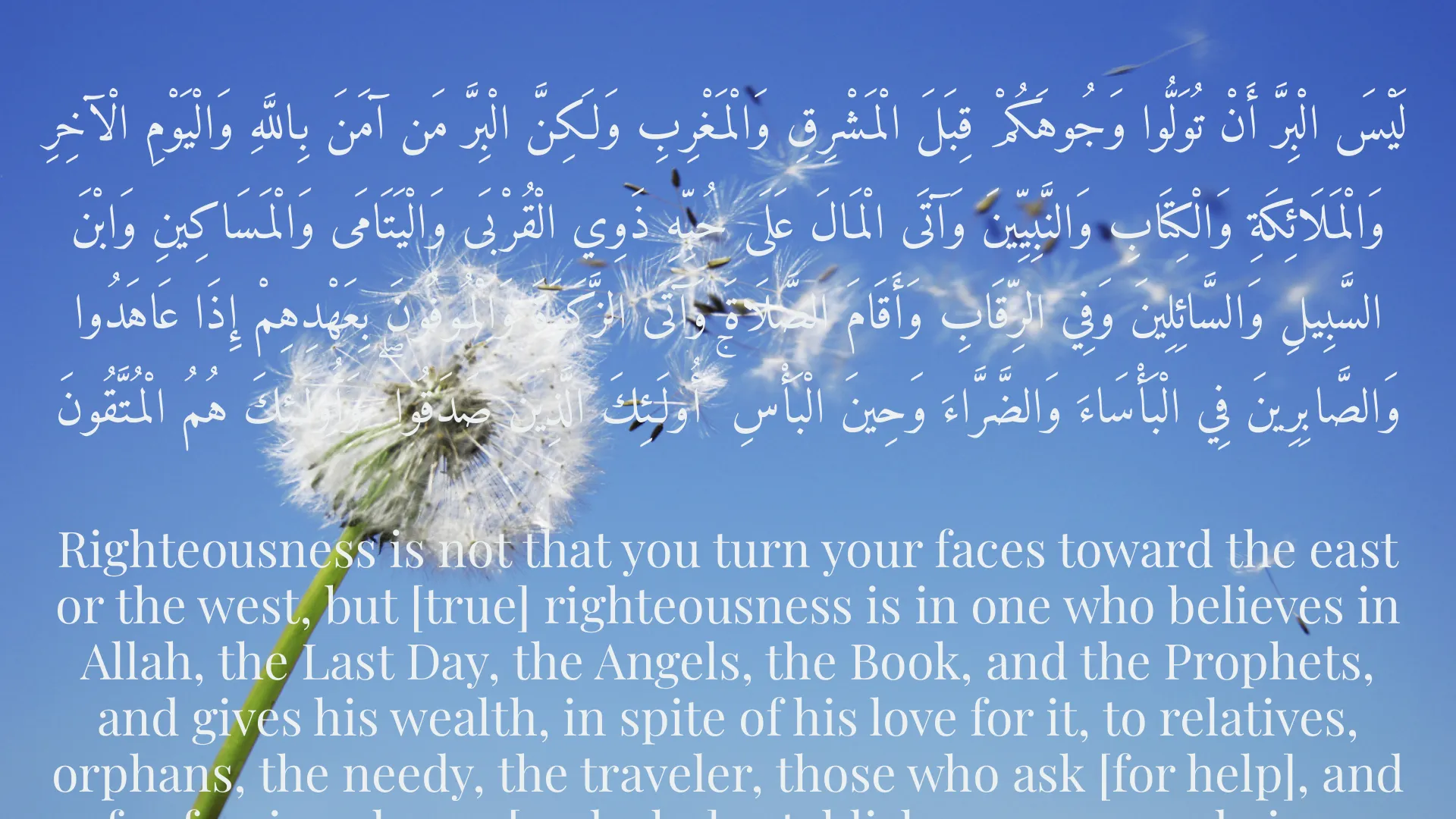
لَيْسَ الْبِرَّ أَنْ تُوَلُّوا وَجُوهَكُمْ قِبَلَ الْمَشْرِقِ وَالْمَغْرِبِ وَلَكِنَّ الْبِرَّ مَن آمَنَ بِاللَّهِ وَالْيَوْمِ الْآخِرِ وَالْمَلَائِكَةِ وَالْكِتَابِ وَالنَّبِيِّينَ وَآتَى الْمَالَ عَلَى حُبِّهِ ذَوِي الْقُرْبَى وَالْيَتَامَى وَالْمَسَاكِينِ وَابْنَ السَّبِيلِ وَالسَّائِلِينَ وَفِي الرِّقَابِ وَأَقَامَ الصَّلَاةَ وَآتَى الزَّكَوَةَ وَالْمُوفُونَ بِعَهْدِهِمْ إِذَا عَاهَدُوا وَالصَّابِرِينَ فِي الْبَأْسَاءَ وَالضَّرَّاءَ وَحِينَ الْبَأْسِ ۚ أُولَـئِكَ الَّذِينَ صَدَقُوا ۖ وَأُولَـئِكَ هُمُ الْمُتَّقُونَ
Righteousness is not that you turn your faces toward the east or the west, but [true] righteousness is in one who believes in Allah, the Last Day, the Angels, the Book, and the Prophets, and gives his wealth, in spite of his love for it, to relatives, orphans, the needy, the traveler, those who ask [for help], and for freeing slaves; [and who] establishes prayer and gives zakah; [those who] fulfill their promise when they promise; and [those who] are patient in poverty and hardship and during battle. Those are the ones who have been true, and it is those who are the righteous.
Al-Baqarah : 177
قُلْ إِن كُنتُمْ تُحِبُّونَ اللَّهَ فَاتَّبِعُونِي يُحْبِبْكُمُ اللَّهُ وَيَغْفِرْ لَكُمْ ذُنُوبَكُمْ ۗ وَاللَّهُ غَفُورٌ رَّحِيمٌ
Say, 'If you love Allah, then follow me so Allah will love you and forgive your sins. And Allah is Forgiving and Merciful.'
Aal-E-Imran : 31
إِنَّمَا يُوَفَّى الصَّابِرُونَ أَجْرَهُمْ بِغَيْرِ حِسَابٍ
Indeed, the patient will be given their reward without account.
Maryam : 60
Short Story
One day, a young man named Ahmad was in search of peace and divine satisfaction in his life. He decided to dedicate more time each day to prayer and being active in good deeds. Through these efforts, Ahmad felt a closer connection to God and realized that his life was filled with more moments of tranquility. He also respected and cared for his parents. These actions made Ahmad feel that Allah loved him and that his life was full of blessings and happiness.