Quranic Answer
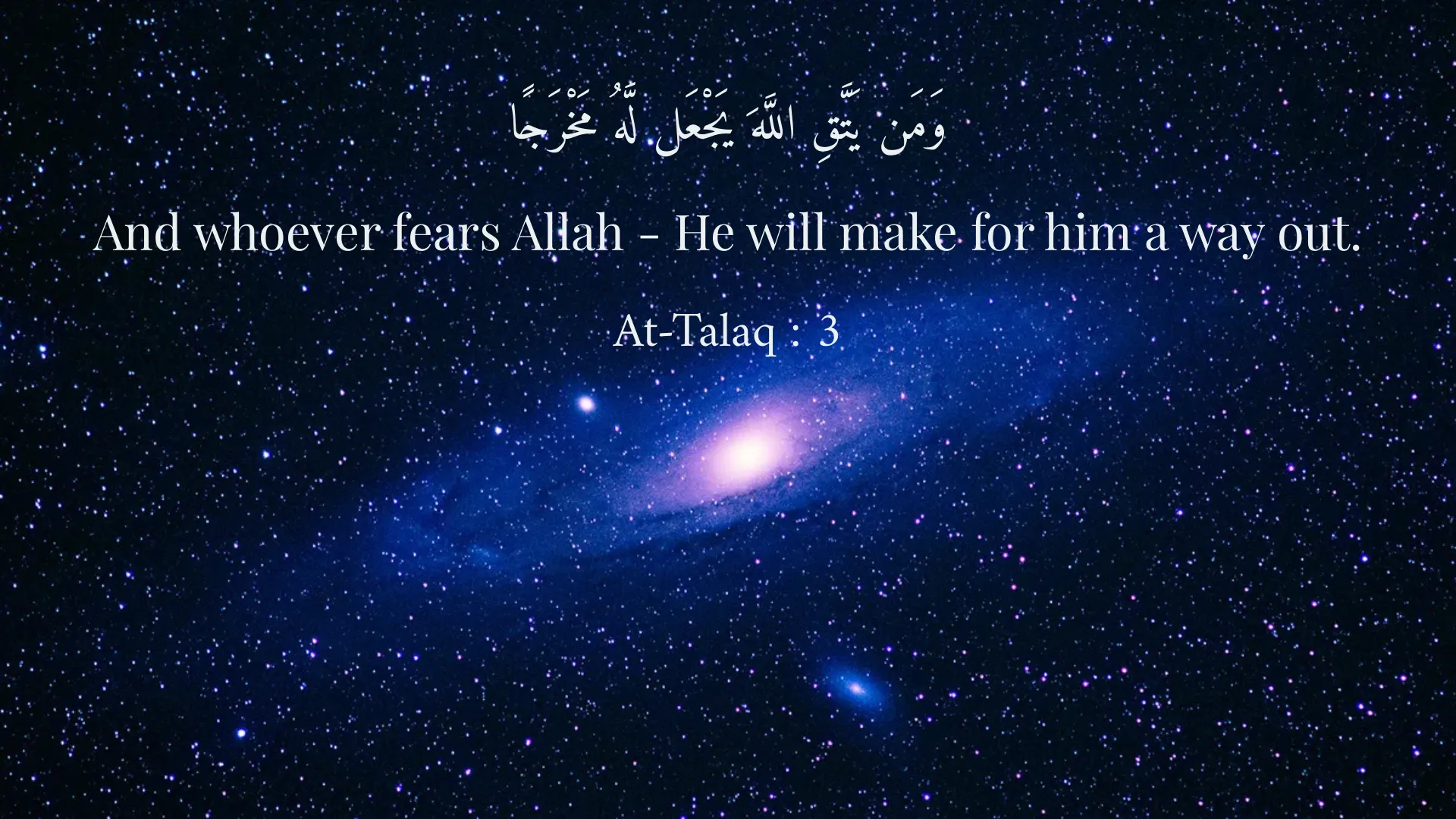
In the Holy Quran, the topic of fear and anxiety about the future is clearly and poignantly addressed. As human beings, it is only natural that we grapple with feelings of uncertainty and apprehension regarding what lies ahead. The unpredictability of life can lead to an overwhelming sense of anxiety, causing many to become paralyzed by their fears. However, the Quran provides profound guidance and comfort for those who find themselves ensnared in the grips of worry. Allah, in His divine wisdom, reassures believers to rely on Him and have unwavering faith, emphasizing that He writes the best destinies for them. This nurturing and compassionate perspective serves as a guiding light for anyone facing challenges or uncertainties in their lives. One of the notable references to fear and anxiety in the Quran can be found in Surah At-Talaq. In verse 2, Allah states, "And whoever fears Allah - He will make for him a way out" (Surah At-Talaq, 65:2). This statement encapsulates the essence of trust in Allah amidst life's uncertainties. The phrase emphasizes that those who maintain piety and consciousness of Allah will find a pathway out of their fears, regardless of how insurmountable their challenges may seem. Furthermore, the following part of the verse continues, "and will provide for him from where he does not expect" (Surah At-Talaq, 65:3). Here, Allah promises that sustenance and solutions will come in unexpected ways, further cementing the idea that believers should not be consumed by anxiety. The message is clear: sincere faith in Allah fosters resilience and can transform one's perspective on life. Moreover, the message of reliance on Allah extends beyond mere trust; it encourages a proactive approach to addressing one's fears through proactive spiritual practices. In fact, fear and worry about the future should not hinder one’s piety; on the contrary, it can serve as a catalyst to deepen one’s connection with the Divine. The Quran teaches that through the cultivation of faith, individuals can attain genuine peace of mind. Drawn from a deeply rooted spiritual foundation, believers are encouraged to turn to Allah in times of distress, emphasizing the significance of prayer and supplication. In addition to the insights provided in Surah At-Talaq, the Quran offers further reassurance through Surah Al-Baqarah. In verse 286, it is mentioned, "Allah does not burden a soul beyond that it can bear" (Surah Al-Baqarah, 2:286). This verse is a profound affirmation for believers facing hardships. It instills hope among the faithful, communicating that every burden they carry is within their capacity to endure. This divine pledge alleviates the weight of despair and reassures believers that they are not alone in their struggles. By trusting in Allah’s wisdom, believers can cultivate resilience, understanding that challenges are often opportunities for growth and spiritual elevation. The power of faith is remarkable, as it can transform fear into courage and anxiety into tranquility. In daily life, focusing on prayer and supplication during times of despair or apprehension serves not only as a source of comfort but also as a means for spiritual elevation. Engaging in sincere prayers, seeking guidance, and expressing one's fears to Allah can lighten the burden of anxiety. The act of supplication is a personal dialogue between the individual and their Creator, providing an avenue to release pent-up emotions and fears that may otherwise overwhelm them. Furthermore, good prayers and positive thoughts can play a critical role in boosting hope and reducing anxiety. The Quran emphasizes that when individuals turn their hearts toward Allah with sincerity and trust, they open themselves up to divine mercy and assistance. The power of positive thinking, coupled with faith, creates a synergy that not only makes one resilient in the face of adversity but also helps to cultivate an optimistic outlook towards the future. It can be beneficial for individuals to create a personal routine of prayer and positive affirmations. Engaging consistently with spiritual practices can enhance emotional well-being and bring about a guided focus toward life's blessings rather than its challenges. The Quran serves as a source of wisdom, offering verses that provide comfort and encouragement; incorporating these teachings into daily life allows believers to navigate their fears with a sense of direction and clarity. In a society that often magnifies feelings of anxiety and uncertainty, returning to the principles of faith and reliance on Allah can restore peace within one’s heart and mind. The journey of combating fear and anxiety is not merely a personal endeavor; it is a collective spiritual pursuit that connects individuals to their Creator and their community. By integrating the teachings of the Quran, believers can foster an environment of support and resilience that encourages growth through faith. In conclusion, the Holy Quran speaks profoundly to the anxieties and uncertainties that many encounter concerning the future. The verses profoundly remind us that through faith, prayer, and supplication, individuals can transcend their fears. The reassurance that Allah does not burden a soul beyond its capacity reinforces hope among believers, illuminating the understanding that hardship is a part of the human experience. By solidifying their faith in Allah, turning to Him in prayer, and engaging with positive thoughts, believers can overcome their fears and achieve a calmer, more assured mindset. Ultimately, the fundamental teachings of the Quran guide individuals towards embracing life with resilience, hope, and unwavering faith, proving that reliance on Allah is the key to overcoming fear and anxiety.
Related Verses
وَمَن يَتَّقِ اللَّهَ يَجْعَل لَّهُ مَخْرَجًا
And whoever fears Allah - He will make for him a way out.
At-Talaq : 3
لَا يُكَلِّفُ اللَّهُ نَفْسًا إِلَّا وُسْعَهَا
Allah does not burden a soul beyond that it can bear.
Al-Baqarah : 286
Short Story
There is a story told by Saadi about a strong man who lamented over the sorrows of tomorrow, feeling powerless. Meanwhile, his friend told him why he occupied himself with the sorrows of tomorrow when only today is in his hands? After some contemplation, the man realized he should focus on today and overcome his fears. From that day on, by trusting in Allah and strengthening his faith, he found peace.